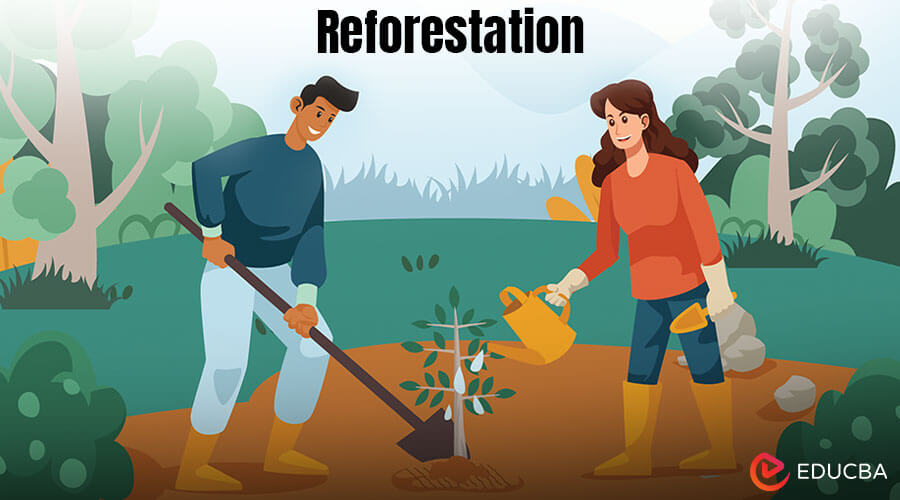
Welcome to our exploration of an intriguing synergy: the intersection of market forces and ecological recovery. As we survey the landscape scarred by deforestation, a common question arises, posed playfully yet stemming from genuine frustration: Can the profit-driven engine of capitalism genuinely fuel the reforestation efforts born from loss aversion? Capitalism, typically seen as prioritizing gain over conservation, nevertheless holds immense power through investment, incentives, and market dynamics. Far from being merely an impediment, its structured mechanisms can be strategically leveraged to incentivize forest restoration. By creatively aligning economic imperatives with environmental imperatives, we can cultivate a diverse economic portfolio centered on reforestation.
- The Engine of Investment Power
The most immediate way capitalism aids reforestation lies in its capacity for large-scale investment. Financial markets, traditionally adept at channeling capital towards profitable ventures, can now be directed towards forest restoration projects. Impact investing, a sector growing exponentially, explicitly targets returns alongside positive environmental or social outcomes. Private equity firms and specialized green funds are increasingly acquiring stakes in reforestation initiatives, providing the crucial upfront capital often missing from purely philanthropic efforts.
Furthermore, specialized reforestation bonds, sometimes termed “green bonds” specifically for ecological projects, can be issued to raise funds on capital markets. These instruments attract investors willing to lock away capital for extended periods in return for financial returns tied to ecological projects. The predictability and scale offered by institutional finance are difficult for grassroots or temporary donations to match, enabling the long-term, intensive forest growth cycles necessary for effective reforestation. This transforms forest restoration from a sporadic activity into a viable, large-scale commercial enterprise attracting serious investment.
- Creating Markets for Verified Environmental Benefits
One of capitalism’s defining strengths is its ability to create tangible markets around abstract needs or newly valued commodities. Perhaps the most compelling mechanism for tying capitalism to reforestation involves creating markets for carbon credits. The fundamental principle is straightforward: forest restoration projects remove carbon dioxide from the atmosphere, sequestering it in growing biomass. Through established frameworks (like cap-and-trade systems or voluntary carbon markets), these removals can be quantified and converted into tradable credits.
Companies and governments forced to meet carbon reduction targets can purchase these credits to offset their emissions. This transforms an ecological benefit into a financial asset – mature trees standing represent a tangible reduction in carbon liabilities. Verification technologies, though still evolving, aim to accurately measure carbon sequestration, adding crucial reliability to these markets. This system creates a powerful incentive for landowners or project developers to initiate and maintain forests not just for inherent worth, but because the resulting carbon credits possess genuine market value, thus fostering a new form of ecological capitalism.
- Aligning Private Land Management with Long-Term Value
Many forests, especially in productive landscapes like temperate zones or former agricultural land, exist on private property. Capitalism operates optimally when property rights are clear and individuals or corporations manage resources productively for sustainable returns. Reforestation on private land can thus be seamlessly integrated into a landowner’s economic strategy. Managing forests as a renewable resource, harvesting timber or other non-timber forest products (like nuts, berries, or medicinal plants) in a sustainably planned manner generates ongoing income.
This model moves beyond the traditional “preserve” concept; it embeds conservation within an active managerial framework. Professional forestry managers, often part of larger agribusiness or investment firms, are increasingly hired to oversee vast tracts of land, ensuring responsible reforestation and sustainable yield. The economic logic dictates that healthy, productive forests generate greater long-term returns than degraded ones. This private sector stewardship, driven by market logic and the potential for financial growth, represents a significant shift in conceptualizing forest lands – viewing them not as unmanaged commons, but as valuable, managed assets contributing directly to a landowner’s bottom line.
- Consumer Demand Driving Sustainable Sourcing
The power of market demand, ultimately driven by consumers, is a fundamental capitalist engine. As awareness grows about deforestation and climate change, consumers are increasingly demanding products sourced sustainably. Certification schemes like the Forest Stewardship Council (FSC) or the Programme for the Endorsement of Forest Certifiers (PEFC) provide verifiable labels for goods originating from responsibly managed forests or recycled sources.
Companies, driven by the imperative to maximize shareholder value, stand to gain significantly by catering to this demand. Offering FSC-certified paper, furniture, cocoa, palm oil, or timber not only attracts ethically conscious consumers but also mitigates reputational risks associated with unsustainable sourcing. This creates a positive feedback loop: consumer demand for certified goods prompts corporate adoption of sustainable supply chains. These supply chains, in turn, incentivize their own suppliers to source from reforested or well-managed forests, thereby creating a virtuous cycle where market logic actively promotes responsible forest management and regeneration.
Capitalism, often perceived as separate from ecological imperatives, possesses inherent tools to foster reforestation. By aligning financial gain with environmental repair, these mechanisms – investment capital, carbon markets, private land management driven by value, and consumer-driven sustainable sourcing – create tangible incentives. Reforestation becomes less a peripheral ‘feel-good’ activity and more an integrated part of a productive economic system. Navigating the complexities of measurement, verification, and equitable benefit-sharing remains crucial, yet the potential exists for market forces to become powerful allies in forest restoration. The question is no longer whether capitalism can help, but how best to harness its formidable energy for the regeneration of our forests.


