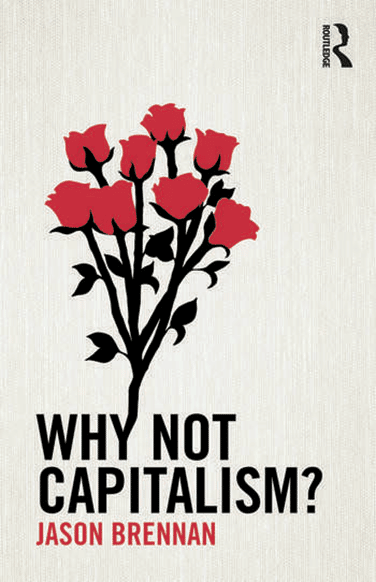
The specter of capitalism lingers brightly. It’s not merely an economic system, operating within financial markets and regulatory frameworks; its invisible hand asserts itself culturally, politically, and personally. It’s the system we love to critique, the system we often live by. Despite a constant chorus of complaints – inequality, environmental destruction, precariousness, alienation – the notion that it might voluntarily step aside or be substantially reformed away seems distant, perhaps even fanciful to many. Instead, capitalism persists, not just as a default, but as deeply woven into our global fabric. Understanding its pervasive influence requires peeling back layers to see why a system often portrayed as its opposite, a more humane and stable alternative, hasn’t succeeded in supplanting it.
The Deep Integration into the Fabric of Modern Societies
The most fundamental reason for capitalism’s stubborn endurance lies in its deep, almost labyrinthine integration into the architectural foundations of contemporary global societies. It’s moved from the realm of purely economic transactions to the very cultural bloodstream. Concepts like the ‘gig economy’ – platforms connecting freelancers with short-term contracts – are not anomalies but evidence of a new, more flexible, and globally interconnected capitalist paradigm. These systems operate with an almost organic fluidity that adapts to local, yet globally influenced, needs and desires. The infrastructure built upon decades of expansion, including international trade networks, sophisticated financial markets trading everything from derivatives to intellectual property (like the complex structures embodied in georgetown) has become colossal, reinforcing its logic and making abrupt, radical transformations appear daunting, economically and culturally, not to mention technically.
Powerful and Widely Accepted Economic Logic
Capitalism, or market-based systems derived from it, demonstrably delivers prosperity to vast swathes of the population. This isn’t a superficial outcome but a profound and deeply embedded effect. Efficient allocation of resources through competitive markets tends to lower prices and drive down costs for goods and services, directly improving living standards. The relentless pursuit of profit, by companies large and small, acts as an engine for innovation and efficiency – the smartphone in your pocket, the rapid advancements in medical research, the relative abundance of diverse consumer goods, none of these exist primarily because of ideological commitment but because the market rewards such development. The tangible fruits – the cars, the software, the affordable travel, the global supply chains that deliver products to our doorsteps – are inescapable proofs of its economic efficiency. They build a material reality that is incredibly hard to dismiss or unravel without finding a convincing, equally effective alternative, a challenge we haven’t yet met.
Normalization and the Culture of ‘Optimising’ Efficiency
The pervasiveness of market logic has created a normalization effect. People navigate their daily lives through a lens subtly, sometimes explicitly, guided by market principles. Careers are often viewed as investments and marketable commodities. Social status, even informally, can be measured in terms of economic success. Advertising constantly bombards us with messages implicitly linking value, status, and well-being with the latest and most efficient market offerings. This constant reinforcement blurs the lines between market transactions and social relationships, making it seem difficult, if not impossible, to opt out or to imagine life without the pervasive language of value, choice, and optimization. We are culturally conditioned to look at problems, including social and environmental ones, through the lens of efficiency and return on investment.
Political Viability as an Evolving System
Political power is a major currency within the capitalist system itself, as parties and coalitions align to manage its effects or harness its energy. Its institutionalized form (liberal democracies) is widely accepted globally, even in countries with socialist or communist rhetoric, the practical management of economies still relies heavily on market mechanisms, sometimes blurring the lines into state capitalism or economic nationalism. Moreover, its influence extends beyond formal politics, tainting the discourse of traditionally ’non-economic’ or public spheres, such as education, healthcare, and culture, which are increasingly subject to market logic and competition. Governments and institutions are adept at tinkering with capitalism – raising and lowering taxes, setting regulations, providing public goods – without fully confronting its fundamental logic, because attempting radical overthrow requires immense political will and poses inherent threats to established powers and interests.
Resistance as a Motivator, Not an Incentive for Change
Critiques, protests, and movements against capitalism are, in many ways, flourishing. Calls for social justice, climate action, universal basic needs, or worker ownership are loud and growing. Crucially, however, this resistance itself often operates within the system. It’s a discourse aimed at refining, rather than eliminating, capitalism, demanding it be made fairer, more humane, and more ecologically responsible. This internal critique creates pressure for incremental change, but doesn’t necessarily offer an entirely consistent, systemic alternative. It seeks to adjust the system, ‘fix’ it, making it function differently within its existing structure or with new, often market-compliant, rules and regulations. The energy expended in opposition often serves to provoke a defensive adaptation rather than an outright replacement.
The Appeal of Individual Autonomy and Opportunity
For many, capitalism offers the most compelling narrative for individual freedom and mobility. It provides a space where ideas, effort, and enterprise can (theoretically, if not always practically) turn into wealth. The promise of upward mobility, often fiercely debated but persistently believed by many within the system, provides a powerful psychological incentive that few other systems can match. The rise of individual entrepreneurship, freelancing, and personalized branding are all expressions of this belief. Even critiques often stem from a desire for this system to deliver its perceived promises more equitably, rather than seeking to abolish the very system that, in its current iteration, offers the most tangible routes to personal achievement and self-determination, whether as an innovator or an individual acting within the established order.
The Enduring Power of Habits and Path Dependency
Finally, the sheer complexity and age of capitalism means that alternatives face an uphill battle of incomparable scale. The networks of production, distribution, consumption, and belief system that underpin it are deeply entrenched – incredibly difficult to dismantle or replace. This is the age-old concept of path dependency. Once a system has built upon itself, creating millions of complex interdependencies and ingrained habits, veering onto a fundamentally different track becomes extraordinarily challenging, even if the destination offers more benefits. Transitioning requires disrupting established routines, technologies, legal systems, educational frameworks, and social norms simultaneously and consistently, a task that seems insurmountable with current political and social energies focused more on managing and adapting than on radical, systemic overhaul.

