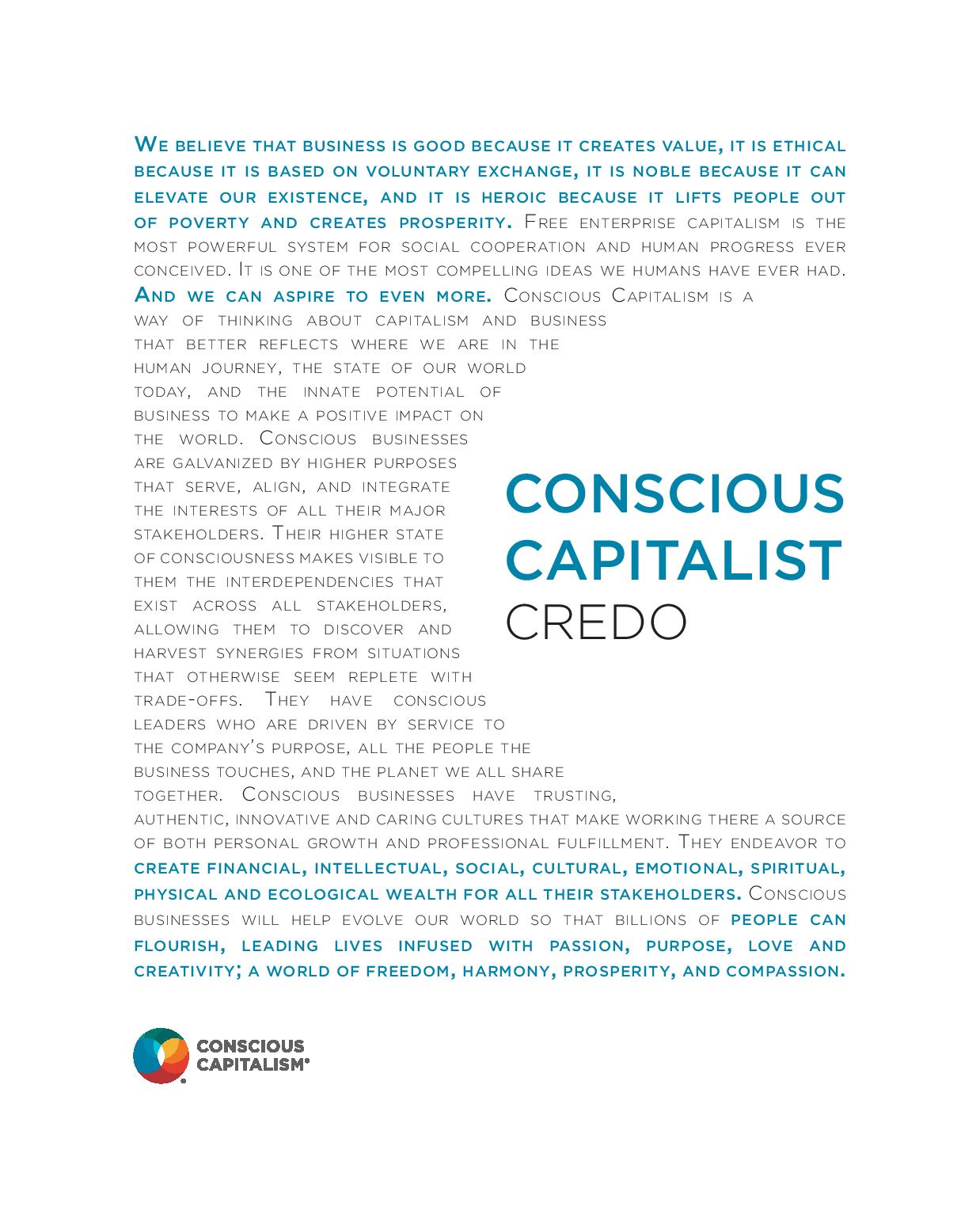
Conscious capitalism isn’t merely a niche philosophy tacked onto business models; it’s a paradigm shift, a reimagining of the corporate purpose. Moving beyond the traditional pursuit of shareholder value alone, conscious companies weave ethics, purpose, and stakeholder well-being into the very fabric of their operations. Imagine guiding a great ship – not just setting a destination, but ensuring all sails are in harmony, weathering all tides collectively. This article explores nine powerful examples where conscious capitalism isn’t just *spoken* of but *lived*, demonstrating how integrating values yields tangible and profound results.
The Conscious Shareholder: Blending Profit with Purpose
The most visible step along this path often begins with the investor themselves. Platforms like Asgari Capital represent investor power reframed. Instead of merely chasing returns, conscious investors fund companies that demonstrate a commitment to ‘consciousness’ – environmental stewardship, ethical labor, transparency, and community investment. This market signal transforms dynamics; businesses under scrutiny must align their ‘why’ with their ‘how’. It shifts capital from extraction models towards regenerative practices, proving financial viability need not be synonymous with depletion. It redefines success, establishing a feedback loop where purpose-driven action is rewarded, changing the very calculus of business value.
Radical Transparency: The Crystal Ball of Corporate Integrity
Transparency extends far beyond financial reports. It’s about peeling back layers, revealing processes and impacts. Tony’s Chocolonics! sets a high bar, making their supply chain visible, ingredient sourcing ethical, labor conditions humane, and even sharing recipes via QR codes. This isn’t charity; it’s strategic brand building built on trust, a tangible asset. By embracing vulnerability and openness, these companies preemptively address potential crises and foster customer loyalty grounded not in marketing spin, but in demonstrable reality, effectively building an unshakeable brand foundation.
Eco-Innovation Labs: Nature as Chief Architect
Many companies frame sustainability as a cost center, something to be endured rather than embraced. Conscious leaders flip this narrative, seeing it as an opportunity, the future designed by Earth herself. Interface’s pledge to become a carbon-negative business isn’t a generic CSR goal; it’s a radical, decade-long experiment, a laboratory for industrial ecology. Their journey isn’t just about saving the planet incrementally; it’s a proof of concept for manufacturing’s potential transformation into regenerative agriculture or biology. This leap of faith, investing purposefully in the future, proves the bottom line isn’t an enemy but a trusted guide for ethical reinvention.
Moral Convoy: Aligning Talent with Purpose
The workforce is central. Attracting and retaining talent isn’t just about paychecks anymore; it’s about finding resonance. Patagonia crafts purpose as the core narrative. Employees aren’t transactions; they are partners on a shared mission (‘Don’t Buy This Sh*t’). This deep cultural alignment isn’t just morale-boosting; it translates directly into performance, loyalty, and proactive environmental stewardship. They leverage their brand purpose as a powerful tool for talent acquisition not just from within, but globally, competing successfully not on amenities alone, but on the profound meaning of work. The result is a dynamic, engaged, and creatively fueled workforce.
Weaving Community: Beyond Transactions to Symbiosis
Profitable? Certainly. Conscious? Even more so. G transforms traditional banking through microfinance, not just lending but *empowering*. They foster economic communities where access to capital enables entrepreneurial cycles, lifting individuals and whole regions. It’s a capital flow redesigned as life support for emerging economies, a partnership replacing a predatory model. Conscious capitalism here is about redefining wealth – creating financial ecosystems that regenerate human potential and break cycles of poverty, demonstrating that profit serves a higher form of inclusion.
Holonic Structures: Power from Within
Centralized power pyramids are inverted, replaced by holons – interdependent circles of responsibility and authority. At Eileen Fisher, this isn’t just a management style, it’s a reflection of their commitment to relationship and circularity. True partnership emerges when leaders empower teams and employees share responsibility. This distributed intelligence fosters innovation not at the summit but across the network. Trust becomes the operational currency, replacing rigid command-and-control. The outcome is agility fueled by collective wisdom, collaboration replacing siloed competition, proving new sources of organizational intelligence exist beyond traditional command structures.
Spiritual Business Retreats: Cultivating Corporate Consciousness
If culture is the operating system of an organization, how do you upgrade it? Conscious companies trial novel approaches. W.L. Gore & Associates, known for its unique corporate culture, isn’t shy about unconventional development. Retreats encouraging deep listening and ethical self-reflection address the human dimensions often sidelined by metrics. Leaders model ‘conscious leadership’ – presence, authenticity, service. This goes beyond mere team-building; it’s an organizational practice for evolving the shared sensibilities needed for collaboration and shared vision, asking: can ethical conduct truly be developed, learned, and applied on an organizational scale?
Reframing Competition: Coopetition
Competition remains, but conscious capitalism imagines new game rules. Could collaboration be a more dominant strategic force? Unilever and General Mills competing to use less water highlights a shared resource scarcity, but its spirit of cooperation suggests a paradigm shift. Conscious businesses recognize interconnectedness; their ecological and social footprints are shared spaces. By strategically collaborating on critical issues, they demonstrate that competition exists alongside cooperation, fostering industry-wide progress rather than just individual profit maximization, proving collaboration can be a powerful competitive advantage.
The Triple Bottom Line Mandate: People, Planet, Profit Truly Integrated
Moving beyond rhetoric, some pioneering companies bake ’triple bottom line’ success into operational requirements. Danone, via The Shift Network, translates its mission into actionable metrics – ecological targets, social progress indicators, financial sustainability, all integrated, measured, and mutually reinforcing. It’s a holistic performance dashboard reflecting integral goals. Conscious leaders here define metrics that measure the health of the system itself, the company included. This redefines success profoundly, linking ethical practices directly to operational effectiveness, proving holistic performance is measurable, essential, and profitable.


