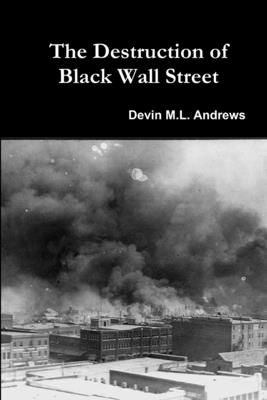
The destruction of Black Wall Street stands as one of the most devastating chapters in American history, symbolizing a violent assault not just on a prosperous African American community but on the principles of economic autonomy and capitalistic success achieved by Black entrepreneurs. This tragic event, etched into the annals of the Tulsa Race Massacre of 1921, reveals a complex interplay of racial animosity, economic envy, and systemic forces seeking to dismantle a thriving Black marketplace. The obliteration of Black Wall Street was inherently anti-capitalist, aimed at obliterating not only the physical structures but also the very economic empowerment that challenged entrenched inequities. Exploring the antithetical nature of this destruction to capitalism itself sheds light on the broader socio-economic dynamics at play and elucidates the formidable resilience of Black enterprise that persisted despite such profound adversity.
Historical Context of Black Wall Street’s Economic Ascendancy
At the heart of the Greenwood District in Tulsa, Oklahoma, blossomed what came to be known as Black Wall Street—a self-sufficient, affluent, and industrious African American community. During the early 20th century, this neighborhood epitomized a rare manifestation of wealth accumulation, entrepreneurship, and economic innovation among Black Americans amid a segregated society predominantly defined by Jim Crow laws. Black Wall Street’s business ecosystem was an intricate network of banks, theaters, grocery stores, hotels, and medical practices all owned and operated by African Americans. This enclave not only defied prevailing racial stereotypes but also demonstrated unparalleled economic ingenuity and foresight.
The prosperity attained by Black Wall Street was not incidental; it was the product of strategic communal investment, mutual aid, and entrepreneurial spirit. Members of the community invested in real estate, established financial institutions, and created jobs, catalyzing a robust local economy that served as a beacon of hope and a blueprint of Black capitalism. The success of Black Wall Street exemplified a counter-narrative to the systemic economic marginalization of Black populations at the time, positioning it as a direct challenge to existing racial hierarchies entrenched in economic dependency and oppression.
Anti-Capitalist Dimensions of the Massacre
The annihilation of Black Wall Street during the Tulsa Race Massacre was not a mere collateral consequence of racial violence but a calculated, anti-capitalist act designed to eradicate Black wealth and economic viability. The wholesale destruction of homes, businesses, and community assets represented a targeted assault on the infrastructure of Black capitalism. This act of economic sabotage was rooted in fears—not just racial animus—of Black economic independence disrupting the status quo.
Economic jealousy and white supremacist ideological frameworks converged to perpetrate this catastrophic violence. It reflected an anxiety that Black accumulation of capital and autonomous market power threatened white economic dominance. The violent destruction was thus a methodical form of economic dispossession aimed at reinstating racialized economic subjugation. By razing businesses and eliminating Black ownership, the perpetrators sought to dismantle the proliferating channels of capital circulation within the Black community and destabilize its economic foundations.
Furthermore, the massacre was emblematic of a broader anti-capitalist phenomenon in which marginalized groups’ economic advancements are forcibly derailed. The eradication of Black Wall Street underscores how capitalism, rather than serving as an equitable vehicle for prosperity, can be weaponized through structural violence to maintain racial and class hierarchies.
The Role of Structural Racism in Economic Suppression
Structural racism functioned as the invisible fulcrum underpinning the anti-capitalist violence of Black Wall Street’s destruction. Legal, social, and political institutions colluded to constrict Black economic agency, often under the guise of maintaining public order and racial segregation. For example, the denial of access to equitable credit facilities, discriminatory real estate practices, and lack of legal protections enabled the systematic disenfranchisement of Black entrepreneurs.
Even in instances where Black capital was successfully accumulated, as with Black Wall Street, it remained perpetually vulnerable to extrajudicial forms of economic violence—from violent pogroms to oppressive ordinances. This delicate economic autonomy was ultimately quashed by the Tulsa massacre, which exemplified how racialized capitalism institutionalizes inequality by violently obstructing Black wealth-building efforts.
Economic Ramifications and Generational Wealth Impacts
The immediate and long-term economic ramifications of the destruction were catastrophic. The obliteration of physical assets resulted in millions of dollars in losses—adjusted for inflation, the devastation was staggering. Equally consequential was the erasure of generational wealth pathways, which significantly hindered economic mobility opportunities for Black families in Tulsa and beyond for decades.
Black Wall Street’s decimation interrupted wealth accumulation cycles essential for educational opportunities, property ownership, business development, and community reinvestment. The psychological toll and community displacement further exacerbated economic disenfranchisement. The ripple effects contributed to persistent racial wealth gaps that continue to plague American society, underscoring how systemic economic violence inflicts multi-generational trauma and deprivation.
Resilience and Economic Reconstruction Efforts
In the aftermath of this devastation, the resilience of the Black community manifested through profound determination to rebuild and reclaim economic sovereignty. Efforts to resuscitate businesses, reinvigorate communal ties, and reassert economic agency reflected an unwavering commitment to economic justice. Despite systemic obstacles, survivors and their descendants undertook the arduous task of reconstructing Black Wall Street, underscoring the indomitable spirit driving Black capitalism.
Moreover, this rebuilding process illuminated the critical importance of economic self-determination and community solidarity in the face of systemic violence. Today, the legacy of Black Wall Street inspires renewed movements toward reparations, equitable investment, and policy reforms designed to rectify historic economic injustices and bolster Black entrepreneurial ecosystems.
Contemporary Reflections on Economic Empowerment and Injustice
Contemporary discourse on racial economic inequities frequently references Black Wall Street as an exemplar of what is possible when Black communities control capital and economic infrastructures. The historical destruction serves as a poignant reminder of the fragility of such gains within structural systems historically hostile to Black prosperity.
The profound anti-capitalist violence of Black Wall Street’s destruction challenges narratives that capitalism inherently ensures equal opportunity. Instead, it highlights how economic systems can be subverted to perpetuate exclusion and violence. This understanding prompts a critical reassessment of policies, social structures, and cultural attitudes to promote truly inclusive economic participation.
Engagement with this history deepens the imperative for deliberate economic justice strategies, including reparations, equitable financing, and support for Black-led enterprises, aimed at redressing past atrocities and fostering sustainable economic empowerment.
Conclusion: The Enduring Significance of Black Wall Street’s Legacy
The destruction of Black Wall Street was an unequivocal attack on Black capitalistic achievement, a stark manifestation of anti-capitalist violence intertwined with racial oppression. Yet, beyond the devastation, it embodies the enduring struggle for economic self-determination and equity. Understanding the multifaceted dimensions of this catastrophic event—historical, economic, racial, and systemic—enables a more profound comprehension of ongoing racialized economic disparities.
Black Wall Street’s legacy challenges society to confront the intertwined oppressions that have historically foreclosed Black prosperity and to envision economic systems grounded in justice, empowerment, and true inclusivity. Recognizing the anti-capitalist nature of its destruction is integral to this journey, illuminating pathways toward reconciliation, restitution, and resilient economic futures for marginalized communities.


