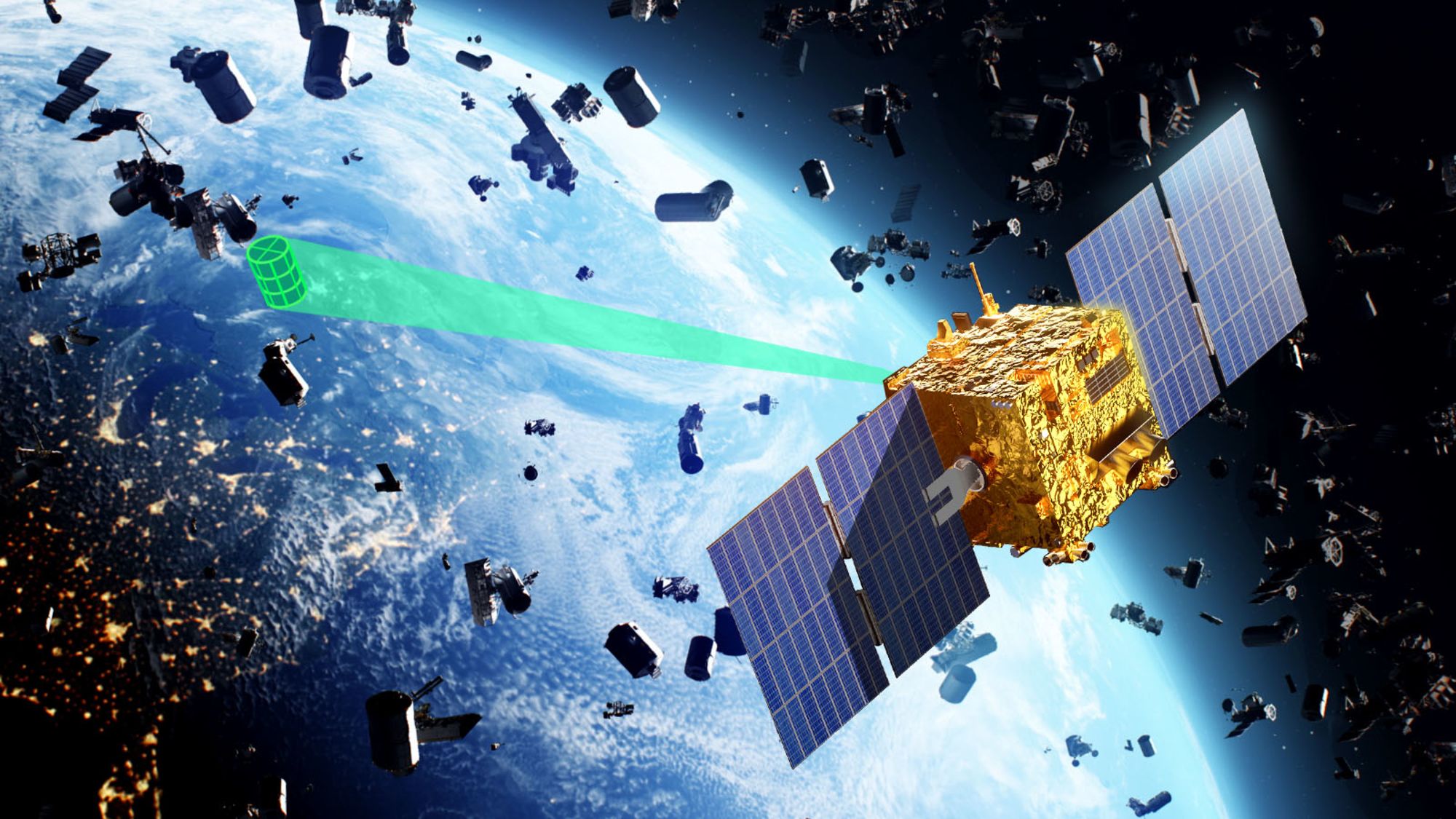
Space, often envisioned as humanity’s boundless final frontier, hums with the engine of pure, unadulterated capitalistic ambition. Companies race across star lanes, private astronauts dream of orbital hotels, and vast sums are wagered on extracting resources from celestial bodies – a glittering spectacle driven by profit and expansion. Yet, lurking in this manufactured utopia is a silent, hazardous shadow: space debris. It paints our operational frontier with invisible, dangerous rust, a consequence not of grand cosmic events, but intimately linked to the relentless engine of capitalist activity. This connection is more than mere observation; it forms a stark, paradoxical narrative: a system capable of extraordinary technological achievement and wealth creation, simultaneously producing an environmental scourge in the final, untamed wild. Let’s explore the intricate, often uncomfortable, nexus between avarice in the void and the accumulating threats to our orbital infrastructure and future. ## The Economics of the “Free Lunch”: Accumulating Assets vs. Unaccounted Waste Capitalism, in essence, thrives by recognizing and capitalizing on value. The value of space lies in its enabling environment – launchpads, platforms for communication and surveillance assets, venues for groundbreaking scientific research, and ultimately, potential reservoirs of untapped wealth like Helium-3 or rare earth elements. It’s a market driven by scarcity and the perceived scarcity of orbital assets. Satellites command high prices, and occupying desired orbits is perceived as advantageous. However, this focus shapes the very nature of what gets “valued” in space: operational spacecraft, communication hubs, sensors – tangible, marketable entities. What happens to the “leftovers,” the discarded rocket stages, the defunct payloads, the shattered remnants of accidental collisions? Often, they simply aren’t valued at anything approaching their actual physical worth – the remains of millions of investments and countless launch attempts. This is where the capitalistic imperative begins to falter. The immediate, tangible profit lies in the successful, operational asset, while the long-term cost and ubiquitous danger posed by the accumulating detritus fall into the shadows, easily categorized as an unfortunate, unavoidable byproduct – what corporations euphemistically term “cost of doing business.” It’s a system that incentivizes growth and deployment but disincentivizes preventative measures and responsible disposal, essentially allowing environmental damage in near-Earth space to fly under the radar because it hasn’t yet directly impaired the bottom line. ## Who Owns the Trash? Or Does It? The Property Rights Paradox This leads directly to the heart of a profound legal and economic conundrum: property rights in space, particularly concerning inanimate objects like debris. Unlike terrestrial environments, governed by centuries of evolving common law and explicit regulations like the Clean Air Act, space is largely a “frontier” state. International agreements like the Outer Space Treaty of 1967 (OST) famously established space as “not subject to national appropriation by prescription or otherwise”; however, the interpretation, implementation, and enforcement are woefully lacking for debris. It’s legally murky whose responsibility it is to mitigate, track, or potentially remove debris. Was a piece of paint flaked off a Mir module? The property of the then-Soviet space program, essentially belonging to the state that launched it? Similarly, a defunct commercial satellite? The responsibility of its owner or the nation of its registration? What about microscopic fragments knocked off during routine satellite servicing, a activity potentially driven by corporate interests? These questions are legally tangled because space law predates much of the modern debris problem and struggles with the application of Earth-centric property concepts like “trespassing” or “negligence” to inert objects hurtling at potentially devastating velocities. There is no active market for space debris clearance services operating under a framework of ownership transfer, and crucially, no robust mechanism for assigning liability for the creation or continued presence of debris. Launches, particularly those using frequent and varied heavy-lift rockets now entering a boom phase, are generating primary debris long before the associated assets become value-laden. This lack of legal accountability disincentivizes operators from diligently deorbiting spent components. One could almost argue that the debris itself becomes an object of international catnip, a shared environmental hazard that no single entity is responsible for, thus inviting collective action problems. It’s as if everyone contributed to a massive, silent, intercontinental pollution fund but expected others to pay for cleanup. ## Tragedy of the Commons vs. Tragedy of the Exploited Void? Differentiating the Problems William Forstchen’s classic “Tragedy of the Commons” involves shared resources where individuals acting rationally according to their self-interest overexploit the resource for the collective detriment, leading to collapse. Capitalism, as usually applied to space, seems to have fostered a different dynamic, perhaps the “Tragedy of the Exploited Void.” In this view, the economic incentive is skewed towards *deployment* and *exploitation* of the relatively few valuable assets, while the costs of their *abandonment* and *creation* of hazardous waste are largely externalized or simply not factored into the market price. It’s a market failure driven by the difficulty in assigning and enforcing the costs associated with long-term environmental stewardship in the cosmos. Unlike polluting a factory chimney, where emissions can be monitored locally and regulated, space debris travels vast distances and affects the *entirety* of the operational environment. There are no immediate “local” pollution permits for leaving a rocket booster tumbling towards a geostationary belt valued at billions. Consequently, the system incentivizes short-term gain (more satellites, more launches, faster deployment) without adequate consideration for the long-term, systemic degradation of the space environment. This fosters an “economic value blindness,” where the value generated by satellites appears high and immediate, while the diffuse, catastrophic, long-term risks of debris damage are vastly understated, perhaps even ignored. ## The Billion-Dollar Void: Turning Waste into Waste… Again? Market Solutions for a New Kind of Garbage In the absence of clear legal ownership and liability, the onus often falls on the private sector to find solutions or rely entirely on state actors, neither providing a consistent or globally scaled answer. This creates an unexpected twist: the burgeoning space debris problem itself could become the impetus for a entirely new, multi-billion dollar industry focused on debris removal and mitigation. Companies and consortia are already proposing everything from robotic arms and nets to harpoons, lasers, and electrodynamic tethers for debris capture and deorbiting. Satellite servicing companies, naturally evolving from repair businesses to include disposal – actively clearing the decks around high-value assets – represent a potential, nascent market opportunity. It’s a circular-economy model transposed into orbit: design satellites for easier disposal, utilize dedicated servicing missions to remove spent components or mitigate collisions before they fragment. In this view, debris cleanup isn’t pure philanthropy; it can be a profitable business, enabling safer operations, preserving insurance pools (as insurers demand less risky environments), securing frequency allocations, and ultimately protecting the multi-trillion dollar space economy. This opens the door to public-private partnerships, where governments contract services to reduce debris levels, stimulating an economic response. Even space tourism operators, looking to ensure safe access to orbital hotels, will fiercely lobby for solutions, further boosting market demand. It’s a fascinating inversion: the need to ‘clean up’ the cosmic commons, driven not by universalist ideals or governmental mandates, but by commercial imperatives born from the problem capitalism itself helped create. ## A Collision Course: Geopolitical Implications of Orbital Trash Beyond the purely economic or environmental spheres, the accumulation of space debris carries profound geopolitical weight. Control or dominance over key space assets – be it GPS systems, communication satellites, or potentially future space weapon platforms – is a source of immense power and national prestige. Debris, however, acts as a slow-moving, permanent grey area: it complicates navigation, increases the risk of accidental conflict (or perception thereof), potentially blocking observation and attack routes, and challenges the fundamental principle of space as a common domain beyond the planet. Major space-faring nations possess surveillance capabilities to track larger debris, but the sheer volume and complexity of the problem strain these efforts. Furthermore, the development and deployment of debris mitigation technologies (including hypothetical “debris removal constabulary”) raises complex questions about future space governance, potentially influencing power balances or even sparking conflicts over orbital “real estate” and debris removal capabilities. ## More Than Metaphor: The Tangible Threat and the Paradox of Progress Discussions of space debris and capitalism risk feeling purely metaphorical if the stakes are not raised. Space debris isn’t just a theoretical challenge; it’s a tangible, escalating hazard. Each collision generates more debris, creating a “Kessler Syndrome” scenario – a runaway cascade where collisions spawn more fragments, making the entire near-Earth space environment increasingly hazardous to navigation and operation until it becomes impassable. The high-speed impacts are destructive beyond comprehension on Earth or low orbit. This poses a direct threat to economic stability, communication continuity, scientific progress, and even international security. The irony is stark: capitalism, so adept at mobilizing capital towards profitable ventures, often struggles to internalize the vast externalized costs of its activities until the market is poisoned or the frontier itself becomes unsafe. The challenge is not just technical, not just finding ways to capture and remove debris. It’s fundamentally asking the economic system to assign a value to the preservation and sustainability of the very orbital environment it simultaneously commodifies and jeopardizes. Balancing profit-driven expansion with fiscal responsibility and environmental stewardship in the final, most pristine (theoretically) environment we might ever conquer is the ultimate test.
Capitalism and space debris: Who cleans up?