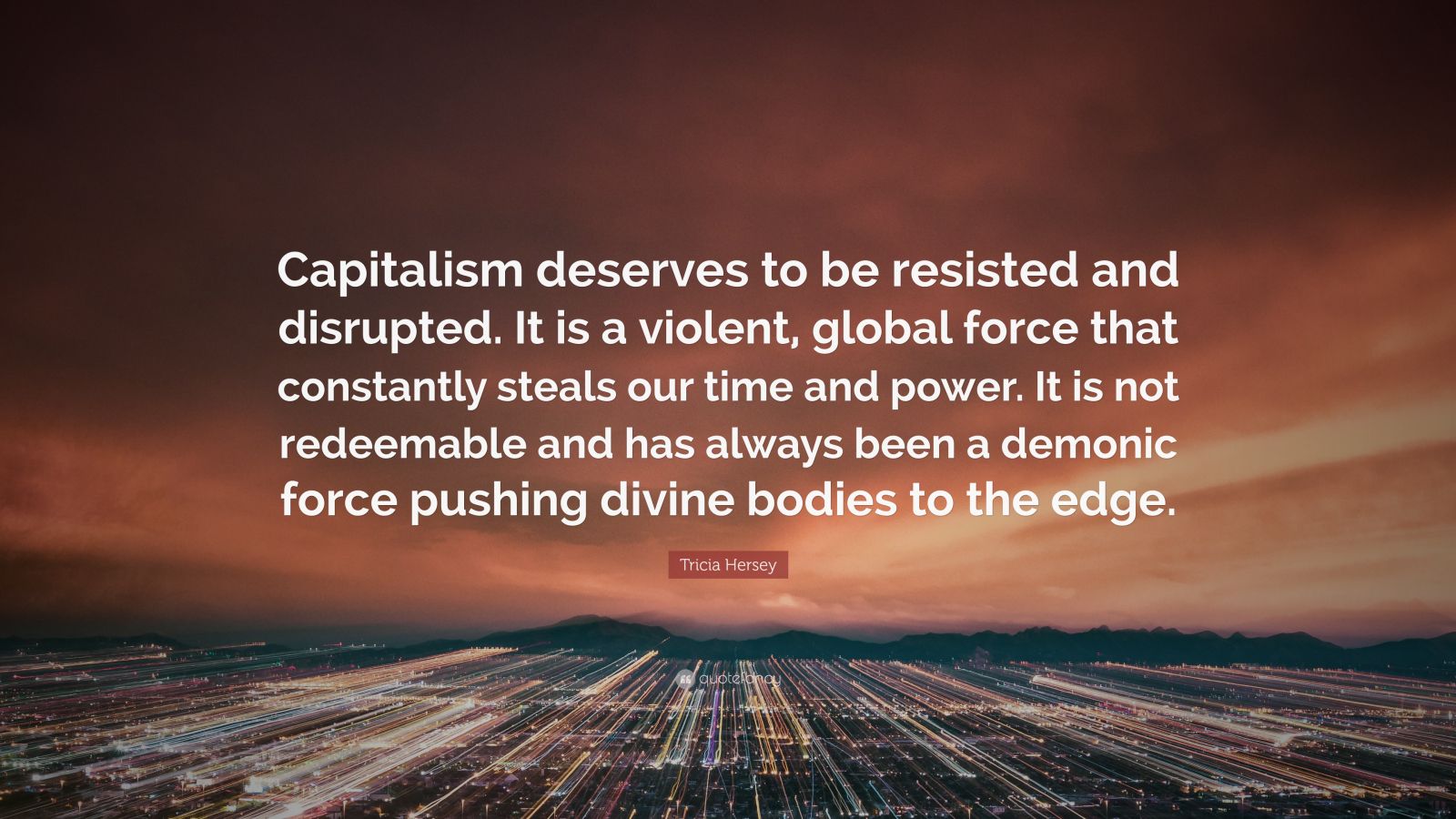
In an era dominated by the towering structures of capitalism, the notion of resistance carries a profound and multifaceted significance. “Capitalism resisted” is not simply a rallying cry but a complex dialogue challenging the foundational premises of a system that has shaped economies, societies, and individual lives for centuries. It promises a seismic shift in perspective—an invitation to scrutinize not only the mechanisms behind capital accumulation but also the cultural and ethical dynamics embedded within. Understanding this resistance means delving beneath the surface of market transactions to uncover narratives of disruption, dissent, and reimagination.
The Genesis of Capitalism and the Roots of Resistance
Capitalism, emerging from the ferment of the Renaissance and crystallizing through the Industrial Revolution, has been a double-edged sword. It propelled unprecedented economic growth and innovation but also engendered systemic inequalities and social alienation. Resistance to capitalism is as old as the system itself, finding its earliest voice in the labor movements and philosophical critiques questioning the moral fabric of unfettered markets. These efforts to resist reflect a deep-seated discomfort with how capitalism commodifies not only goods and services but human labor and the environment.
However, resistance has never been monolithic. It encompasses a spectrum—from reformist endeavors seeking to humanize capitalism through regulations and social safety nets to radical ideologies advocating for its total dismantlement. The persistence of this resistance highlights capitalism’s inherent contradictions and the continuous negotiation between power and justice.
Disrupting Capitalism: Contemporary Movements and Philosophies
Modern capitalism faces disruptions from a plethora of unconventional sources. Grassroots movements, social entrepreneurs, and critical theorists all contribute to a vibrant tableau of resistance. These contemporary forces argue that resisting capitalism requires more than opposition; it demands innovative alternatives that reconfigure value and success.
Consider the rise of the sharing economy, cooperative enterprises, and sustainable business models that prioritize community well-being over profit maximization. These approaches challenge capitalistic norms by proposing economies grounded in reciprocity rather than exploitation. Additionally, philosophical frameworks such as degrowth and post-capitalism question the imperative of endless expansion and consumerism, pressing us to envision a world where human flourishing supersedes financial gain.
The Ethical Quandaries Fueling Capitalist Resistance
The ethical disquiet surrounding capitalism is profound and multifarious. The system’s tendency to concentrate wealth exacerbates disparities, thereby provoking moral introspection about fairness and justice. Resistance emerges not merely as economic critique but as a call for ethical accountability.
Capitalism’s reliance on relentless competition and accumulation inevitably raises questions about the limits of individualism. Does the drive for personal wealth undermine communal bonds? Are ecological catastrophes an acceptable price for capitalist growth? These inquiries ignite critical resistance built on the premise that capitalism’s triumphs cannot overshadow the ethical concessions made along the way.
The Psychological and Social Dimensions of Resisting Capitalism
The act of resistance transcends systemic critique, permeating the very fabric of individual and collective consciousness. Capitalism’s pervasive influence shapes desires, identities, and expectations, often engendering feelings of alienation and discontent. Resisting capitalism is thus also a psychological endeavor, aiming to disentangle the self from consumerist impulses and the commodification of social relations.
Communities resisting capitalism often cultivate alternative cultural practices that reaffirm values of solidarity, creativity, and ecological stewardship. These efforts disrupt capitalist narratives by fostering spaces where people prioritize connection over consumption. Through art, education, and communal rituals, resistance nurtures resilience against a system that commodifies every aspect of human experience.
Capitalism Resisted: The Promise of a Paradigmatic Shift
When capitalism is resisted, the horizon of possibility expands. This resistance promises a paradigmatic shift—not merely a political upheaval or economic reform but a transformation of worldview. It compels us to reevaluate what we value as a society and how we measure progress.
By disrupting entrenched capitalist mechanisms, resistance unlocks space for imagining economies embedded in equity, sustainability, and genuine well-being. This shift invites provocative questions: What if prosperity was decoupled from consumption? What if labor was redefined beyond transactional terms? What new social contracts could emerge when the imperative to accumulate capital is replaced by a commitment to shared abundance?
Challenges and Contradictions in Resisting Capitalism
Resistance to capitalism is laden with paradoxes. Capitalism’s adaptability can absorb and neutralize criticism by commodifying dissent, transforming rebellious ideas into marketable goods or trendy ideologies. Moreover, navigating resistance often involves grappling with internal tensions between pragmatism and idealism.
Efforts to disrupt capitalism must confront entrenched interests, institutional inertia, and the pervasive cultural indoctrination that normalizes capitalist logic. These factors complicate the pathway to change and necessitate sustained strategic thinking combined with visionary imagination. Resistance is not simply a reactive posture but a proactive project of creative disruption.
Envisioning Futures Beyond Capitalist Domination
The ultimate promise of resisting capitalism lies in the potential to reimagine and reconstruct social, economic, and ecological frameworks. Emerging dialogues about post-capitalism are rich with concepts such as universal basic income, commons-based economies, and regenerative practices that prioritize planetary health.
These future-oriented discourses challenge the inevitability of capitalism as the sole economic paradigm. Instead, they posit pluralistic possibilities grounded in decentralization, participatory democracy, and interdependence. The resistance becomes a liberatory pathway—inviting us to envision societies where wealth is a means, not an end, and where human dignity aligns with ecological equilibrium.
In resisting capitalism, a new lexicon of hope and agency is cultivated—one that seeks not merely to oppose, but to transform. It is a call to awaken curiosity about alternative ways of living and organizing, awakening the imagination to conceive of worlds unbound by capital’s relentless logic.

