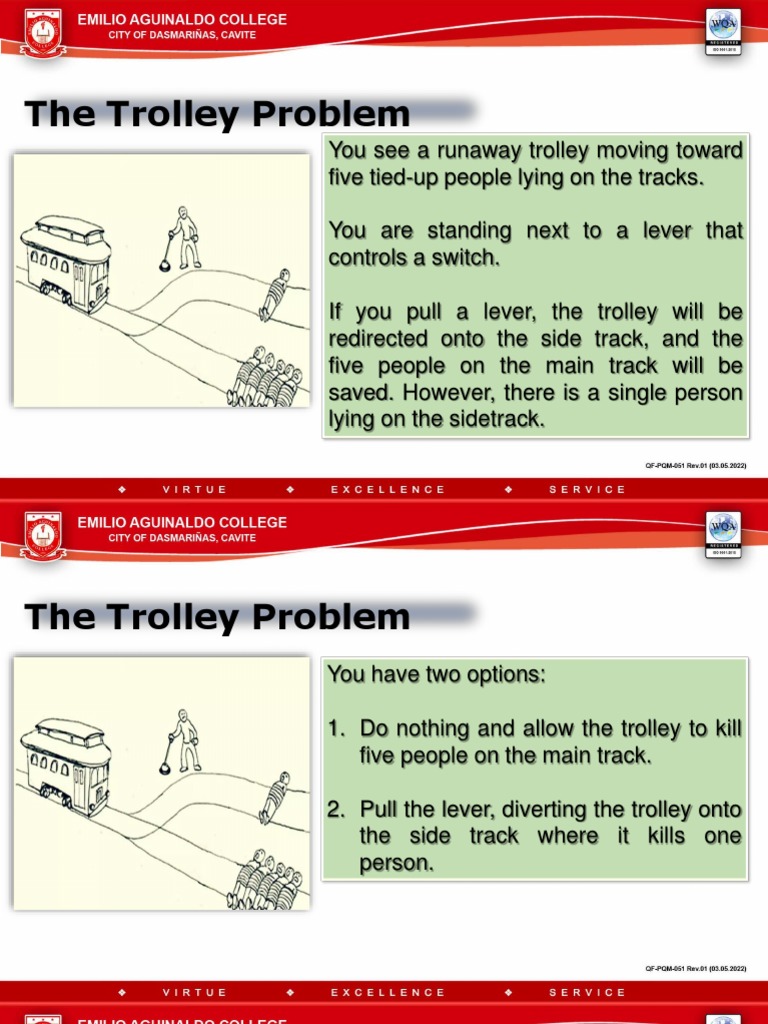
In the realm of ethics, the Trolley Problem presents a stark, hypothetical challenge: sacrificing one life to save five by action versus allowing a greater loss through inaction, pitting consequentialist utilitarianism against deontological principles. Capitalism, as a dominant socio-economic system, often faces analogous dilemmas, albeit filtered through the lens of market dynamics, resource allocation, and profit maximization. What constitutes Capitalism’s answer to this profound ethical quandary? This exploration suggests Capitalism largely operationalizes a specific approach, balancing self-interest with social equilibrium, framing the dilemma as a complex, ongoing negotiation rather than a one-off, life-or-death calculation.
The Implicit Metaphor: Efficiency and Allocation
On the surface, the direct equivalence between saving lives and saving capital might seem weak. However, the underlying structure resonates. Capitalism mandates a perpetual calculation, albeit different in stakes, focused on optimizing scarce resources. In this light, Capitalism’s “problem” isn’t about choosing between humans outright, but navigating a complex calculus focused on maximizing value, minimizing disruption, and ensuring systemic functionality. The “trolley” represents the forces of competition, supply and demand, and market fluctuations, hurtling down tracks towards outcomes. Capitalism’s “engineers,” or market actors, must decide how to “redirect” this force, allocate assets, and prioritize investments. Utilitarianism finds a parallel in shareholder value maximization – acting to increase overall wealth or market share, even by marginalizing certain needs or costs. Deontology echoes through the principle of acting according to rules that maintain market integrity, contractual obligations, or established property rights, which, even if inconvenient, must be adhered to.
The Classic Corporate Trolley Scenario: Cost-Benefit Analysis
A quintessential corporate embodiment of this dilemma emerges when a company must weigh the cost of safety improvements against short-term profit retention or competitive advantage. A factory owner might calculate the financial impact of upgraded safety equipment versus the potential cost of a lawsuit (“the death of workers”) or reputational damage stemming from minor accidents. This mirrors the classic Trolley Problem, but the actors are the corporation (as the trolley) and shareholders/cost-cutters (pulling the lever). Here, ethical considerations (‘utilitarianism’ meaning protecting workers’ lives or ‘deontology’ regarding worker rights) become embedded in economic equations. What weight is assigned to “one life” versus the “cost of five”? Can suffering caused by inaction (“allowing the workers to die from preventable causes”) be compared quantitatively to immediate profit gains? Capitalism frames these issues as business decisions subject to market pressures, stakeholder expectations, and legal frameworks – a complex system replacing simple cost-benefit analysis with nuanced arguments and trade-offs. Legal precedents often define the boundaries, implicitly answering these questions based on established norms and precedents.
Market Self-Defense Mechanism: Competition and Incentives
Capitalism offers a different mechanism for resolving ethical predicaments: competition and the power of incentives, perceived or real. If one firm fails to meet the “moral minimum” (e.g., by endangering labor) and operates in a competitive market, consumers or investors (“pulling the ethical lever”) might boycott it, divest, or sue, forcing a course correction. This represents a form of market feedback, analogous to public disapproval in the original scenario. Think of unethical practices being curtailed not by external mandates but by the potential for market exclusion or reputational ruin. This self-regulating aspect complicates direct application of the Trolley Problem. The potential negative consequences of deviating from ethical behavior (failure to save lives) aren’t static; they fluctuate with market share, competition, technological change, and societal shifting sands. A decision framed as purely utilitarian or deontological within an existing system can only be evaluated retroactively, often in light of these volatile market forces, rather than through a clear, external standard.
Limits and Anomalous Results: Cracks in the Capitalist Calculation
Despite its market dynamics, Capitalism doesn’t perfectly translate the Trolley Problem. Externalities – costs or harms not internalized by the decision-makers – often force outcomes that challenge purely economic reasoning. Climate change exemplifies this; polluting (allowing an environmental “death”) yields short-term profits, yet the long-term, aggregated harm (“saving the planet,” a global utilitarian calculation) demands collective action beyond market self-correction. Income inequality further highlights the limitation; the cost of ensuring basic human needs (life) for the many is weighed against retaining wealth (“saving”) for a few. These are complex, systemic issues defying simple lever-pulling calculations. Additionally, legal and moral imperatives, while embedded, aren’t always consistent. Actions legal within a capitalist framework (gaining a competitive edge) may clash with deontological principles (fair competition), or vice-versa. The market’s short-term orientation often prioritizes immediate gains over long-term utilitarian outcomes (or basic human rights), introducing time as an additional variable. The assumption that the Trolley Problem can be cleanly solved by cost-benefit analysis falters here.
The Resolution: Adapting to Complexity
Capitalism’s practical approach to ethical dilemmas appears less like the binary trolley solution and more like intricate, ongoing adjustments within a complex system. It doesn’t resolve the underlying ethical tension between action and inaction as cleanly as the philosophical problem does; instead, it manages the competing demands through constantly re-evaluated trade-offs, legal and cultural enforcement, and the shifting incentives of competition. The system doesn’t offer a single, flawless mechanism; it presents a dynamic interplay of self-interest and constraint, constantly recalibrating its moral calculus amidst volatile market conditions and evolving societal expectations. The answer isn’t found in pulling a single lever, but in navigating the perpetually changing terrain of supply, demand, regulation, competition, and, perhaps, a growing awareness that maximizing value for some might paradoxically necessitate preserving value for all in the long run. It is a system that frames dilemmas as ongoing challenges, responding through feedback loops and adaptation, rather than providing clear-cut solutions detached from human consequence entirely.


