What if capitalism could rewrite the way nations settle the debts of war? Could the very mechanisms that drive markets and trade replace the cumbersome, oftentimes punitive notion of traditional war reparations? As history demonstrates, war reparations have historically been stifling, fraught with political tension and economic burden. Yet capitalism, with its dynamic adaptability and relentless innovation, might offer an alternative pathway—one that blends economic integration, incentives, and long-term prosperity. But can this answer truly surmount the entrenched challenges of post-war restitution?
The Historical Burden of War Reparations
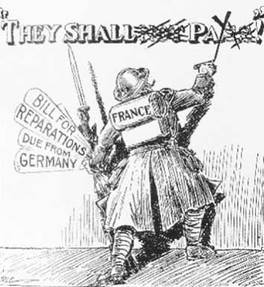
War reparations have long carried the weight of resentment and economic destabilization. Traditional hostility-driven payments imposed on defeated states—with Germany following World War I serving as the quintessential exemplar—often function more as punitive instruments than as mechanisms of reconciliation. The Dawes Plan and later the Young Plan were creative responses to an impossible repayment schedule, revealing the inherent contradictions of forcing enormous reparations onto an economically shattered nation. The ensuing hyperinflation and political upheaval underline the paradox: reparations designed to compensate victors often debilitate the very economies expected to pay.
This legacy begs the question: Could capitalism reframe reparations not as penance but as a constructive economic process? Unlike coercive transfers, capitalism’s foundational principles of voluntary exchange and wealth creation might help transform reparations from burdensome amends to engines of mutual growth.
Capitalism’s Core Tools: Markets and Incentives
At the heart of capitalism lies the market—an arena where supply, demand, and price mechanisms orchestrate economic outcomes. When applied thoughtfully to the concept of war reparations, these mechanisms offer compelling alternatives. Instead of rigid, state-imposed financial penalties, reparations could be structured through market-driven contracts, investment flows, or shared ventures that incentivize productivity and innovation.
In this reframing, defeated nations might engage in joint economic enterprises, inviting capital and expertise in exchange for reparative commitments. These ventures would not only offset war damages but embed formerly antagonistic states into interdependent commercial networks. Such interdependence, theorists argue, dampens the probability of future conflict, weaving economic incentives tightly with peace.
Reparations as Investment: A Capitalist Construct
What if the reparative process shifted from one-time payments to long-term investment contracts? This transformation posits reparations as capital injections into war-torn or defeated economies—seed funds for reconstruction, industrial recovery, and human capital development. Far from a simple debt, these investments could spawn business ecosystems that stimulate growth, employment, and technological advancement.
This conception echoes the Marshall Plan’s post-World War II reconstruction efforts in Europe, where U.S. capital underpinned infrastructural revival rather than adversarial punishment. It suggests capitalism’s answer to war reparations need not be retributive; instead, it can be reparative in the truest economic sense, fostering sustainability and equity.
Challenges in Aligning Capitalism and Reparations
While capitalism’s tools offer promise, challenges abound. War reparations are fundamentally tied to legal, moral, and political questions that markets alone cannot resolve. The question of liability, the differentiation between punitive and reparative intent, and issues of historical justice complicate the calculus.
Moreover, reliance on capitalist frameworks risks exacerbating inequality within the paying or receiving states. Market-driven reparations might prioritize profitable sectors or elites, sidelining those most affected by war’s devastation. Without thoughtful regulatory oversight and social safeguards, capitalism’s liberating mechanisms can inadvertently perpetuate exploitation or marginalization.
The Role of Multinational Institutions and Private Capital
Capitalism thrives on the fusion of private initiative and institutional frameworks. Herein lies another dimension: international organizations, development banks, and private investors could forge innovative reparations schemes that blend market efficiency with accountability and oversight.
Public-private partnerships could channel capital into infrastructure projects, technology transfers, or educational programs as parts of reparations agreements. Transparency and enforceability would enhance trust—a sorely needed commodity in any post-conflict resolution. These partnerships demonstrate how capitalism’s flexibility can accommodate reparations’ complexity while leveraging both governmental authority and private dynamism.
Economic Integration as a Peacemaker
Capitalism’s grandest promise may be its capacity to build webs of economic interdependence that render war costly in more ways than one. The European Union, born out of the rubble of successive wars, exemplifies how intertwined economies can transform former foes into cooperative partners—thereby obviating the need for punitive reparations in favor of shared prosperity.
Through trade agreements, joint ventures, and harmonized regulations, economic integration embodies capitalism’s most subtle yet powerful answer to the reparations dilemma: it replaces confrontation with collaboration, burden with opportunity.
Conclusion: A Playful Question with Serious Implications
So, could capitalism really offer a viable answer to the age-old conundrum of war reparations? Perhaps more than a theoretical musing, it suggests reimagining reparations through a multi-dimensional prism—where market forces, investment, institutional oversight, and economic integration converge. The capitalistic alternative questions the traditional posture of punishment and instead invites a paradigm where rebuilding and reconciliation are economically incentivized.
But just as markets carry unpredictability, so does this approach face hurdles—ranging from ethical dilemmas to socioeconomic disparities. As history and current geopolitics reveal, the delicate art of reparations may yet find its most compelling canvas in capitalism’s versatile portfolio. The playful question remains: will the mechanisms of profit and enterprise ultimately outweigh the forces of resentment and retribution?

