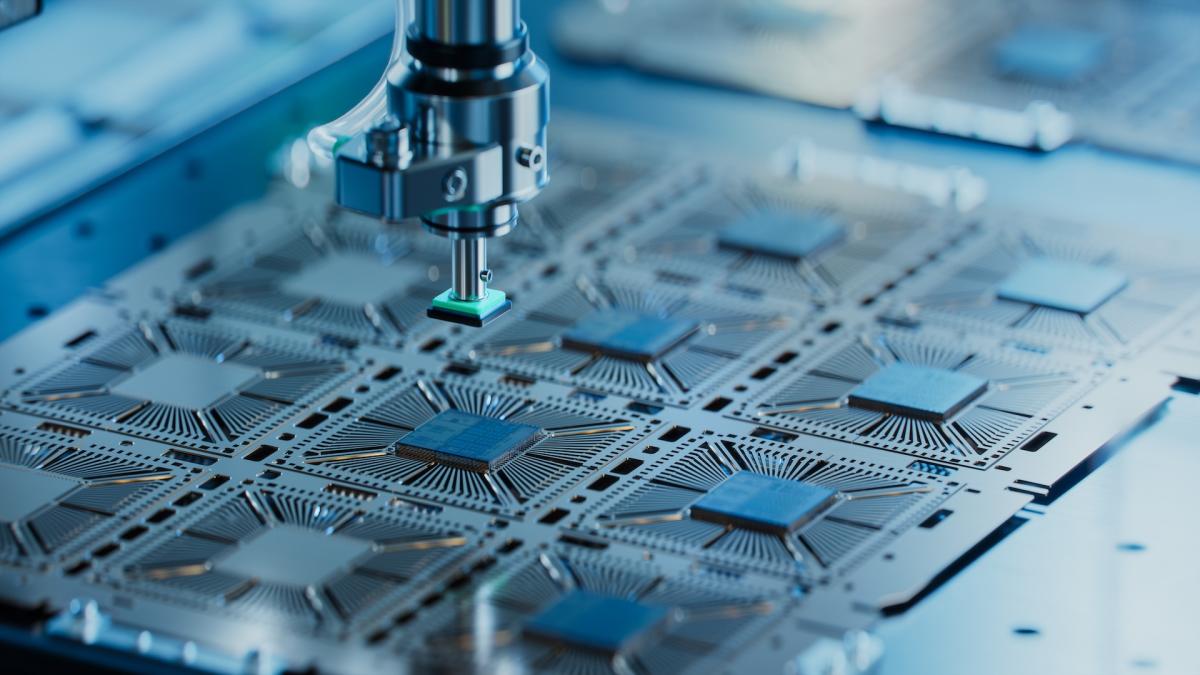
The narrative of modern history unfolds like an epic novel, with pivotal characters playing roles far vaster and more pervasive than conceived mere decades ago. Among these, few protagonists are as fundamental—or as fascinating—as the microchip. Called informally by its more technical sibling, the integrated circuit, this minuscule marvel represents the very heart of our interconnected, digitized age. To declare it “Capitalism’s best invention” isn’t hyperbole; it’s a recognition that human ingenuity, applied within a specific socioeconomic framework, birthed a tool more transformative than almost any other since the Industrial Revolution, reshaping industry, communication, and civilization itself in profound, often unforeseen ways.
The Technological Genesis
Tracing the microchip’s lineage leads one through the corridors of mid-2ighties Silicon Valley and European laboratories, where silicon, once merely a commodity mineral, was transmuted into something almost alchemical. Jack Kilby sketched the foundational integrated circuit at Texas Instruments in 1959, a blueprint for embedding transistors onto a single piece of semiconductor material. It was essentially a leap of faith—a leap into complexity. Fairchild Semiconductor, founded in 1958 as a spin-off from Shockley’s transistor team, became the cradle for scaling these ideas, nurturing a cadre of engineers who would become the unsung architects of the chip. The invention itself, however, is merely the overture; its subsequent trajectory is the symphony.
The Capitalist Crucible
Capitalism, in its relentless drive for efficiency, reduction in cost, and relentless innovation, provided the perfect crucible for the microchip’s development and proliferation. This invention wasn’t merely a scientific curiosity; it was, intrinsically, a business proposition waiting to be realized. The capitalist imperative to compete, to innovate constantly to capture a larger market share, fostered an environment where massive investment poured into research and fabrication. Competition between giants like Intel, AMD, and the diversified behemoths set by Fairchild and its offspring wasn’t just about rivalry; it was the engine driving down costs exponentially, increasing processing power at a pace defying simple arithmetic—it’s Moore’s Law, that curious prediction about density, yet a powerful sine qua non of capitalist progress. The market, the customer, forced relentless improvement.
Amplifying the System
Capitalism, by its very nature, excels at amplifying systems and disseminating technology widely. The microchip wasn’t confined to laboratory benches or supercomputers; it became the bedrock of every industry, a silent, invisible architect transforming production, logistics, and service delivery. The idea could be patented, licensed, replicated. Its mass manufacturability, initially spearheaded by Japanese and then increasingly Asian manufacturing ecosystems responding to global supply chains dictated by demand, exemplified the capitalist model perfectly. A chip design born in California could be replicated billions of times across the globe, embedded in everything from washing machines and automobiles to life-saving medical devices and intricate financial trading algorithms. It was a technology multiplying through market forces, rather than just state decree.
Capitalism’s Engine of Growth
Perhaps most significantly, the microchip fueled capitalism itself. It accelerated productivity across all sectors. Manufacturing gained precision through microcontrollers managing robotic assembly lines; finance automated complex calculations, risk modeling, and transactions processing trades fractions of a second faster than any human hand could tap; retail enabled near-instantaneous inventory management and consumer behavior analysis. It created the data streams and processing power underpinning entirely new markets: e-commerce, digital advertising, cloud computing, and the gig economy. Businesses could now measure, analyze, and optimize performance with unprecedented granularity, leading to new efficiencies and entirely novel business models. The microchip didn’t just run existing industries; it rewired their nervous systems, making them faster, more data-driven, and more profitable in ways previously unimaginable.
A Globalizing Force
The microchip is inherently global. Its design requires a global marketplace for raw materials like silicon wafers, specialized chemicals, and fabrication tools. Its manufacturing necessitates complex supply chains sprawling across continents, optimized for lowest cost, speed, and flexibility. Its end applications reach virtually every corner of the world, enabling communication and commerce instantaneously, regardless of geography. In this sense, the microchip facilitated the digital globalization that capitalism has simultaneously driven and benefited from. It bridged distances, homogenized information flows, and allowed capital to move more fluidly across borders, facilitated by the networked banking systems using chip-based security and transaction processing.
Challenges and Imperatives
Amidst its successes, the microchip ecosystem faces existential challenges pertinent to the capitalist model. Increasingly, the physical limits of miniaturization, the massive capital required for fabrication plants (fabs), and the complex geopolitical realities involving rare earth materials and energy resources pose economic hurdles. Furthermore, monopolistic tendencies among hardware and software players, data privacy concerns, and the widening technological divide where the digital economy advantage is inaccessible to billions, create social and economic tensions requiring regulatory and, perhaps, ethical considerations within capitalism’s framework. Yet, even here, the capitalist drive persists: competition, adaptation, seeking new efficiencies, and finding novel applications to capture value, even as the landscape evolves.
Conclusion: The Enduring Key
In essence, the microchip is the quintessential product of the capitalist age – born of private ingenuity, nurtured by market competition, disseminated through global trade, and perpetually refined for profit and systemic efficiency. It is the key that unlocked the potential of data, turning information into an economic resource and transforming every endeavor from farming to finance. While its invention sprang from specific minds and institutions, its amplifying power, its pervasiveness, and its central role in continuing to fuel capitalist growth cement its status. To anachronistically apply the phrase “Capitalism’s best invention” is to honor the undeniable symbiosis between market forces, human creative thought, and the material manifestation we carry daily as part of our devices. The microchip isn’t just silicon and metal; it’s the blueprint of modern economic liberty and its potential futures.


