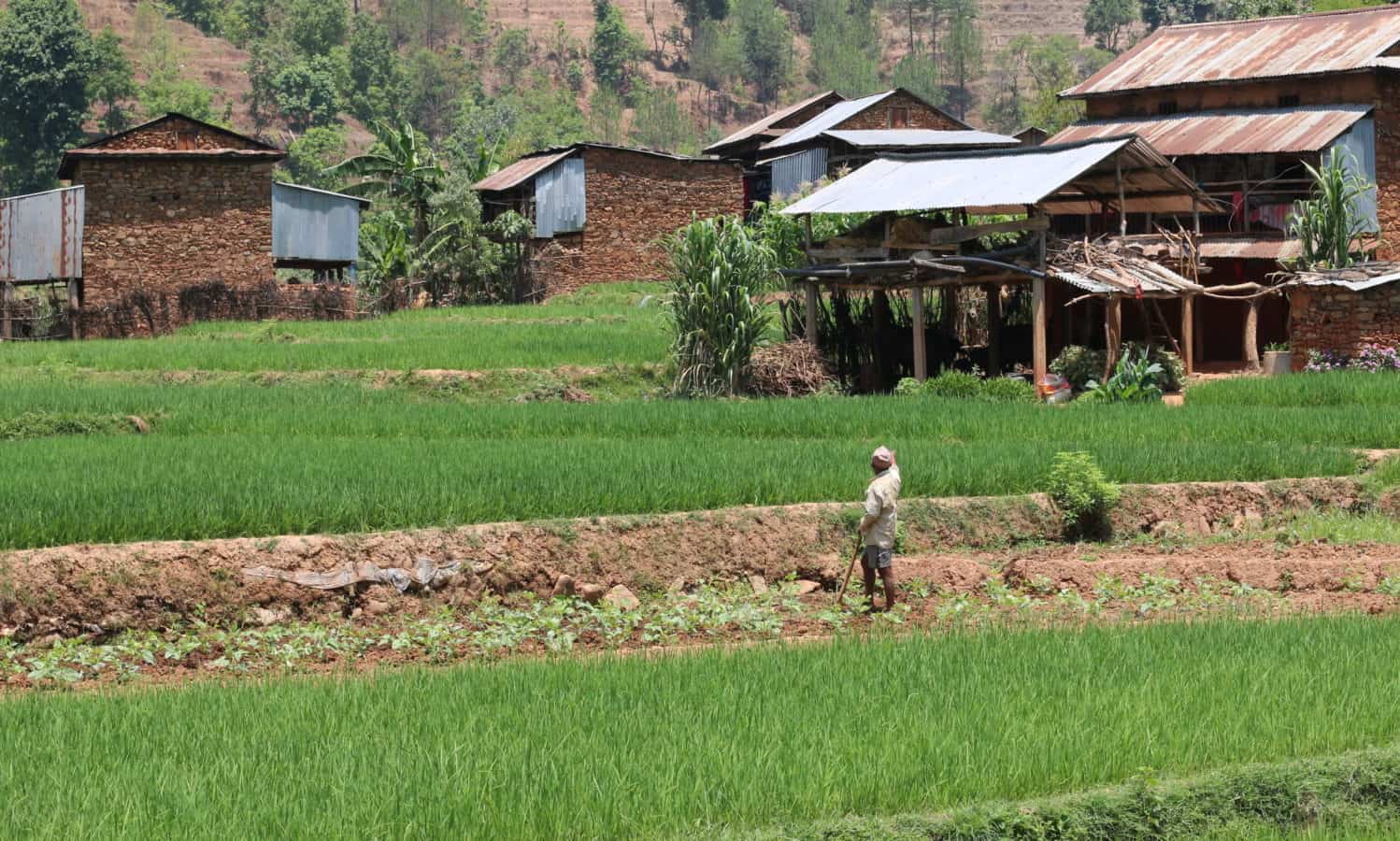
Capitalism, the vast and ever-shifting ocean of modern economies, carries immense potential and, paradoxically, immense pressure. Its relentless currents, driven by the pursuit of profit, efficiency, and scale, have reshaped industries beyond recognition, transforming bustling metropolises and sprawling factories. Yet, amidst this tide of change, the resilient haven of the family farm exists. It is a testament to a different logic, a commitment to stewardship often rooted in generations interwoven with the land. Here lies the crux of capitalism’s effect on family farms: not merely as passive participants, but as entities navigating a system fundamentally predicated on a different set of imperatives. Examining this interaction reveals a complex dance between enduring virtues and formidable economic pressures.
The Tsunami of Consolidation: Capitalism’s Drive for Scale
The most visibly transformative force of capitalism on family farms has been the relentless drive towards consolidation and scale. This principle – that larger entities can achieve greater efficiency and profitability – often manifests in devastating ways for the smaller operator. In sectors like livestock, grains, or fresh produce, agribusiness giants emerge, acquiring land, processing power, and distribution networks, often making it economically unsustainable for family units competing under the same global pricing structures.
Think of it as a powerful undertow. Capitalism’s undertow pulls resources – capital, land, consumer dollars – ever deeper into the abyss of industrial behemoths. While this pursuit can fuel innovation and infrastructure, its primary current often leaves the intricate ecosystem of the family farm struggling. Smallholders grapple not just for survival, but for relevance, caught between economies of scale dictated by distant shareholders and the localized realities of soil, season, and community.
This pressure manifests in various forms, from direct acquisition by large processors threatening to corner the market, to complex financial instruments tying farm viability directly to volatile commodity prices traded on global exchanges. The family farm, once a localized decision-maker, becomes just another node in a vast, impersonal network, vulnerable to swings in the market’s tide.
The Elusive Anchor: Market Realities and the Price Paradox
The defining characteristic of a family farm, its very anchor – a deep relationship with the land and often a long-term, almost familial commitment to the produce – can ironically become its most vulnerable point under capitalism’s relentless market logic. The farmer cultivates with care, sometimes anticipating future value or connecting intimately with unique terroirs, but must sell within a system fundamentally governed by current supply and demand.
This disparity between cost of production and market price is the existential challenge. The farmer invests labor, knowledge, and capital, nurturing growth through time, only to face prices determined by impersonal forces – global harvests, speculative trading, energy costs, even international conflict. This asymmetry is the core tension between the intrinsic value embedded in the farming process, often nurtured by family legacy, and the purely transactional capitalism demands.
Further, finding a stable local market can be another struggle. The capitalist system, optimized for logistics and distribution networks favouring big producers, often makes the direct connection from farm to local table inefficient, economically challenging, or logistically remote for multi-acre operations. This creates an additional barrier, pushing families towards commodity markets where competition is fierce and prices are further compressed.
The Unyielding Rhythm: Capitalism, Cycles, and Fiscal Seas
Capitalism operates through predictable yet harsh cycles: expansions and contractions, booms and busts. These market dynamics ripple through agriculture profoundly. During bullish periods, prices can favour the existing order, but just as inevitably, cyclical downturns expose the vulnerabilities of small-scale farmers. Credit markets, often the lifeline for seasonal financing, tighten during economic distress, exacerbating the farm’s inherent seasonal cash flow challenge.
The farm itself, tied intrinsically to the seasonal rhythm of growth, harvest, and rest, is caught in capitalism’s economic tides. Success may depend on favorable weather and market conditions, but failure can be swift and absolute. Government aid, while sometimes a necessary buoy, can be inconsistent, politically contentious, and insufficient to counter the volatile waves of a capital-driven system. The inherent volatility, a feature of capitalism itself, is thrust directly onto the precarious shoulders of the family farmer.
The Web of Labor: People, Pay, and Productivity Quest
The relationship between the farmer-family and their labor presents a unique conundrum under capitalism. Ideally, it’s a source of pride, fostering skills and deeply understanding traditions. However, the pressure to remain competitive inevitably impacts farmer livelihoods. Does the pursuit of capital necessitate the transition from family stewardship towards strictly agribusiness employment, further fragmenting the knowledge and connection held within the family unit?
This tension raises deeper questions about the value system implicit in capitalism’s operation. Is the optimal path defined purely in terms of economic productivity – measured in bushels per acre or dollars per employee? Family farms, often operating on principles of sustainability that are not necessarily the most immediately profitable, face the constant, subtle, or overt message that less efficient, more capital-intensive production is the required norm. This can marginalize a model that values longevity, stewardship, and often, human connection, favouring its efficiency under capitalism’s harsh spotlight.
The Silent Undercurrent: Environmental and Community Tides
While capitalism is often linked with progress, it also has an inherent tendency towards externalizing costs. Pollution control, environmental conservation, water rights, biodiversity – these issues often fall as liabilities within a pure market framework. Family farms, however, often stand in direct, daily opposition to many of these negative externalities. They are, implicitly, advocates for soil health and local ecosystems.
This creates a complex relationship. Capitalism can reward the family farm precisely for avoiding these destructive practices, simply through continued operation, creating a form of value that even capitalism, with its efficient market logic, implicitly recognizes. Yet, the pressure to compete, to feed a cheap diet, can also conflict with these intrinsic values. How can a system demanding ever lower costs or ever higher yields sustain the inherent respect for natural resources that often defines family farming? These environmental and sometimes community values become part of the unquantifiable variable that makes the farm a persistent outlier in a purely capitalist economy.
The Policy Currents: Favoring the Leviathans
Government policy, operating within the framework of a capitalist system, often reflects its priorities. Subsidies pour disproportionately towards certain commodities, favouring large agribusinesses or monoculture systems, diverting both financial resources and the attention of lawmakers away from diverse, often smaller, farming initiatives. Trade policies, designed to maximize national capital advantage, can devastate family farms located in vulnerable regions exposed to cheap imports, sometimes unfairly subsidized by richer nations or global corporations.
This legislative undertow makes the regulatory landscape precarious. Navigating agricultural policy often favours the well-connected, large-scale operator. The rules of the game, often established without sufficient representation for the sustainable, diversified, and often family-run operation, can become overwhelming, punitive, or simply impractical for the smaller farmer. Access to the benefits and protection offered through state apparatus remains structurally challenging.
Yet Enduring: The Unflinching Appeal of the Family Unit
Despite these overwhelming currents – the undertow of consolidation, the harsh reality of price swings, the harsh rhythm of cycles, the internal tensions of labor, the submerged cost of the environment, and the potentially biased policy tide – the family farm has shown an unexpected capacity for endurance. There remains, intrinsically linked to the human spirit of nurturing and connection, a powerful appeal that capitalism cannot easily erase.
It is not merely about survival; many continue to farm because they embody something distinct from the relentless logic of the market – a commitment to stewardship, a direct connection to their community, and a deep relationship with the land, often expressed through organic practices or niche markets demanding transparency. They operate a dual ledger: one balancing market economics, the other measuring resilience, sustainability, and place-based value.
This unique appeal – the fusion of practical expertise, deep ecological memory, genuine connection, and an unwavering commitment that often transcends immediate profit – allows a resilient minority to continue navigating these treacherous waters. The family farm becomes a point of tension, forcing us to confront the limitations of a system designed for maximum extraction versus the potential of a different kind of economy – one embedded in community well-being and environmental longevity. The dance between capitalism’s demands and the family farm’s spirit is ongoing, shaping agriculture and our relationship with it, for better or for worse.


