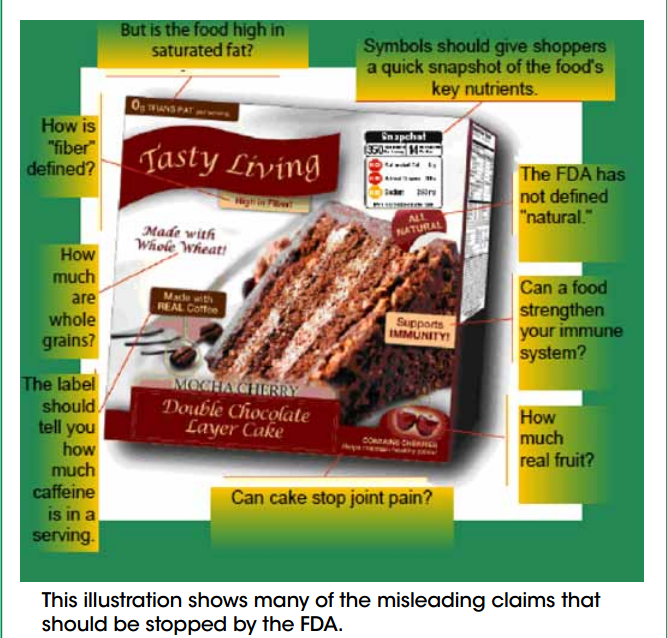
In the contemporary marketplace, food labels have become ubiquitous communicators, promising transparency and guiding consumer choices. Yet, beneath the surface of colorful packaging and alluring claims lies a complex interaction influenced heavily by capitalism. This economic system propels innovation and competition but also cultivates environments where truth in food labeling becomes a contested domain. The fascination with labels—organic, natural, non-GMO—reflects not only consumer desire for authenticity but also the intricate mechanisms by which capitalist imperatives shape information presented on food packaging.
The Illusion of Transparency in a Capitalist Marketplace
At first glance, food labels appear to offer clear and concise details about a product’s contents and origins. However, within capitalism’s framework, transparency is often more an illusion than a reality. Companies are driven to differentiate their products amidst fierce competition, often employing selective disclosure that emphasizes appealing attributes while obscuring less flattering information. This creates an environment ripe for ambiguity where truth is malleable and constructed to serve market goals.
Labels such as “natural” or “light” may evoke healthfulness or wholesomeness, yet these terms frequently lack rigid regulatory definitions, rendering them fluid marketing tools rather than guarantees of quality or safety. In this way, capitalist incentives encourage a semiotic battlefield where meanings are negotiated and contested, blurring boundaries between fact and fiction. Consumers become enchanted by these surface-level promises, investing trust in symbolism that may reflect more about market strategies than nutritional reality.
Capitalism’s Role in Defining Labeling Standards
Regulatory frameworks exist to govern food labeling, ostensibly ensuring accuracy and protecting consumers. Yet, capitalism’s influence extends into the very heart of these structures. Powerful industry stakeholders often lobby for lenient standards that favor their commercial interests. This asymmetric power dynamic results in regulations that are at times deliberately vague or insufficiently enforced, allowing companies to exploit loopholes.
In this context, labeling standards do not merely communicate objective facts; they become battlegrounds for corporate influence and regulatory compromise. The convergence of economic power and policy-making engenders a fluid landscape where definitions of “organic,” “free-range,” or “pesticide-free” vary widely. Such variability fuels consumer confusion and skepticism, perpetuating a cycle where trust must be continuously negotiated rather than assumed.
Psychological Fascination: The Consumer’s Quest for Authenticity
Consumers’ deep-seated fascination with food labels reflects an intrinsic quest for authenticity and control in an increasingly complex food system. Capitalism amplifies this search by offering a plethora of choices, each adorned with distinctive labels that promise to satisfy specific values and identities. In navigating this labyrinth of options, consumers employ labels as heuristic devices—quick shortcuts to infer healthfulness, ethicality, or quality.
This reliance imbues labels with near-symbolic power, facilitating emotional connections to products that transcend their material composition. As capitalism accelerates product innovation and market segmentation, labels evolve into cultural artifacts that shape consumer identity and social belonging. The allure of truth in labeling thus reveals deeper psychosocial dynamics where economic imperatives meet human desire for clarity amidst uncertainty.
Marketing Innovation and the Exploitation of Ambiguity
Capitalism drives continuous marketing innovation, and within food labeling, ambiguity becomes a strategic asset. Companies meticulously craft wording and visuals that evoke positive associations without committing to rigorous scientific verification. Such practices exploit linguistic and regulatory vagueness to maximize appeal while minimizing accountability.
For example, “gluten-free” labels have burgeoned even on products unlikely to contain gluten, appealing to health-conscious consumers despite debates about actual necessity. Similarly, “non-GMO” labels capitalize on fears surrounding genetically modified organisms, often overshadowing substantive nutritional considerations. Through subtle semiotic techniques—color palettes, typography, and phrasing—brands manipulate consumer perception, generating desirability rooted in impression rather than empirical evidence.
Economic Pressures and the Dilution of Informational Integrity
The imperative for profitability exerts a persistent pressure to prioritize marketability over informational integrity. In striving to capture consumer attention and higher price points, companies may resort to exaggeration or omission, thus diluting the truthfulness of labels. This economic calculus is reinforced by competitive dynamics that reward innovation in packaging and messaging as much as product quality.
Moreover, as global supply chains expand and complexity intensifies, maintaining stringent verification of production practices becomes logistically and financially challenging. This environment provides fertile ground for inconsistencies and misrepresentations to arise, often unnoticed by regulators and consumers alike. Consequently, capitalism’s relentless pursuit of growth and differentiation can undermine the informational clarity that food labels ostensibly aim to provide.
The Paradox of Consumer Empowerment and Deception
Food labels ostensibly empower consumers by offering information that enables informed choices. However, capitalism engenders a paradox wherein this empowerment coexists with pervasive deception. The multiplicity of claims, certifications, and claims generates a cognitive overload that can obfuscate rather than elucidate. Consumers may find themselves misled by labeling that prioritizes persuasive allure over substantive truth.
This paradox highlights the tension between market-driven innovation and ethical transparency. While labels are intended to confer agency, they simultaneously serve as vectors for corporate narratives that may distort or simplify complex realities. Thus, the very tools designed to enhance consumer sovereignty may, under capitalism’s influence, become instruments of subtle manipulation and obfuscation.
Pathways Toward Greater Truthfulness in Food Labeling
Addressing the distortions introduced by capitalism requires multifaceted approaches spanning regulation, corporate responsibility, and consumer activism. Strengthening regulatory clarity and enforcement can constrain the exploitation of ambiguous terms and ensure greater consistency across products. Corporate transparency initiatives, including third-party verifications and open supply chain disclosures, offer potential to rebuild trust.
Simultaneously, consumer education is vital to cultivating critical literacy around food labels. Empowered with analytical tools, consumers can better navigate marketing rhetoric and demand genuine accountability. Ultimately, mitigating capitalism’s distortive impact on food labeling demands concerted efforts that reconcile market dynamism with ethical imperatives for truth and clarity.
In unraveling how capitalism shapes the truthfulness of food labeling, a deeper understanding emerges of the interplay between economic systems and consumer perceptions. Food labels are not mere conveyors of fact; they are embedded artifacts of social, economic, and psychological processes. Recognizing this complexity encourages a more discerning engagement with what lies on the packaging—inviting us to look beyond the label and question the forces that craft its message.


