The murmurs started humbly, the murmur of markets, production, and the relentless advance of wealth creation. For centuries, capitalism, in its various manifestations, held sway, riding the powerful tide of economic expansion. Its ascendancy seemed almost inexorable, a global current into which countless lives were tossed or swam. Yet, now we stand at a precipice, peering into the abyss. Why? Not because the system itself is inherently immoral, but perhaps because its driving engine – growth – may be fundamentally unsustainable in the world as it is unfolding. This inquiry probes the heart of modern capitalism: Is its fixation on perpetual expansion still viable, or has it rendered the system itself a casualty of the very forces it seeks to command?
A Stream that Cannot Run Dry?
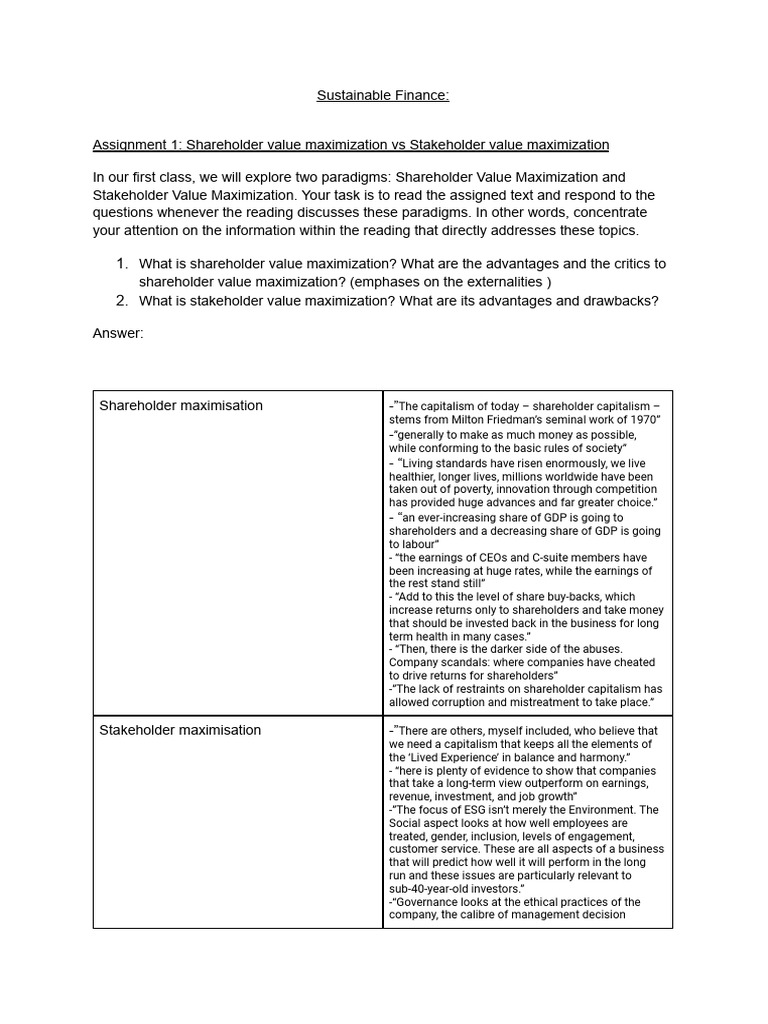
Navigate, then, the core conundrum: an economy predicated on a mathematical function – Y = A * F(K, L)¹ – requires continuous input for the variables and a corresponding increase in output to sustain itself in its current form. This isn’t mere preference; it is the systemic logic. Shareholder value is king, financial reports demand upward trajectories (unless met by deleveraging or reduced capital expenditure). Asset price inflation becomes the measure of success. This pursuit of numerical ascent, of endless accumulation, resembles a streambarrelling downhill; it seems unstoppable, yet its existence relies on flowing through increasingly narrow channels.
The flaw arrives at the ecological boundaries. Earth provides finite resources and operates within fixed climatic tolerances. The planet breathes, circulates blood, and limits growth in biological systems precisely because balance, not exponential increase, is paramount to survival. Capitalism, conversely, whispers of the ‘Limits to Growth’ debate², a prophetic shadow born decades ago, suggesting overshoot and collapse are inherent risks. This is where the metaphor truly clarifies: imagining the Earth itself as a bathtub, capitalism demanding water while ignoring the fixed size of the basin reveals a catastrophic miscalibration between human economic activity and finite ecological carrying capacity.
The Human Equation: Equity or Oblivion?
Yet, the pursuit is not solely material. Examine the social contract, the distribution of this generated wealth. Capitalism’s primary engine, the market, often marginalizes those outside its immediate sphere. Those whose labor, resources, or ecological services don’t fit neatly into a tradable currency value outside the system become effectively invisible or undervalued. A service provided freely benefits no one in the ledger – no market value is captured. Consider healthcare: the system demands wealth to access care. The person too poor for treatment might choose to sell labor to survive, adding wealth to the system, perhaps enabling even more expensive treatments later – a circular argument that leaves millions vulnerable. The ‘obligation’ to sustain this growth model often translates into immense hardship.
The internal mechanisms also present contradictions. Innovation brings value, rewarding effort and enterprise. However, the same relentless focus can undermine this value. Disruptive innovation, often lauded, can simultaneously destroy value and the existing base of wealth it was built upon. Think of the personal computer phasing out the typewriter industry, a paradigm shift driven by the very system celebrating it. Furthermore, the finance industry, tasked with intermediating wealth, increasingly engages in leveraging existing assets to generate paper profits. As leverage expands, the potential for a feedback loop spirals downward, as the value of collateral evaporates³. This is another dissonance, a system demanding ever more risk to continue existing ‘sustainably’. It suggests the sustainability question extends deeply into the internal architecture of the capitalis itself.
Beyond the Numbers: Searching for a Sustainable Spirit
The system’s self-awareness is limited. Capitalism thrives on predictability and calculable risk². The unknown, the truly disruptive, the long-term environmental consequences (unless monetized as an externality⁴), the complex social friction created by inequality – these elements are often ignored or actively distorted as ‘social cost’. It requires immense faith – perhaps misplaced – for a system based on measurable flows to ensure its own long-term viability in an immeasurably complex reality. Is perpetual motion truly possible within finite, dynamic systems?
Perhaps the critique isn’t about abolishing capitalism, but transforming it. Maybe a system adjusted to integrate concepts of circularity, valuing things beyond their price tags, and prioritizing resilience over sheer growth could be viable⁵. Or perhaps, it necessitates a fundamental shift: acknowledging that the pursuit is not endless, that value exists in spheres often outside purely capitalist logic: well-being, stewardship, social cohesion, long-term wisdom. Maybe the spirit of capitalism holds untapped potential for efficiency and ingenuity, but its direction needs recalibration away from infinite material expansion towards finite, genuine sustainability – an evolution that remains incomplete, an unfolding journey still in progress.

