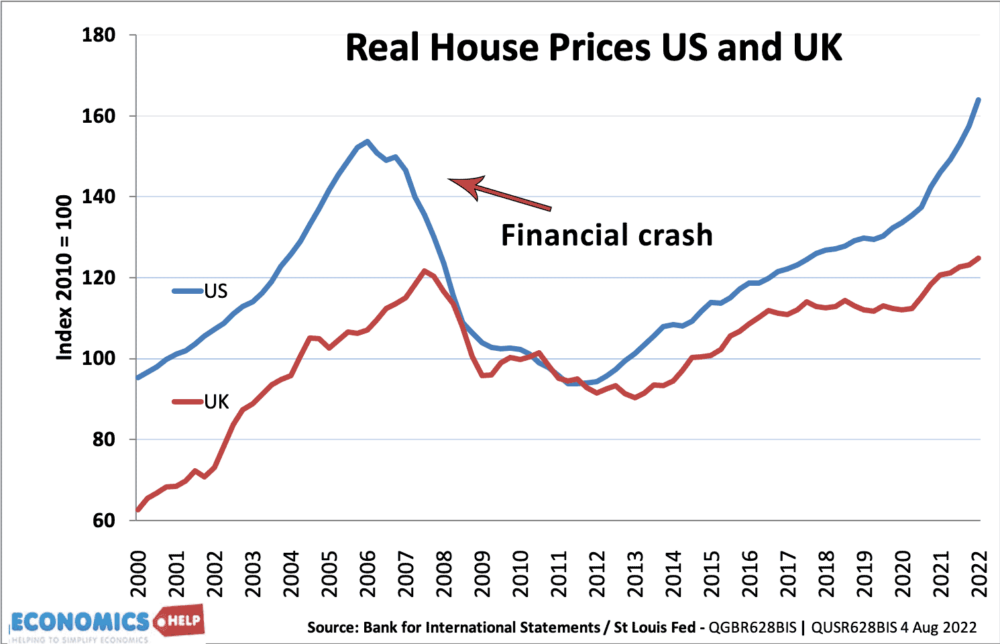
The 2008 financial crisis, a global phenomenon with tendrils reaching into every facet of modern economies, was fundamentally ignited by the bursting of a housing bubble, primarily in the United States. While multifaceted, the inherent logic and systemic pressures of capitalism played a pivotal, almost central role in creating the conditions for this devastating crash. Understanding the deep-seated connection between capitalistic imperatives and the housing market meltdown is crucial to grasping the magnitude of that fateful year.
The Engine of Profit: Speculation vs. Substantive Value
Capitalism, by its very nature, is driven by the relentless pursuit of profit and capital accumulation. While businesses often begin by providing tangible goods or services, the lure of speculative gains – multiplying capital rapidly – is a persistent feature of the system. In the years preceding 2 *008, this speculative impulse became dangerously amplified within the housing market.
Initially fueled by rising household formation, low interest rates set by the Federal Reserve, and increasing household debt capacity, a speculative bubble began to form. The narrative shifted from “housing for shelter” to “housing as an investment asset.” Real estate, perceived as a stable and appreciating asset, attracted capital not only from genuine investors in need of a home but increasingly from speculators seeking quick returns and from institutions leveraging their existing portfolios. This influx of capital, chasing a finite number of assets, inherently inflates prices beyond their fundamental value, severing the connection between mortgage debt and the collateral it secures. It becomes a Ponzi-like scheme, dependent on perpetual price appreciation and new investment to sustain the illusion.
The Mechanics of Exacerbation: Securitization and Leverage
Capitalism introduced complex financial instruments designed to channel capital efficiently, yet in the lead-up to 2008, they became vectors for destructive risk proliferation. The process of securitization – pooling various types of mortgages and repackaging them into tradable bonds (MBS - Mortgage-Backed Securities) – amplified the crisis. This transformed mortgages from direct banks-to-households relationships into abstract financial products traded globally among diverse investors.
Concurrently, leverage – borrowing money to amplify potential returns (or losses) – reigned supreme, particularly among financial institutions and mortgage brokers. Investment banks and other entities took on enormous debt to acquire mortgages, then layered more debt on top of these loans by issuing securities backed by them. This intricate layering created instruments so divorced from the actual loan performance that their true risk became opaque and highly magnified. When the housing market turned, these highly leveraged positions were susceptible to even minuscule percentage drops in collateral value, triggering massive margin calls and a cascade of deleterious losses throughout the financial system.
The Labyrinth of Risk: Credit Default Swaps and Unprecedented Derivatives
Securitization merely facilitated the problem; complex derivatives like Credit Default Swaps (CDS) took risk replication to an unprecedented, almost incomprehensible level. In essence, CDS functions as insurance against default (or more generally, an adverse event). The issue lay in the definition of “default” and the minimal regulation surrounding these instruments, particularly compared to the sophisticated capital they tapped into. Insurance companies and investment banks, rating agencies, and hedge funds all participated in creating and selling CDS on various asset classes, including the newly minted MBS.
The CDS market was largely unregulated and remained notoriously opaque. Many institutions sold protection (insurance) without holding any corresponding underlying debt exposure. Others held vast amounts of exposure without adequate preparation to absorb the losses if multiple CDS payouts materialized simultaneously. These positions were further amplified by leverage. In the event of significant losses on the underlying MBS – triggered by widespread defaults in subprime mortgages – the payouts on CDS contracts could dwarf the original exposure. It was a system where risk was not contained but actively spread and magnified across the global financial architecture.
Predatory Lending Practices: The Underpinning of Subprime Mortgages
Fundamental to the creation of the toxic assets fueling the crisis were the subprime mortgages themselves. Many homeowners lacked sufficient income, savings, or credit history to qualify for conventional mortgages under traditional lending standards. This gap was filled by predatory lending practices, often enabled by the pursuit of profit within the housing finance industry.
Lenders increasingly relaxed underwriting criteria, demanding fewer documents, overlooking crucial income sources, and approving loans for amounts exceeding the homeowner’s ability to service. Predatory tactics, such as “liar loans” (no income verification) or loans with exotic features like adjustable rates and “interest-only” options, proliferated. These loans often targeted vulnerable populations – low-income families, minorities, and seniors – extracting their equity and extending borrowing capacity beyond sustainable limits. While seemingly targeting creditworthy borrowers through less stringent means, the sheer volume of flawed loans contributed to the unsustainable nature of the housing market.
The Regulatory Vacuum: Deregulation and Oversight Failure
Capitalism, absent sufficient checks and balances, tends towards excesses. In the United States, the period leading to 2008 coincided with waves of deregulation, particularly concerning the financial industry. The repeal of parts of the Glass-Steagall Act in 1999, for instance, allowed commercial banks to engage more directly in investment banking activities, blurring lines and facilitating increased risk-taking.
Moreover, the traditional oversight mechanisms, such as the Office of Thrift Supervision (OTS) and various aspects of banking regulation, proved inadequate to monitor the burgeoning mortgage market complexities and the proliferation of risky loan products. Regulatory capture – the phenomenon where regulators become overly aligned with the industries they are supposed to police – was suspected to have occurred. Internal incentives within rating agencies also played a part, as assigning high credit ratings to complex, newly developed securities generated fee income, regardless of the rigorous evaluation required.
Capital Flight and the Global Dimension
The housing boom was not merely a domestic American phenomenon; it was turbocharged, in part, by capital inflows. Capital flight from stagnated economies, particularly in Asia, flowed into the perceived high-growth US housing market, further fueling price escalation and the eventual bubble. Investment capital, inherently mobile, sought the highest returns, pushing asset valuations to stratospheric levels divorced from underlying economic fundamentals and creating an unsustainable dynamic capable of reversing course on a global scale.
Legacy and Lessons Learned
The crash of 2008 serves as a stark reminder of how unchecked capitalistic principles, devoid of adequate ethical guardrails and regulatory oversight, can precipitate catastrophic systemic risk. The interplay between speculative fervor, complex financial engineering amplified by leverage, predatory behavior within underwriting, regulatory complacency, and the pursuit of profits worldwide demonstrated capitalism’s potential for fostering widespread destruction when market forces are not tempered by thoughtful regulation and ethical consideration for the broader socioeconomic consequences.
The events of 2008 forced a reckoning. It exposed the fragility of unregulated derivatives markets, the risks inherent in securitization gone wild, and the dangers of linking mortgage debt excessively to speculative investment vehicles. It sparked intense debate about the proper balance between free markets and necessary regulation, and the critical importance of distinguishing between financial market instability that can be corrected through normal market mechanisms and the potentially civilization-threatening disruptions that occurred with the bursting of the housing bubble and the subsequent financial meltdown. The scars left by the “Capitalism’s role in the 2008 housing crash” remain visible in the form of tightened regulations (though often debated) and a more critical examination of market logic itself.

