Could capitalism’s ceaseless drive for efficiency and growth inadvertently spotlight an unconventional workforce phenomenon—quiet hiring? In today’s fast-evolving labor markets, organizations are deploying subtle strategies that blur traditional lines of recruitment and internal mobility. This shadowy maneuver, known as quiet hiring, presents an intriguing question: How does capitalism reconcile its relentless demand for productivity with the discreet redistribution of talent within companies? The answer lies buried in the dynamic interplay between economic imperatives and organizational innovation.
The Anatomy of Quiet Hiring: A Subtle Corporate Stratagem
Quiet hiring refers to the practice whereby companies augment their capabilities not through overt external recruitment, but by realigning existing resources, leveraging internal talent, and outsourcing specific skill sets without formal announcements or expansions of the workforce. Essentially, it is a stealthy recalibration of personnel that avoids the bureaucratic fanfare of traditional hiring. This method capitalizes on flexibility—redeploying employees into new roles or hybrid responsibilities to meet emerging business needs with surgical precision.
Unlike conventional hiring, which involves public job postings and candidate vetting, quiet hiring thrives in the shadows, underscoring the increasing premium placed on agility within capitalism. This phenomenon has multiple dimensions, including gig work, shadow workforces, and the use of contingent labor, all packaged under the guise of operational optimization.
Capitalism’s Imperative: Efficiency Meets Elasticity
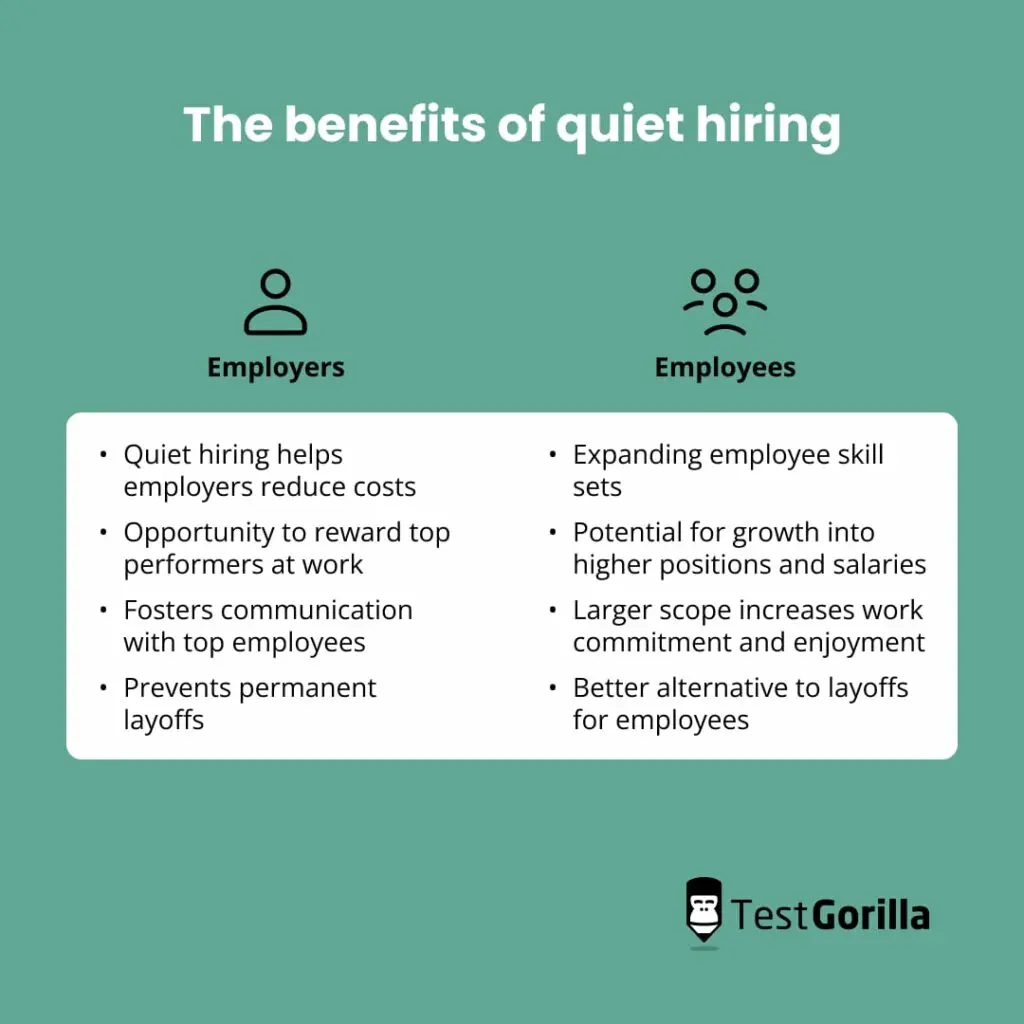
Capitalism, at its core, prizes the optimization of scarce resources. Corporations are under constant pressure to extract maximal value from their labor force while minimizing costs. Quiet hiring epitomizes this imperative by enabling organizations to meet fluctuating demands without the financial and temporal burdens linked to traditional recruitment cycles. It sidesteps the long lead times of onboarding and can curtail payroll inflation, a crucial advantage when market conditions shift rapidly.
This elastic approach to workforce management allows companies to dynamically balance supply and demand internally. Instead of adding headcount—sometimes a costly and permanent commitment—employers simply adapt roles and redistribute tasks. The elasticity reduces inertia in the system, enabling firms to pivot and innovate with greater velocity, a hallmark of contemporary capitalist enterprises.
Challenges of Transparency and Employee Agency
Despite its operational allure, quiet hiring raises palpable ethical and managerial challenges. Foremost is the tension between corporate interests and employee empowerment. When workers are shuffled into new roles or responsibilities without clear communication or consent, they may experience ambiguity, role conflict, or burnout. The surreptitious nature of these moves can undermine trust, breeding uncertainty about career paths and professional development.
Moreover, the opacity inherent in quiet hiring obscures labor market signals such as job availability and fair compensation. For employees, the phenomenon could translate into precariousness, as the boundaries of job descriptions become malleable and expectations unvoiced. From a broader social lens, this dynamic complicates workforce planning and distorts traditional metrics of employment and economic health.
The Capitalist Conundrum: Innovation Versus Exploitation
Quiet hiring typifies capitalism’s dual-edged sword: on one hand, it fosters innovation by enabling nimble workforce strategies that fuel competitive advantage. On the other, it risks commodifying labor to a degree that erodes the implicit social contract between employer and employee. The pursuit of efficiency can edge towards exploitation when employees’ roles are expanded without commensurate recognition or remuneration.
This conundrum is further complicated by the rise of digital platforms and remote work. Virtual labor marketplaces facilitate fluid skill exchange, allowing companies to tap into talents without formal employment relationships. The result is a fragmented labor ecosystem where quiet hiring extends beyond corporate walls into the broader gig economy, blurring lines between employment and contract work.
Quiet Hiring Through the Lens of Internal Mobility
Internal mobility—the movement of employees within an organization—is often heralded as a best practice for talent development and retention. Quiet hiring co-opts this concept but infuses it with a hidden dimension: the reallocation may be strategic yet discreet, bypassing formal HR protocols and negotiations. This can foster career agility but also risks sidelining transparency and fairness.
Organizations that master this balance leverage quiet hiring as a tool to nurture bespoke career trajectories, aligning individual aspirations with emergent corporate goals. This creates a symbiotic relationship where employees are seen as adaptable assets rather than static roles. However, the success of this approach hinges on communicative clarity and supportive leadership, lest the practice be perceived as covert maneuvering.
Capitalism’s Potential Responses: Regulation and Reinvention
As quiet hiring proliferates, capitalism faces a critical juncture. Market forces alone may not correct the asymmetries it creates. Increasing regulatory scrutiny might emerge, centered on transparency, employee rights, and equitable practices. Labor laws could evolve to encompass these indirect forms of employment adjustment, ensuring protections extend to those caught in the shuffle.
Simultaneously, capitalism’s inherent dynamism encourages reinvention. Forward-thinking companies may adopt transparent versions of quiet hiring, embedding clear policies and communication to balance flexibility with fairness. Emerging human capital management technologies could provide real-time data on roles and assignments, demystifying the process for all stakeholders.
The Future: Quiet Hiring as a Catalyst or a Conundrum?
Quiet hiring embodies a paradox intrinsic to capitalism’s evolution. Will it serve as a catalyst for workforce innovation, empowering employees and companies alike? Or will it become a conundrum that exacerbates inequality, sows distrust, and destabilizes labor markets? The answer likely depends on how the delicate interplay of market incentives, corporate governance, and legal frameworks unfolds.
One certainty is that quiet hiring challenges traditional paradigms of work and recruitment. It demands a nuanced understanding of how value is created and allocated in contemporary organizations. As companies continue to explore quiet hiring strategies, vigilance and adaptability will be essential to harness its potential while guarding against its pitfalls.


