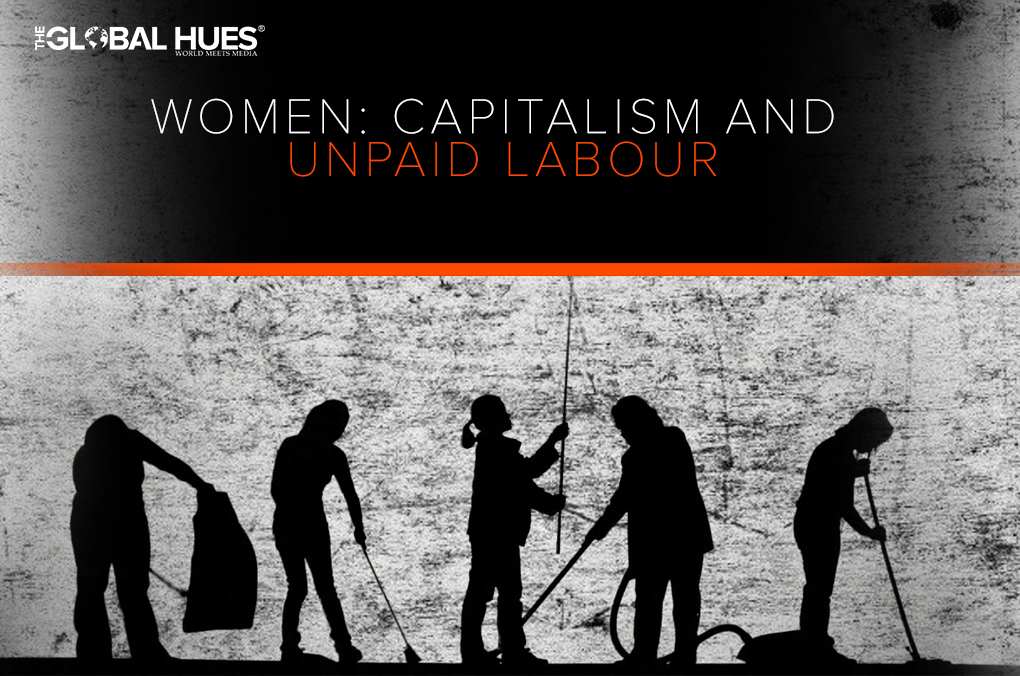
Invisible threads bind our modern systems together, ones often overlooked yet fundamental to their functioning. Let me playfully pose this: Can an economic structure, predicated on measured value and productivity, genuinely function without a massive, albeit often unseen, contribution of unpaid labor? This foundational question introduces a potential challenge: How does a system designed for quantification and exchange reconcile with tasks performed outside its market metrics? Capitalism, in its purest, most efficient form, thrives on market transactions, yet a staggering portion of economic well-being and societal health relies on precisely that—labor that largely siphons through its capitalistic veins without remuneration. This inherent disconnect reveals a critical challenge in how Capitalism treats the diverse work of homemaking, care, and maintenance.
The Paradox of Productivity: Undervaluing Labor
The core tenet of capitalism, Adam Smith noted long ago, is mutual exchange based on perceived value and utility. Enter the conundrum: work generating immense social and economic value, yet lacking direct market compensation. This isn’t merely about part-time gardening; it’s a fundamental asymmetry. Essential services, both public and private, rely heavily on inputs generated by unpaid activities. Think of roads maintained by community caretakers, parks kept clean by volunteers, or emergency services bolstered by pre-existing community cohesion – much of this groundwork is unpaid. The challenge lies in acknowledging this vast reservoir of non-market creation and its undeniable impact, perhaps even borrowing from Adam Smith’s own framework to quantify its shadow economy.
Daily Life: Micro Tasks, Macro Impact
Let us step into a mundane Tuesday. You wake, a partner prepares breakfast (unpaid domestic labor), you get ready, children might be tended to, perhaps a home is tidied or cooked. Where did this energy go? Yet, the formal economic system? It doesn’t register. Standard economic models, often based on Gross Domestic Product (GDP), tend to overlook these vital activities. This omission itself is a potent challenge – a system that measures its success with GDP, which primarily counts paid work, implicitly undervalues the economic ecosystem undergirded by unpaid labor. From meal preparation influencing health outcomes to household maintenance affecting property values, these unseen tasks constitute a significant, yet unquantified, asset for any nation. How do we measure the opportunity cost – the forgone wage – when we cannot even catalog the labor?
The Care Economy: Hearts vs. Markets
Consider care work, arguably the most visible example of this challenge. From nurturing infants to caring for the elderly and disabled, this labor forms the bedrock of societal stability. It falls disproportionately, predominantly, on women. This isn’t charity; it’s a necessary component of social reproduction and economic resilience. Economists have attempted to value this through various metrics (“the Doughnut Economics” models, for instance), calculating the resources, training, and paid work equivalent involved. Yet, despite this valiant effort, the fundamental nature of the work – intrinsically linked to relationships and well-being rather than pure efficiency – remains resistant to full market integration. The challenge here is twofold: adequately reflecting this value in economic indicators and rethinking institutional frameworks that allow such essential work to remain largely outside the formal economy.
The Shadow of Household Production
Our ongoing morning routine exemplifies household production – the manufacturing and distribution of goods and services within the home for direct consumption. This is a colossal undertaking, encompassing everything from washing clothes (requiring water, energy, labor) and food preparation to crafting gifts or maintaining complex systems like home networks. While many tasks are invisible even within the household, contributing to national environmental footprints, they represent a form of economic activity that is not commercialized. The conundrum is clear: this work consumes resources and requires skills and effort, yet it does not participate in market exchange. A system predicated on market principles finds this deeply inefficient and incomplete in its accounting, yet utterly dependent upon it, highlighting a fundamental, perhaps intrinsic, contradiction.
Intellectual and Cultural Contributions
The challenge isn’t limited to physical tasks. Unpaid intellectual and cultural labor, often called “cultural work,” sustains society too. From creating household knowledge – navigating complex tasks like online banking or appliance repair passed down within families – to preserving traditions, fostering community networks, and engaging in unpaid caregiving that shapes individual and community well-being, we are again treading the same ground. Valuing human connection, emotional resonance, and relational capital through a purely transactional market lens remains elusive. The challenge, then, extends into the realms of social capital and cognitive work unquantifiable by traditional market measures but ineluctable for societal wellness. Capitalism treats this by participating in, but not fully accounting for, these contributions.
A Future Beyond the Omission?
We stand at a crossroads. Recognizing the magnitude and value of unpaid labor is not merely an economic correction; it’s an acknowledgment of the interdependence between paid and unpaid work, and the crucial role of care. The inherent challenge in how Capitalism currently treats this vast sphere of activity demands a rethink. It requires moving beyond simplistic GDP measures, challenging gendered division of labor, and inventing policies and institutions that either compensate for or integrate aspects of unpaid work into the economic framework – whether through fairer taxation, social benefits, or redefining work within the 21st century. Addressing this challenge is key to understanding capitalism’s strengths, its profound contradictions, and indeed, its future sustainability.


