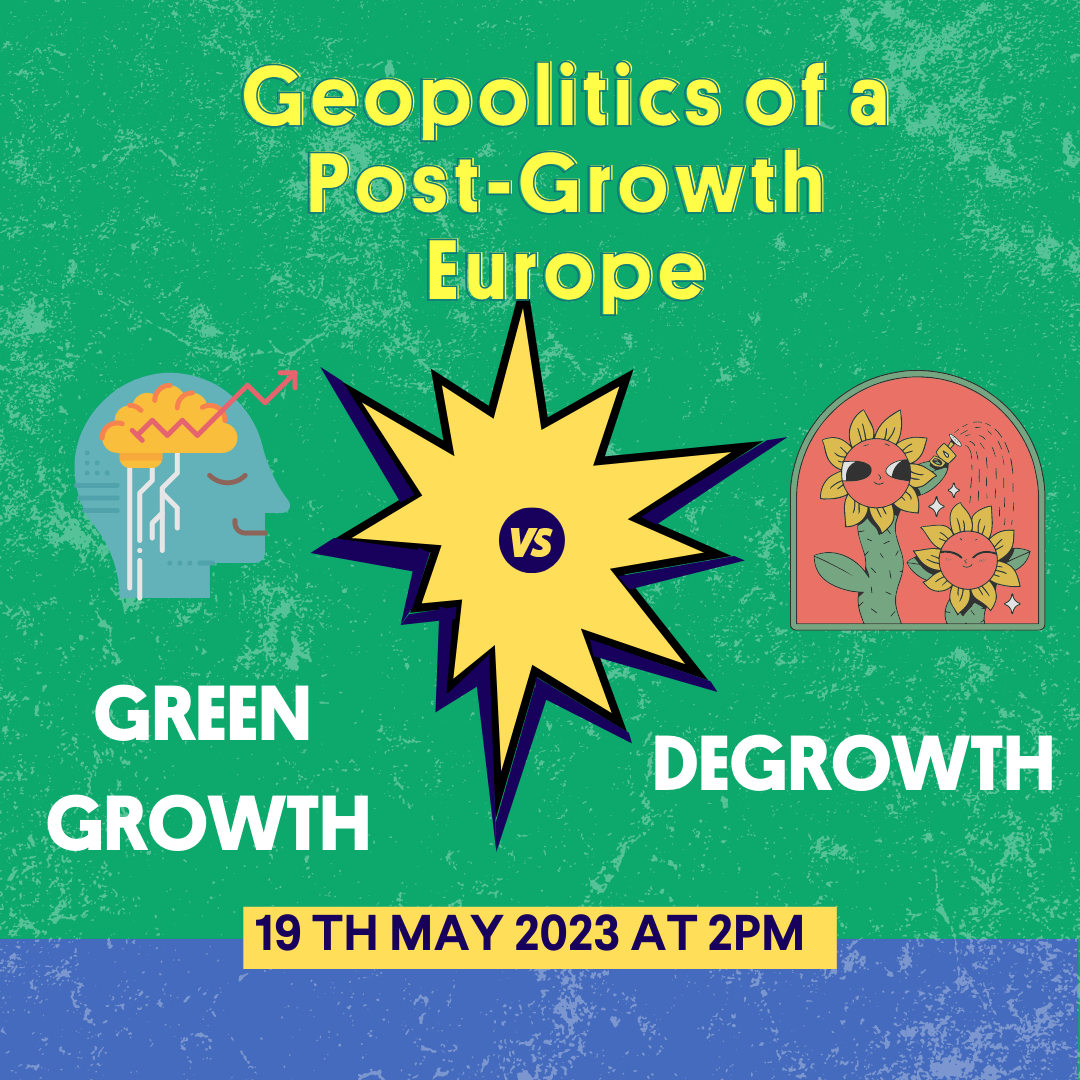
Nestled within the current waves of ecological consciousness, a profound tension stirs: the collision course between long-held economic orthodoxies and radically new paradigms. We stand at a crossroads, wrestling with the fundamental question: “Eco-capitalism vs degrowth: Which works?” The answer, emerging from think tanks and activist circles, from corporate boardrooms and radical theorists, is less binary and more profoundly complex, a Gordian knot woven from threads of profit, planetary health, and human fulfillment.
The Allure of Eco-Capitalism
Eco-capitalism presents itself as a familiar path, a redemption for the perceived sins of unchecked industrialism. It courts our existing desire for progress, promising innovation, efficiency, and sustainable growth. This is the vision of the circular economy, where waste is minimized and materials are reused within a perpetuating system. It envisions green skyscrapers, carbon-neutral industries, and renewable energy dominating the skyline. Think electric vehicles replacing combustion engines, precision agriculture minimizing environmental impact, or biomimetic materials revolutionizing manufacturing. The appeal lies in its synergy with existing economic structures – competition, innovation, shareholder value – but filtered through environmental lenses.
Proponents argue that techno-economic solutions can solve our ecological crisis without fundamentally disrupting the capitalist engine. Mechanisms like carbon pricing, cap-and-trade systems, green bonds, and Extended Producer Responsibility schemes are presented as tools to internalize environmental costs. They believe market mechanisms, nudged in the right direction, can steer production and consumption towards ecological balance. This view sees degrowth not as a necessary destination, but perhaps as an uncomfortable, perhaps even erroneous, misinterpretation. Eco-capitalism thrives on the narrative of perpetual, albeit greener, growth, suggesting prosperity and environmental health are not mutually exclusive.
Furthermore, eco-capitalism attempts to redefine value. Concepts like the Natural Capital Accounting movement try to place a monetary value on ecosystem services – the air we breathe, the water we drink, the pollination that feeds us. This attempt to quantify nature could, in theory, integrate environmental costs into mainstream economic indicators (like GDP) or create entirely new markets. Is the intrinsic value of a species, its existence for its own sake, truly captured by its potential yield in carbon credits or ecotourism revenue? The debate surrounding Natural Capitalism often navigates this delicate balance between acknowledging ecological value and the capitalist’s inherent preference for quantifiable assets.
Dismantling the Illusion: A Critical Look at Eco-Capitalism
Yet, a closer examination reveals cracks in the eco-capitalist edifice. While innovation, like the advancements in LEDs or solar panel efficiency, is undeniable, does perpetual economic growth, the engine of capitalism, truly align with planetary limits? Physical reality imposes constraints: finite resources, carrying capacities for ecosystems, and atmospheric capacities – the biophysical foundations of life on Earth. An economy predicated on ever-increasing throughput of resources cannot, by its very definition, be infinitely sustainable, unless it operates within living systems, not merely on them.
One critique echoes historically skeptical voices asking: Does technological progress within a profit-driven system inherently solve ecological distress, or does it merely delay the inevitable while deepening dependence? The Paragons of early environmentalism often built their lives on ecological principles – simplicity, localism, sufficiency – offering a stark contrast to the ever-expanding consumer culture. Critics argue that the core logic of capitalism – infinite expansion, market-driven consumption – fundamentally conflicts with ecological stability. The drive for profit necessitates constant growth, leading inevitably towards resource depletion, pollution spillovers, and ecological overshoot, even if mitigated (“soft”), or transformed (“new”).
Furthermore, the concept of “green growth” often faces a fundamental challenge. Growth, in any society, relies on increased throughput – extraction, consumption, waste. Replacing one finite resource with another, even if less harmful (e.g., synthetics replacing natural materials, renewables replacing fossil fuels), involves ecological costs. The materials for wind turbines require mining, solar panels involve manufacturing energy, and the land required for biofuels displaces food supplies or native habitats. Is the “winning” of a green market offset by the “losing” elsewhere? This accounting is complex, bordering on the impossible in a system driven by profit rather than comprehensive planetary accounting.
Pioneering Degrowth: An Alternative Vision
Emerging from European soil and finding traction globally, the degrowth movement offers a radically different answer. Degrowth rejects the necessity of perpetual economic expansion. Its proponents, like the influential [However, degrowth is not without its own complexities. Critics question the practicality of reduced material production in a world facing absolute needs – food, sanitation, shelter, medicines. What does degrowth mean for eradicating poverty? Does it entail redistribution or outright rejection of certain comforts associated with modern life? Advocates counter that ecological overshoot itself constitutes a form of deprivation for future generations and marginalized populations, and that a fair distribution based on sufficiency, not mere consumption, could offer genuine security combined with ecological stewardship. It’s a call for qualitative progress over quantitative expansion.
Unpacking the Contradictions: Where Do They Clash? -————————————————-
The clearest point of divergence emerges when analyzing material throughput and genuine sufficiency. Eco-capitalism, focused on substituting existing material flows or increasing them in a supposedly greener form, appears to miss the deeper need. Degrowth, conversely, challenges the very premise of material accumulation driving the economy.
Consider the ecological footprint of work. The relentless pursuit of productivity within the capitalist framework often leads to precarious labor, exploitation, and immense environmental strain from production cycles. Eco-capitalism seeks technological fixes and regulatory tweaks to lessen this impact, but degrowth fundamentally questions the desirability and sustainability of such intense economic activity, advocating instead for leisure and well-being.
The distribution of goods also highlights the contradiction. Eco-capitalism through corporate channels often leads to increased consumption, sometimes exacerbating inequality (green divides), while degrowth emphasizes sharing, redistribution, and a different model of acquisition altogether. The promise of green finance and markets offers pathways into the system, often co-opting dissent (greenwashing), whereas degrowth pushes for systemic change away from market logic.
Grappling with the Path Forward -——————————
There may be no one-size-fits-all answer. Perhaps we find ourselves in a world where both narratives coexist, clashing as deeply held worldviews within the same society. Maybe genuine transition requires learning from both – the technological ingenuity of eco-capitalism to address pressing, localized environmental issues, while simultaneously building the political and cultural foundations for a degrowth future focusing on well-being and planetary health.
The crucial questions persist: What metrics replace GDP? How do we fairly distribute goods and services in a system not necessarily driven by constant expansion? What truly constitutes progress in a finite biosphere? The tension between Eco-Capitalism and Degrowth isn’t just an abstract philosophical debate. It shapes our political discourse, our resource allocation, and the very future we are collectively engineering. Navigating this complex terrain requires not just choosing a narrative, but developing a robust, nuanced understanding of the promises, pitfalls, and underlying contradictions inherent in each.](<https://en.wikipedia.org/wiki/Work_(book): Work: The Science of Leisure and Wellbeing (Olivier Roy), the work of Serge Latouche, or the advocacy of the Post-growth Institute, challenge the fundamental axiom that GDP must grow indefinitely. Instead, they posit that a society focused on reducing material throughput, decreasing energy consumption, and valuing well-being, ecological health, and social equity over GDP might offer a path towards genuine sustainability.


