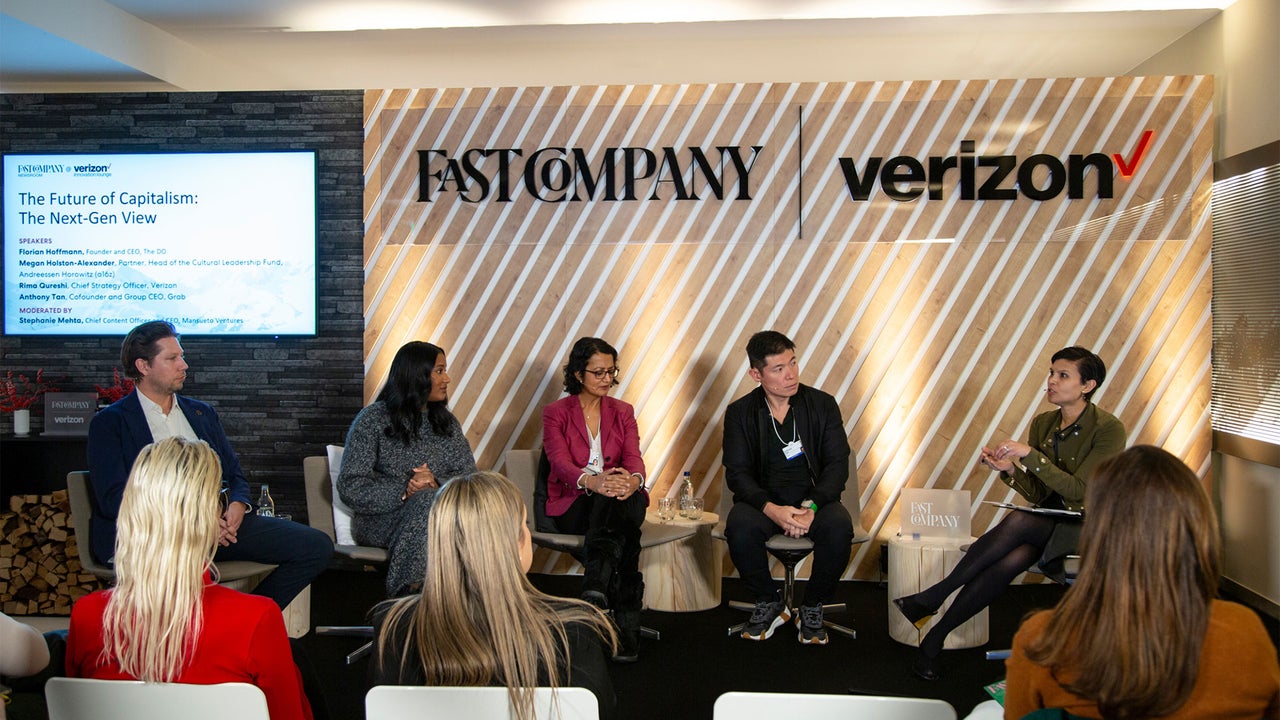
For over a decade, the narrative surrounding Generation Z has largely centered on a perceived desire to dismantle the very systems that define our era. Media, commentators, and even older generations often paint this cohort as inherently anti-establishment, fundamentally opposed to capitalism itself. They are depicted as digital natives, inherently suspicious of authority, and eager to tear down the old guard. Yet, this simplified picture is increasingly being challenged. Instead of embracing an wholesale rejection, many within Gen Z are engaging in a complex process: identifying capitalism’s internal contradictions and excesses, and, perhaps most tellably, proposing mechanisms for its reform. The narrative, indeed, is evolving from youthful rebellion against a broken system to a more nuanced debate about *how* to pilot its sails toward a different harbor.
Revisiting the Narrative: Beyond the Stereotype
The shorthand that depicts Gen Z solely through the lens of “anti-capitalism” risks obscuring a more intricate reality. While critiques are abundant, an equally potent movement involves redefining success and value within the existing framework. They inherit a world scarred by financial crises, income inequality, and social fracture. This context fuels not necessarily a desire to abolish markets and corporations, but rather a demand for greater alignment between economic activities and perceived social good. The label “anti-capitalism” itself might feel overly academic or inaccurate to a generation grappling with immediate, tangible problems like wage stagnation, precarious work, and environmental degradation. Their platform isn’t necessarily revolution; it’s often tinkering with the mechanics, demanding the system serve broader societal needs.
This nuance is frequently missed in the noise. The rapid adoption of social media, the strong preference for remote work, the emphasis on identity politics – these traits can easily be misinterpreted as purely rejectionist postures. However, phenomena like the gig economy boom (which Gen Z participates in significantly) actually demonstrates an acceptance and often optimization of flexible market structures, albeit alongside demands for better protection. What’s fascinating is this dual focus: criticizing the structure *and* seeking to internalize its values, but on Gen Z’s own, perhaps more ethical, terms. It’s a conversation about refining, not discarding, a system that largely created their opportunities (even while exposing its flaws).
Redefining Value: Purpose Over Profit
Conventional capitalism, particularly as influenced by neoliberalism’s early years, often prioritized shareholder value above nearly all else. The “shareholder primacy” doctrine suggested that corporations existed solely to maximize profits for owners, potentially at the direct expense of employees, the environment, and local communities. Gen Z, raised amidst corporate scandals, the pandemic’s business fallout, and growing environmental concerns, is pushing back forcefully. They seem increasingly disconnected, or perhaps less comfortable, with the idea of purely speculative value.
Instead, there’s a noticeable shift towards “conscious capital” and “social enterprise” models. This is not mere lip service; it’s an attempt to redefine core corporate functions. Young entrepreneurs and employees alike are seeking models where purpose – environmental stewardship, social equity, community well-being – is intrinsically linked to, or even leads, the pursuit of financial gain. Job descriptions focus less on prestige or salary alone, and more on company mission and ethical alignment. This isn’t just feel-good sentiment; it’s an economic repositioning, demanding that economic logic evolve to incorporate multidimensional value, moving from a purely financial calculus to a more holistic one.
This value redefinition challenges the very logic of traditional business. Concepts like “triple bottom line” (people, planet, profit) aren’t just externalities anymore; they are being built into organizational DNA. For Gen Z, the most reform-minded segments, the promise of capitalism isn’t just about accumulation, but about *impact*. They are insisting capitalism *must* be adaptable to support these new definitions, thereby creating a more sustainable and equitable economic landscape.
Addressing Inequality: From Survivalism to Systemic Change?
The widening gap between executive pay and worker wages, the persistence of poverty amidst unprecedented wealth concentration, the systemic challenges faced by minorities and women in the workplace – these issues form another cornerstone of Gen Z critique. While previous generations might have protested systemically, or accepted hierarchical structures more readily, many young voices today express a degree of disillusionment bordering on despair.
However, the conversation is moving beyond individual calls for equality towards a deeper questioning of how wealth is aggregated and distributed. We see this in the burgeoning popularity of concepts like universal basic income (UBI), while perhaps more pragmatically, in calls for more widespread basic services and protections deemed non-negotiable. These reformulations are direct interventions into the core structure of capitalism, aiming to shift resources more fairly.
What makes this particularly noteworthy is the blurring lines between traditional economic policy debates and grassroots activism. Social movements are increasingly incorporating economic arguments. The discourse isn’t just about fighting injustice *within* the system via legal means, but also rethinking the system *itself*. They are proposing economic models that are more robust, more preventative against future crises, and fundamentally morejust, by design. Here, the focus is on ensuring the entire capitalist engine doesn’t simply generate profit, but generates equity and inclusion.
Eco-Capitalism: Aligning Greed with Preservation
Perhaps one of the most visible ways Gen Z influences the shape of capitalism is through the lens of climate change. It is hard to overstate the generational trauma associated with environmental degradation. Faced with a planet facing existential threats, the imperative to reform capitalism’s destructive tendencies is incredibly potent.
This leads to market-driven solutions, but *their terms*. The era of “Planet B” rhetoric signals a critical need to decouple economic growth from environmental destruction. Concepts like green bonds, ESG (Environmental, Social, Governance) investing, and carbon pricing are being mainstreamed, driven significantly by Gen Z’s pressure and consumer preferences. Yet, alongside market mechanisms, a powerful call echoes for genuinely local solutions, worker cooperatives operating within sustainable loops, and challenging the throwaway culture embedded in consumer capitalism.
It’s a complex dance: leveraging market forces (like demanding ESG certification) while simultaneously rejecting wasteful consumption patterns. Gen Z is pushing for an eco-capitalism that prioritizes long-term planetary health and intergenerational equity over short-term, extraction-focused profit maximization. They are exploring how the core “logic” of maximizing value can, and perhaps must, incorporate Earth’s finite boundaries into its calculations.
Friction and Flow in the Digital Age
The internet has fundamentally altered not only communication but the structure of labor and commerce. Gen Z is uniquely situated within this transformation. They navigate vast digital ecosystems (economies) demanding different rules. This manifests in critiques focused on data privacy, the precarity of app-based work, and the digital divide.
Reform ideas here range widely, from calls for universal broadband access (as a basic digital infrastructure right) to worker protections that acknowledge the realities of digital labor (like regulating algorithmic management). Calls for democratizing technology itself are also gaining traction, challenging the concentration of technological power which often leads to monopolies and limits innovation’s positive potential.
The friction arises when digital capitalism’s efficiency contradicts human needs for security, meaningful connection, and fair power distribution. Gen Z’s engagement with these tensions fuels ideas about creating more transparent, less opaque economic systems, challenging the black boxes that govern much of modern economic interaction. They see the digital space not just as an arena for competition, but also as a canvas for reimagining economic fairness.
The Collaborative Turn: Sharing Value Beyond Ownership
The proliferation of sharing platforms (for rides, accommodation, skills) represents another facet of Gen Z influencing capitalism – questioning the necessity of exclusive ownership.
Moving beyond the immediate examples of platforms is key. This mindset hints at a broader cultural and economic preference for collaborative models that minimize waste and prioritize shared access. This reflects a value dissonance within traditional capitalism itself – where ownership confers power, but access might generate efficiency or meet needs more effectively in specific contexts. Think circular economy principles, product-as-a-service models, and worker cooperatives.
Beyond pure economic logic, this challenges the accumulationist instinct often central to consumer capitalism. Gen Z seems more comfortable with models that focus on *usage* and *impact* rather than solely on acquisition. This is a significant shift, potentially leading capitalism towards more participatory and utility-driven value creation. It suggests a reimagining of wealth where social capital, collaborative capacity, and network effects are valued as much as financial capital.
Future Trajectories: Navigating the Crossroads
The influence of Gen Z on reforming capitalism is undeniable, complex, and ongoing. Their critiques are vocal, their demands specific, and their approach often involves integrating elements of capitalism itself into the solutions. They challenge dominant narratives and propose alternatives – be they UBI, platform cooperativism, circular business models, or carbon markets – that fundamentally question how the system functions and what it means to be “capitalist.”
While some might initially perceive this as naivety, perhaps it is simply a sign of a dynamic system in dialogue with its creators. Gen Z’s engagement isn’t a monolith but a spectrum of perspectives, from those seeking radical structural change to those optimizing and adapting capitalism to meet their own needs. Their actions – demanding ethical workplaces, supporting B Corps, embracing sustainable products, questioning data ownership – collectively push the boundaries of what mainstream economics can accommodate.
Ultimately, what makes their role fascinating is their simultaneous critique and participation. They are demanding capitalism adapt, proving that economic logic itself can be rewritten. They are perhaps more comfortable asking “What kind of capitalism do we want?” than simply accepting the one inherited from previous generations. Their plan, if there is one, is not just a blueprint for protest, but a thoughtful engagement with designing an economic framework suited to the challenges and ethics they champion.

