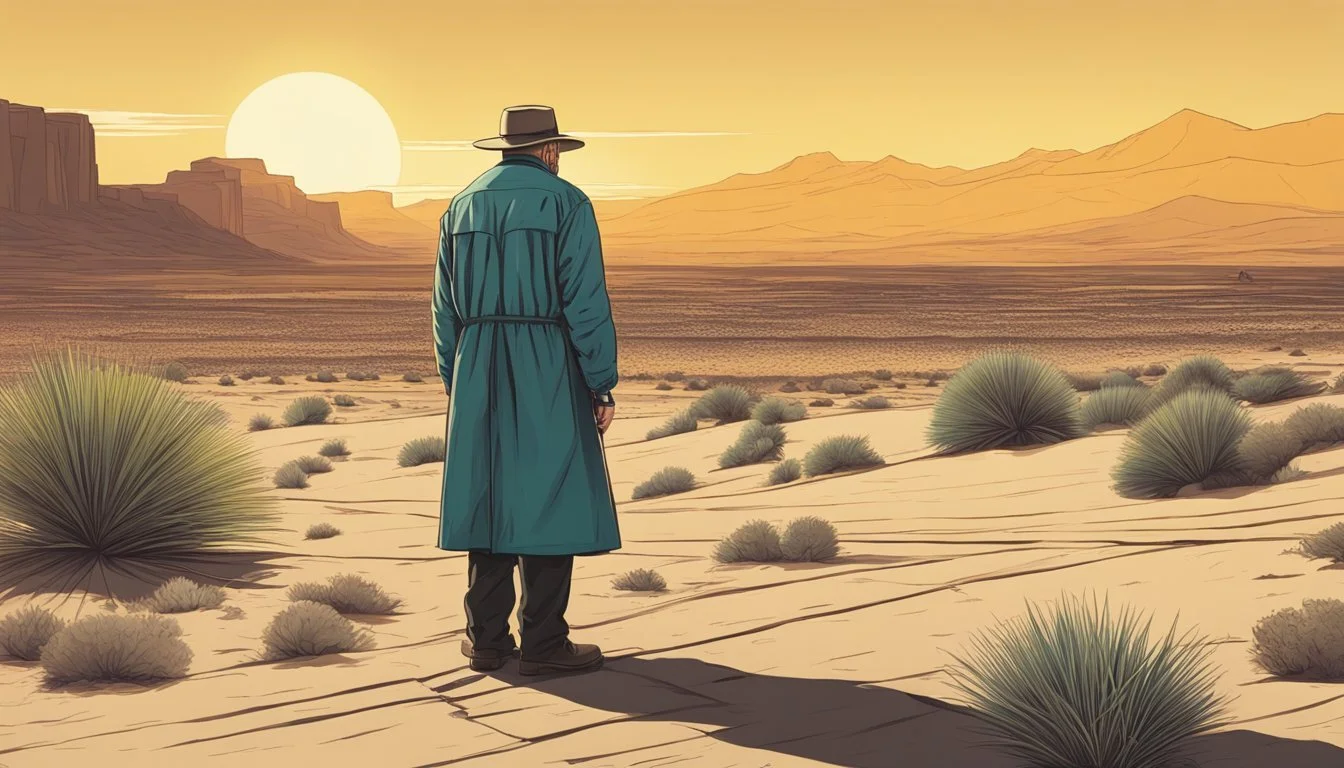
Despite its surface appearances as a gritty crime drama centred on methamphetamine production and bloody revenge, AMC’s *Breaking Bad*’s critique of American capitalism remains one of its most potent and enduring legacies. The series, through its meticulously detailed world and its protagonist, Walter White, a high school chemistry teacher turned meth kingpin, offers a stark and unsettling portrait of a system that ruthlessly consumes ambition, idealism, and even morality. *Breaking Bad* doesn’t merely depict crime; it anatomizes the often-justified illusions that propel individuals, often with the best of intentions, into the dangerous embrace of avarice, exposing the pervasive corrosion of ethical behaviour when profit becomes the paramount currency.
The Demystification of the “American Dream”
Walter White’s initial motivation – teaching, providing for his family, ensuring a secure future – smacks of the very American ideals the narrative subsequently obliterates. He seeks compensation for perceived devaluations – reduced class sizes, outdated textbooks, lack of resources – expecting the system to reward his expertise and dedication with recognition and fair remuneration. When this expectation is cruelly dashed, his professional degradation compounds his personal humiliation. Seeking to reclaim not only his dignity but financial solvency, Walter injects himself into the brutal underworld of the drug trade. His initial strategic approach, drawing upon his scientific meticulousness, sets a tone: money isn’t merely *acquired*; it’s *engineered*, often from raw, morally abhorrent materials. *Breaking Bad* implicitly asks: if a system fails to value talent adequately, is the path paved for success necessarily criminal enterprise? While offering a perverse, destructive form of capital, the criminal market ultimately represents a distorted reflection of legitimate economic forces – supply and demand, competition, the brutal mathematics of profit, stripped of ethical constraints.
The Drug War as a Capitalist Microcosm
The world of drugs, as depicted in *Breaking Bad*, mirrors legitimate American commerce with chilling accuracy. Competition is endemic, often violently so, as rival dealers vie for territory, influence, and market share. Marginalization – initially by the legitimate corporations that exploit miners (Mr. White, Saul Goodman, Gus Fring) – fuels resentment and eventual retaliation. Product development is obsessed with creating the ‘best’: purer product, more potent blends, novel distribution methods akin to branding and logistics management in the legitimate market. Financial statements, profit margins, market analysis (even informal, street-level ‘due diligence’), price points, and the constant pressure for increased return on investment dominate the characters’ minds. Walter’s meticulous chemical processes could almost be those of an innovative CEO, except the product is poison and the market is the vast reaches of the American underclass. *Breaking Bad* renders the drug trade not as a parallel subculture, but as a warped, hyper-visible representation of American capitalism’s drive for profit and expansion, albeit operating in the most shadowed corners and yielding the most tragic consequences.
Capitalism’s Slippery Slope: From Ambition to Addiction
Walter’s transformation hinges on a critical moment: pride and intellectual recognition snatched from the jaws of professional oblivion and penury by the discovery of crystal meth’s potency. The initial discovery, while born of desperation, is fueled by the profound satisfaction of his scientific ingenuity yielding a result far superior to the meagre salaries he desperately sought. This moment becomes addictive – not just the literal crystal, but the power, the control, the sense of being truly *seen*. This resonates with a common capitalist criticism: the intoxicating effect of power and wealth can easily morph into an all-consuming force. Walter, capable of operating with a professorship and adherence to societal norms, finds legitimacy and validation in his crime. The system he enters, cynical and predatory, not only rewards ruthlessness (as the legitimate world does), but often in ways the legitimate sphere cannot: direct power, immediate financial payoff proportional to risk and ruthlessness, and, paradoxically, the respect of fellow criminals. His initial naivety about Jack Welles, an old hippie acquaintance, underscores how easily one can misinterpret signals in any legitimate environment, assuming goodness over competence. *Breaking Bad* demonstrates how the pursuit of wealth in an unrestrained capitalist sphere can warp perception until the line between success and ruin becomes blurringly thin, poisoning the source as one drinks.
Profit’s Unblinking Eye: Exploitation and Collateral Damage
Throughout the series, *Breaking Bad* constantly demonstrates how the pursuit of profit, even in the extreme example of manufacturing illegal drugs, normalizes extreme levels of exploitation and dehumanization. The initial success relies on Hank and his investigations, seemingly innocent attempts to enforce state law, creating an unwelcome external pressure. This forces Walter and his partners to engage in ruthless self-protection, demonstrating how a business can readily become violence itself. Financial constraints, often discussed in terms of profit margins, drive key decisions: cutting corners for product yield, selling illicit assets for operating cash, making seemingly impossible choices under impossible circumstances. The infamous scene “Say My Name,” where the enforcers declare their brand and their power, is a brutal, almost ritualistic display linking extreme wealth and control directly to casual cruelty. *Breaking Bad* doesn’t condemn only heinously obvious crime; it shows how the logic of profit-driven activities, even marginally condoned ones, inevitably involves immense human cost, where the devaluation of life becomes a direct consequence of the market’s demands.
The American System: Rewards and Ruin
The show doesn’t end with Walter’s destruction; it lingers on his final moments viewing an Albuquerque sunset – a common American trope – suggesting his corruption, while complete, still holds a certain aesthetic within this setting. Elsewhere, secondary characters like Saul Goodman, the cutthroat lawyer, or Jane Margolis, the politically connected user, exemplify how the system operates on multiple levels, rewarding manipulation, favours, and political connections. Gus Fring, while ultimately operating at arm’s length from the law, builds a meticulously architected facade – a church! – symbolizing the bizarre ways in which the pursuit of capital requires layers of deception, even architectural mimicry. The pervasive theme of healthcare struggles, leading Walter into meth production partly out of frustration with his prognosis, highlights a key critique: the system doesn’t just make money; it also actively *dissolves* value – physical, human, and ethical – often rewarding ill health and inefficiency while extracting maximum profit until exhaustion or death. *Breaking “Bad”’s critique suggests that American capitalism, in its full complexity, operates not merely through overt crime, but through a subtle, insidious poisoning of the very social and individual well-being it purports to sustain.


