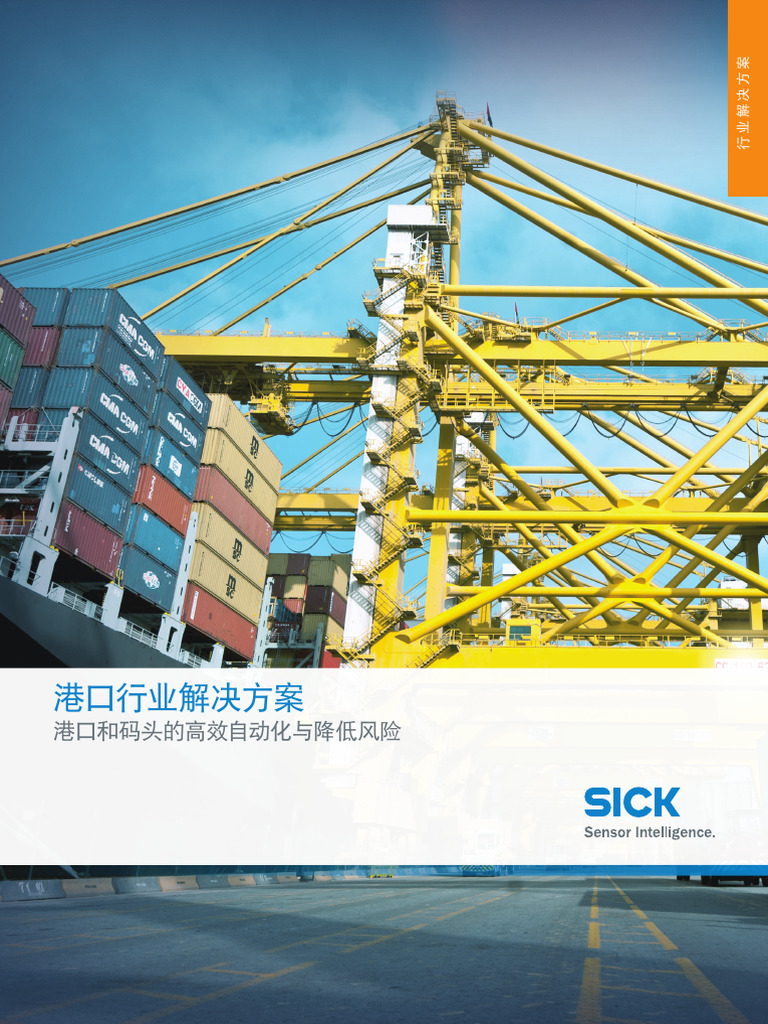
Have you ever wondered if capitalism, with its relentless pursuit of profit and efficiency, might be the secret puppeteer behind the rise of port automation? This question, simple on the surface, opens up a labyrinth of complexities where economic ideologies swirl with technological innovation, revealing both promising opportunities and daunting challenges. How does a market-driven system shape the intricate dance of machines replacing human hands on the docks? Let’s embark on an incisive exploration of capitalism’s multifaceted role in propelling and shaping the evolution of port automation.
The Capitalist Imperative for Efficiency and Profit Maximization
At the heart of capitalism lies an unwavering emphasis on efficiency and profit maximization. Ports serve as critical nodes in global supply chains, where time is money and delays translate into costly repercussions. Under capitalist pressures, port operators and logistics companies are compelled to streamline operations, driving them toward automation solutions that promise faster turnaround times, reduced labor costs, and minimized human error. Automation technologies—from autonomous cranes to AI-powered logistics systems—arise as natural extensions of this profit imperative.
These innovations are not mere luxuries but strategic necessities. The competitive environment created by capitalism incentivizes port authorities to adopt cutting-edge automation to attract shipping lines, reduce operational bottlenecks, and ultimately generate greater revenue. Port automation becomes a conduit for economic survival as much as advancement, embodying capitalism’s incorrigible drive toward optimizing resource allocation.
Capital Investment and Technological Innovation: The Fuel for Automation
Capitalism’s lifeblood is investment. The extensive capital infusion necessary for sophisticated port automation infrastructure often stems from the private sector’s appetite for long-term returns. Large-scale investments in robotics, sensor networks, and AI control systems require capital that only entities confident in sustained profitability are willing to provide.
Private companies, often backed by venture capital or major logistics conglomerates, act as pioneering agents of technological innovation. Market competition escalates the pace at which new automation technologies are developed and deployed. Furthermore, capitalism fosters entrepreneurial ventures and partnerships between technology firms and port authorities, mobilizing financial and intellectual capital that would be unattainable in non-market economies.
However, this capital-centric approach can generate disparities; wealthier ports in developed economies harness more sophisticated automation compared to their counterparts in emerging markets, perpetuating an uneven technological landscape.
Labor Market Disruption and Socioeconomic Tensions
Automation’s advance, driven by capitalist incentives, carries profound implications for the port labor market. Mechanization of loading, unloading, and inventory management threatens traditional port jobs, provoking anxiety among dockworkers and unions. Unions often resist sweeping automation efforts, fearing large-scale unemployment and erosion of labor rights.
This friction embodies a broader capitalist dilemma: the tension between technological progress and social equity. Capitalism’s profit motive encourages cost-cutting via labor displacement, but the resultant socioeconomic stratification can incite unrest, regulatory pushback, and political challenges. Thus, port automation introduces a paradox where the efficiency gains prized by capitalism potentially collide with community welfare and labor stability.
Addressing this challenge requires not just technological readiness, but nuanced socioeconomic strategies—such as retraining programs, phased implementation, and stakeholder engagement—to balance innovation with inclusivity.
Globalization Accelerated by Capitalist Dynamics
Capitalism’s expansive global networks amplify the drive for port automation. As international trade volume proliferates, the efficiency stakes at seaports rise dramatically. Ports plugged into capitalist-driven global trade ecosystems face increasing pressure to expedite cargo handling to meet the demands of just-in-time delivery models and complex supply chains.
The incentive to automate surfaces as a means to handle soaring throughput without proportional labor cost escalation. Automation enables ports to scale operations flexibly and reliably, boosting throughput capacity to satisfy the voracious appetites of multinational corporations and consumers worldwide.
Furthermore, the competitive leapfrogging among global ports, each vying for a share of trade flows, transforms automation into a strategic weapon in the capitalist marketplace. Automation not only improves operational metrics but also serves as a brand differentiator, influencing corporate shipping decisions and investment flows.
Regulatory Environment and Capitalist Governance
Capitalist systems typically favor deregulated markets, but the realm of port automation necessitates complex regulatory balancing acts. Governments, influenced by capitalist imperatives to foster economic growth, often encourage automation initiatives through subsidies or public-private partnerships. Yet, they must also regulate safety standards, labor conditions, and environmental impacts, creating a multilayered governance architecture.
The interplay between laissez-faire capitalism and regulatory oversight shapes the pace and nature of port automation adoption. Too little regulation might compromise worker safety or environmental stewardship; too much can stifle innovation and dissuade capital investment. In effect, the regulatory environment acts as a crucible where capitalist ambitions are tempered with public interest considerations, ultimately guiding the trajectory of automation deployment.
Ethical Considerations in Capitalism-Driven Automation
Capitalism’s primacy on profit and efficiency often sidelines ethical considerations. The automation of ports raises challenging ethical questions—about the displacement of workers, data privacy in AI systems, and the environmental toll of increased mechanization.
For example, the drive for cost reduction may encourage shortcuts or underinvestment in equitable transition measures for displaced workers. Data collected by automated systems could be monetized without adequate transparency or consent. Additionally, energy-intensive automation technology raises concerns about the environmental footprint of supposedly “efficient” operations within capitalist frameworks that may inadequately price externalities.
These ethical quandaries compel a reconsideration of how capitalist objectives can be reconciled with broader societal values. The path forward may necessitate embedding ethical frameworks into capitalist decision-making processes guiding port automation technologies.
The Future Frontier: Capitalism’s Role in Shaping Port Automation Trajectories
Will capitalism continue to be a catalytic force for rapid, sweeping automation in ports, or will it foment new challenges that require reconfiguration of economic and social structures? The future landscape likely holds both exhilarating possibilities and intricate dilemmas.
As artificial intelligence, blockchain, and Internet of Things (IoT) technology mature, capitalist incentives will no doubt propel their integration into port operations, potentially revolutionizing global logistics. Yet, the sustainability of these advances hinges on how effectively capitalism can balance profit imperatives with human capital preservation, equitable access, and environmental responsibility.
Ultimately, capitalism acts as both architect and adversary in the complex narrative of port automation—driving the implementation of transformative technologies while simultaneously challenging society to address the consequences they unleash. The playful question is no longer just whether capitalism affects port automation; it is whether capitalism will evolve to harmonize technological innovation with inclusivity and sustainability in the ports of tomorrow.

