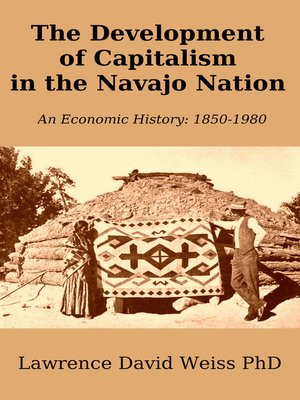
The intricate relationship between capitalism and indigenous communities presents a narrative both profound and paradoxical. Nowhere is this interplay more complex than within the Navajo Nation, a sovereign entity marked by deep cultural heritage and historical resilience. The advent and entrenchment of capitalist mechanisms have ushered in transformations that span economic, social, and environmental dimensions, provoking a shift in perspective on what development means for indigenous peoples. This exploration ventures beyond reductive binaries of progress and loss to reveal a nuanced tapestry of aspirations, challenges, and inexorable change.
The Historical Context: Capitalism Meets Navajo Tradition
Before the infusion of capitalist enterprises, Navajo society thrived on intricate systems characterized by reciprocity, communal stewardship, and a profound spiritual connection to the land. These values underpinned subsistence economies centered on livestock, weaving, and agriculture. The incursion of capitalist ideology did not merely introduce new economic practices; it disrupted longstanding paradigms and catalyzed a redefinition of social relations.
Early interactions with capitalist economies were often marked by coercion and uneven power dynamics, where resource extraction prioritized external profit over indigenous well-being. The imposition of private land ownership clashed with Navajo concepts of communal territory, eroding traditional governance and sovereignty. Yet, this juncture also ignited a resilient negotiation, as the Navajo sought to harness capitalist tools while striving to preserve cultural autonomy.
Economic Opportunity and Uneven Development
The embrace of capitalism opened avenues for economic opportunity within the Navajo Nation, particularly through natural resource development, manufacturing, and service industries. Mining enterprises, for instance, created jobs and generated revenue, promising economic upliftment. Entrepreneurial ventures among Navajo citizens began to flourish, from tourism to small businesses, signaling a gradual diversification of economic activities.
Nevertheless, this prosperity reveals itself unevenly distributed. Structural impediments such as limited infrastructure, geographic isolation, and educational disparities complicate the equitable diffusion of capital gains. Moreover, reliance on volatile industries exposes the Navajo economy to market fluctuations and external shocks, challenging its stability. The promise of capitalism’s wealth is thus interlaced with persistent inequality and economic precarity.
Cultural Dissonance and the Commodification of Identity
Capitalism’s advance introduces subtle yet powerful tensions within Navajo cultural frameworks. The commodification of indigenous identity—through crafts, cultural tourism, and media—poses dilemmas regarding authenticity and self-representation. While these commercial endeavors can empower economic independence, they also risk diluting sacred traditions and commodifying heritage for external consumption.
This tension extends into generational dynamics as younger Navajos negotiate cultural preservation amidst allurements of capitalist modernity. The encroachment of consumer culture challenges communal values of humility and interconnectedness, prompting a reflection on the costs embedded in adopting capitalist consumerist norms. Consequently, capitalism serves as both stimulus and test for cultural resilience.
Sovereignty and Economic Self-Determination
At the heart of the Navajo Nation’s engagement with capitalism lies a potent imperative: the assertion of sovereignty through economic self-determination. Harnessing capitalist frameworks offers a strategic conduit to assert autonomy, fund social programs, and reinforce governance infrastructure. Enterprises like tribal businesses and partnerships with external investors articulate a proactive embrace of capitalism, tempered by cultural imperatives.
This sovereignty-centered approach reframes capitalism not merely as an external imposition but as a platform for empowerment. By carefully navigating legal and economic arenas, the Navajo Nation endeavors to redefine capitalism on its terms, blending modernity with tradition. However, this path demands vigilance, negotiation, and an ever-evolving vision of what economic success entails.
Environmental Ramifications: Capitalism’s Double-Edged Sword
Natural resource exploitation within the capitalist schema has exerted profound environmental impacts on Navajo lands. Mining and energy extraction, while economically beneficial in the short term, often lead to ecological degradation, water contamination, and long-lasting health issues. The tension between economic goals and environmental stewardship epitomizes a critical challenge confronting the Navajo Nation.
Emergent initiatives seek to reconcile this dichotomy by fostering sustainable development strategies that leverage capitalism’s productive capacity without sacrificing ecological harmony. Renewable energy projects and conservation programs illustrate adaptive responses, indicating that capitalism’s imprint need not be inherently destructive. Instead, it can be a vehicle for innovative stewardship aligned with indigenous environmental ethos.
Social Transformation and the Future of Navajo Capitalism
Capitalism’s penetration alters not only economic landscapes but social fabrics as well. Changing labor patterns, urban migration, and shifting social stratifications emanate from the capitalist economy’s diffusion. These transformations provoke reassessment of community cohesion, traditional roles, and social capital.
Looking forward, the evolution of capitalism within the Navajo Nation holds potential for reimagining development models grounded in indigenous values. Hybrid economic systems that integrate communal well-being with market responsiveness may emerge as a salient paradigm. This prospect invites a paradigm shift—transforming capitalism from an external force to a malleable instrument in the Navajo pursuit of prosperity and cultural continuity.
Conclusion: Reframing Capitalism’s Narrative
The story of capitalism in the Navajo Nation resists simplistic portrayal. It is emblematic of broader indigenous struggles worldwide grappling with modern economic forces. Far from an unmitigated force of disruption, capitalism here promises a shift in perspective—illuminating possibilities for empowerment, sovereignty, and sustainable futures. This complex dynamic demands nuanced understanding and critical engagement, inviting all who witness it to rethink the interplay between tradition and transformation.

