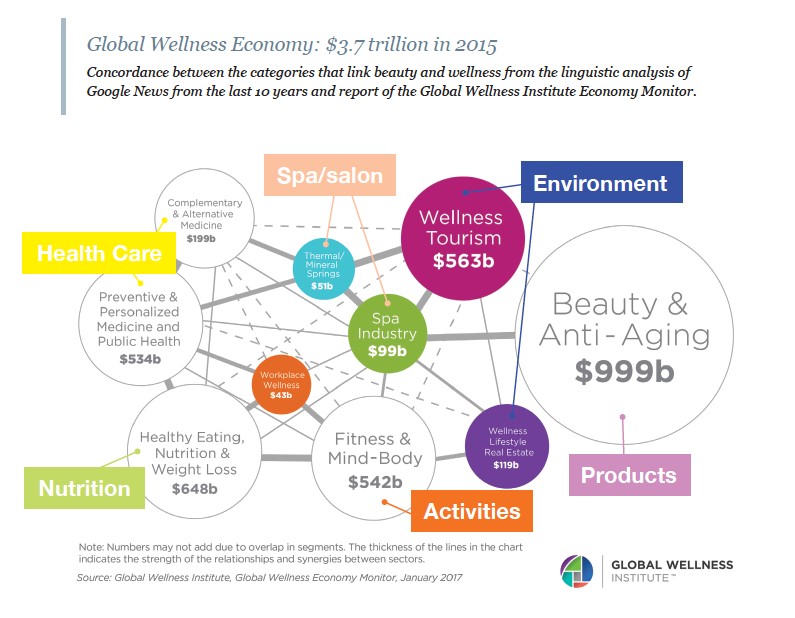
The journey of wellness from ancient practices and philosophical pursuits to a global multi-billion dollar industry, largely recognizable and ubiquitous in contemporary society, is intrinsically linked to the development and dominance of capitalism. It wasn’t merely the wellness movement seeking recognition or authenticity; it was, and continues to be, a profound transformation driven by the economic logic and structures of a capitalist system. To fully grasp the nature, scale, and even the controversies surrounding today’s wellness industry, understanding its roots in capitalism is essential.
Exploiting the Human Appetite: From Niche to Commodity
Capitalism, at its core, operates on the principle of identifying perceived value and transforming it into a profitable commodity. Wellness, long considered a state of being or a collection of individualized practices, began to be “discovered” within this framework. Visionaries, entrepreneurs, and market researchers identified the burgeoning desire for health, longevity, and holistic well-being among populations increasingly disillusioned with purely mechanistic or reductionist medical models. Practices ranging from yoga to meditation, aromatherapy to nutritional supplementation, were pinpointed not for their intrinsic benefits, but for their market potential. Capitalism’s insatiable drive to commodify – to package, standardize, and sell – turned these ancient or alternative approaches into consumer goods and services. Concepts like “wellness tourism” emerged, catering to specific desires for transformation or escape, demonstrating how capitalism segments and markets human experiences.
Capitalizing on Consciousness: The Rise of Consumer Wellness
The narrative shifted from selling products to selling the *idea* of wellness itself. Capitalism masterfully crafts desire. Advertisers, marketers, and content creators actively cultivated a culture of “self-care” and “optimal living,” creating narratives that equated consumer choices with improved health outcomes and enhanced life quality. This wasn’t just selling lotions or leggings; it was selling a lifestyle brand, positioning wellness as an essential component of modern success and personal branding. The industry developed specialized professionals – wellness coaches, registered dietitians (often charging premium rates), mindfulness instructors, reiki practitioners – whose expertise was primarily valued for its marketability. Furthermore, the digital revolution amplified this phenomenon, allowing “influencers” and online platforms to peddle wellness products and philosophies to vast audiences, democratizing access yet concentrating control within the digital capitalist marketplace.
Creating Infrastructure, Not Just Products: Institutionalizing Wellness
Wellness under capitalism isn’t confined to boutique studios or wellness magazines. It demands infrastructure. This necessitated the development of specialized spaces: wellness hotels, retreat centers offering holistic treatments, corporate wellness programs employing health managers, specialized supplement companies building intricate supply chains, gyms focusing on functional movement, and even cities or communities designed with wellness principles in mind (think New Agers or certain planned communities). Capitalism provided the mechanism and the motivation to scale these operations. Venture capital poured billions into wellness tech startups, promising everything from bio-hacking gadgets to AI-driven personalized nutrition. This institutionalization, often sprawling and complex, is a direct consequence of viewing wellness as a systematic industry, requiring massive investment, standardization, and recurring revenue streams.
The Marketing Engine: Shaping Desires and Defining the Market
The expansion of the wellness industry without a corresponding, obvious, and widespread increase in genuine health crises (though underlying health issues certainly existed) points directly to marketing power. Capitalism’s greatest tool in this context is sophisticated marketing and branding. Concepts like “functional medicine,” “intuitive eating,” “clean beauty,” and “mindfulness” are not just described; they are defined, packaged, and sold. Language itself is weaponized – “detox,” “vibration,” “energetic alignment,” “quantified self” – creating buzzwords that build desire and validate spending. Trust is often manufactured through certifications, testimonials (curated), endorsements (paid), and scientific-sounding marketing speak, even when the underlying evidence is contested or preliminary. This relentless marketing shapes consumer perception, creates new needs, and legitimizes expenditures, driving the industry’s growth through sheer force of narrative and branding.
Problem P solving Through Profitability: Supply and Demand Dynamics
Capitalism inherently seeks profitable solutions to perceived problems. Wellness presents a unique challenge: it addresses not a tangible, acute problem like a disease but a vast territory of preventative health, subjective well-being, and future-oriented potential. Despite these ambiguities, the market logic operates relentlessly. Entrepreneurs identified gaps: who would create standardized mindfulness curricula? How could personalized nutrition reach millions? How could luxury spa treatments be franchised? This persistent supply creation, however legitimate some wellness advancements or improvements in self-awareness it might bring, also inevitably leads to the proliferation of products and services of questionable efficacy or ethical standing. The pursuit of profit fuels innovation but also incentivizes over-expansion and, sometimes, dilution of core principles.
Mainstreaming Ambiguity: Subjective Value Meets Market Logic
Perhaps the most complex aspect is how capitalism deals with the inherently ambiguous and subjective nature of wellness. Unlike a car engine or a smartphone, the benefits of meditation, mindful eating, or spending hours in a sauna cannot be easily quantified or guaranteed. Yet, these are precisely the elements the system thrives on. Wellness products and experiences satisfy unquantifiable desires: reduced stress, increased peace, enhanced vitality, connection to something greater. Capitalism learns to extract value from things people feel, even when they can’t be easily measured by traditional metrics. Subscription boxes for “wellness essentials,” apps promising improved focus, workshops guaranteeing “self-discovery” – all leverage the gap between experiential benefit and tangible proof. This blending of tangible delivery with intangible benefit is central to the wellness industry’s capitalist DNA.
The Billion-Dollar Mirage: Profit Beyond Traditional Metrics
The culmination of these processes is an industry of staggering proportions. Figures often cited are inflated, yet the undeniable reality is that wellness, as shaped and driven by capitalism, is a highly profitable market. This profitability doesn’t necessarily stem from solving a previously unrecognized physical scarcity. Instead, it arises from transforming abstract human aspirations into a tangible, marketable entity. The industry thrives by meeting perceived needs within a framework that prioritizes recurring revenue, lifestyle attachment, and experiential consumption over solely tangible health outcomes. It has created a self-sustaining cycle where perceived demand generates wealth, and the generation of wealth further fuels demand, regardless of the fundamental health realities being addressed.


