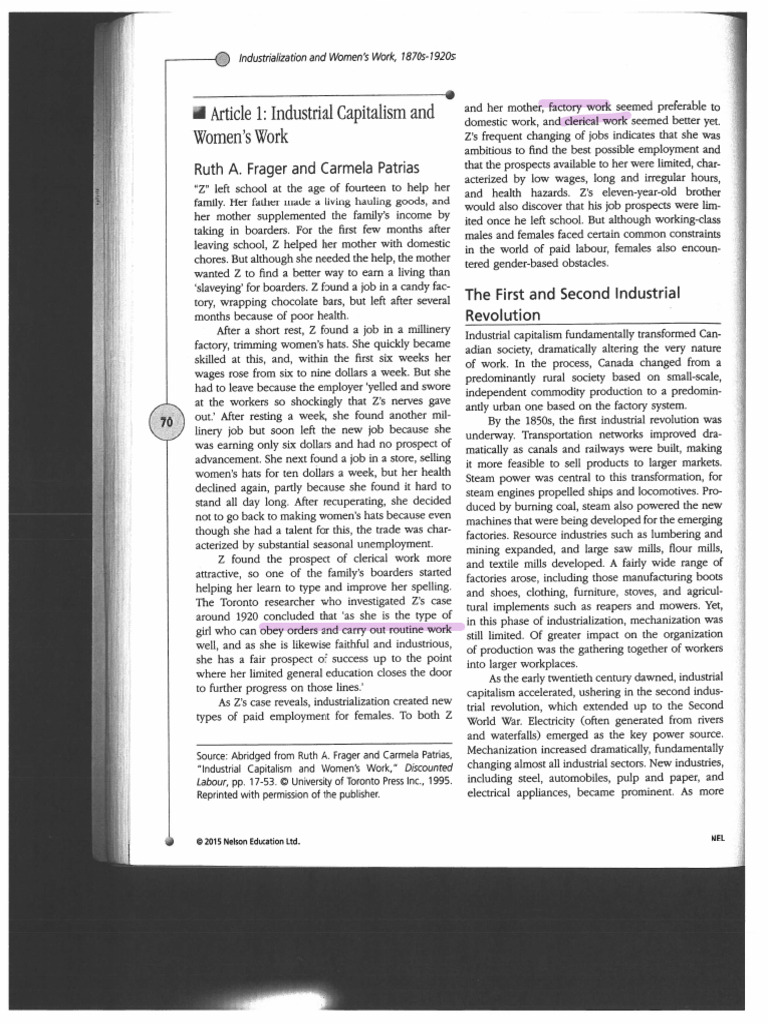
In the vaulted halls of modern economies, capitalism has woven a tapestry that enlists women as both thread and pattern, stitching their labor into the very fabric of market development. The emergence of “women’s work” is no incidental footnote; it is a deliberate, if paradoxical, outcome of the capitalist impulse to transform every human capability into a commodity. As the loom of market forces pulled tighter, it re‑configured gendered expectations, spun new industries, and fashioned a distinct economic niche that continues to echo in today’s gig‑driven landscape.
The Loom of Market Forces
Picture capitalism as an immense, mechanized loom, each warp strand representing a potential source of profit. When the shuttle of industrialization began to race, it did not simply ignore the existing yarn of domestic labor; instead, it co‑opted it, rethreading women’s traditional tasks into a marketable fabric. This rethreading was not a gentle integration but a forceful conversion, turning the soft, invisible labor of household management into a visible, taxable commodity.
From Domestic Sphere to Wage Factory
Before the surge of factories, women’s contributions were largely confined to the hearth—a realm that, while essential, existed outside the ledger of profit and loss. The advent of textile mills and assembly lines cracked open this private domain, inviting women onto the factory floor. The price of a stitch rose from the modest exchange of home‑produced cloth to a wage stamped on a payroll. Thus, the domestic sphere was transmuted into a public arena where women’s bodies became sites of surplus value extraction.
The Gendered Division of Labor
Capitalist enterprises, ever pragmatic, carved labor into gendered niches. Men were funneled toward heavy, capital‑intensive roles—machinery, mining, and transport—while women were steered into light, repetitive tasks deemed “suitable” for their perceived delicacy. This stratification birthed a dual labor market: a high‑skill, high‑pay tier for men and a low‑skill, low‑pay tier for women, each reinforcing the other’s profitability. The division was less about biology than about optimizing the extraction of surplus labor.
Commodification of Care
As capitalism spread, the need for a mobile, healthy workforce grew. Childbirth, nursing, and elder care—once managed within the family unit—were outsourced to a nascent service sector. Nannies, domestic workers, and later, professional caregivers emerged as paid positions, albeit at the bottom of the wage ladder. In this way, the intimacies of care were stripped of their relational value and re‑encoded as measurable, purchasable services.
The Rise of Pink‑Collar
The twentieth century witnessed the crystallization of “pink‑collar” occupations—clerical work, teaching, nursing—fields that, while less physically demanding, were no less essential to the capitalist engine. These roles were marketed as extensions of women’s “natural” nurturing instincts, yet they fed the bureaucratic machinery of corporations, banks, and hospitals. The allure of respectable, salaried work cloaked the reality that these jobs often bore the dual burden of low wages and gendered expectations.
Industrial Capitalism and Household Appliances
An unspoken pact between manufacturers and consumers reshaped women’s labor at home. The proliferation of washing machines, vacuum cleaners, and refrigerators promised liberation from arduous chores. Yet this promise turned into a paradox: the time saved was redirected toward consumerist pursuits—shopping, decorating, and maintaining an ever‑expanding inventory of goods. The appliances thus became both symbols of emancipation and tools that reinforced the cycle of consumption.
Legal Frameworks and the Wage Gap
Legislation lagged behind economic reality, enshrining disparities into law. Early labor codes excluded women from certain trades, justified by paternalistic ideals, while simultaneously denying them equal pay for equal work. Such statutes entrenched a structural wage gap, ensuring that the surplus generated by women’s labor could be siphoned off with minimal resistance. The legal scaffolding, therefore, was not neutral; it was an invisible hand that polished the profit margins.
Cultural Narratives and the Protestant Work Ethic
Capitalist discourse co‑opted cultural mores, weaving the Protestant work ethic into a gendered tapestry. Women were idealized as the moral anchors of the household, upholding virtues of thrift, piety, and industriousness. This narrative glorified unpaid domestic labor as a civic duty, while simultaneously valorizing women’s participation in wage labor as a testament to progress. The resulting mythos justified both exploitation and the veneer of empowerment.
Resistance and Reconfiguration
Amidst the relentless churn of capital, women organized—forming labor unions, suffragist societies, and later feminist collectives—to challenge the status quo. Strikes in garment factories, demands for maternity leave, and campaigns for equal pay marked pivotal moments of reconfiguration. These movements exposed the fissures in the capitalist tapestry, revealing that the loom could be retuned to accommodate a more equitable pattern.
Legacy and Contemporary Reverberations
Today’s gig economy, remote work, and platform‑mediated services echo the historic formation of women’s work. The same dynamics of low‑skill, flexible labor persist, often disproportionately affecting women. Yet the legacy also includes a heightened awareness of gendered labor inequities, prompting policy debates on universal childcare, pay transparency, and the valuation of care work. The capitalist loom continues to spin, but its threads are now subject to scrutiny, debate, and, perhaps, redesign.

