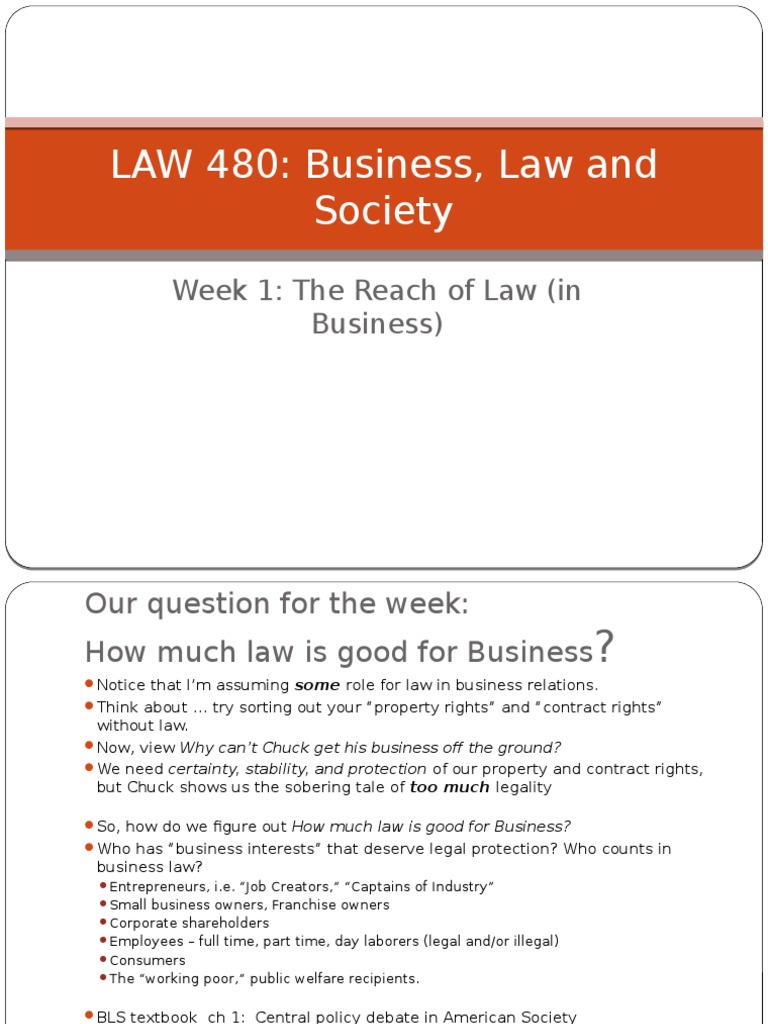
Welcome. Prepare for a deep dive into an enduring paradox: the intricate, often uncomfortable, and profoundly influential dance between capitalism and law. It’s more than mere jurisprudence and market transactions; it’s a cosmic alignment, a symbiotic tango driven by the forces of capital seeking accumulation and the state erecting, bending, or breaking the very structures through which it flows. Understanding how capitalism shapes the practice of law reveals not just economic mechanics but a fundamental architecture of modern society, a syncretic matrix woven from profit motives and legal constructs.
A Thousand Years of Co-Evolution: Law and the Loom of Capital
The narrative is older than financial markets themselves. Law, in its various iterations – feudal, mercantile, codified – has always been more than mere rules; it’s the scaffolding upon which economic orders are built. Ask not ‘what can the law do?’ but rather, ‘what must law do for commerce to thrive?’ This is the crux. Law doesn’t exist in a vacuum; from the Magna Carta’s constraints on royal exaction to the doctrines facilitating shareholder value today, its very substance is refined by the crucible of economic pursuit. It’s a relentless feedback loop. Capitalism demands certainty, predictability, and efficient enforcement. Law, in turn, evolves structures to grant precisely these.
Consider the historical trajectory. The rise of private property, the conceptualization of contract (as a shield more potent than a sword in facilitating exchange), the standardization of weights and measures, codifications of trade – each step finds legal expression aimed at lubricating the gears of commerce. The very notion of ’legal personhood’ granted to corporations by statute transcends natural law, creating entities capable of acquiring, holding, and transferring vast tracts of value, subject, of course, to the prevailing legal interpretations.
Facilitating the Engine: Law’s Role in Capital Accumulation
At its most fundamental, law provides the track. Capitalism requires secure and recognized forms of ownership – without property rights enforced against encroachment or state seizure, investment evaporates. This isn’t about whimsical acquisition; it’s about the predictability required for long-term value creation and financial planning. Intellectual property law, while often contentious, performs this function admirably for creative works and inventions, offering creators a limited monopoly to incentivize costly originality. Patents and copyrights are badges of limited-term monopoly privilege, granted in exchange for disclosure, creating temporary scarcity where natural abundance might otherwise reign, thereby fueling capital investment and market entry.
The legal system acts as an architect drafting deeds for abstract entities called ‘companies,’ outlining liability shields and avenues for capital injection. It delineates the parameters within which debt can be contracted, secured, and traded across borders. Dispute resolution becomes less a matter of redressing grievance and more a calculation of liability, contract breaches framed as commercial torts with quantifiable damages. Here lies the unique appeal for capital: law translates social interaction into manageable, anticipatable financial transactions.
Mobilizing the Market: Ensuring Fluidity and Reducing Friction
Capital, by its very nature, seeks the path of least resistance. Law actively engineers this landscape. Contract law standardizes promises into legally enforceable undertakings, predicated on consideration – a mutual exchange anticipated to benefit both parties (one of whose primary benefits is financial return). This standardization allows participants from any corner of the globe to operate under a common (though not identical) set of legal presumptions, reducing uncertainty.
Securities regulation, while arguably creating barriers in theory, often fosters certainty for sophisticated actors navigating established frameworks. Imagine the chaos without codified rules governing the buying and selling of financial instruments – the valuation would be impossible. Antitrust law attempts to maintain a competitive playing field, preventing established entities from becoming barriers themselves – a unique dynamic where the market rules are created to eventually challenge the behemoth it sometimes cultivates. And bankruptcy law – ah, bankruptcy law. A legal exit strategy, a structured dissolution, providing a crucial safety valve allowing capital and entrepreneurs to start anew under new, reformed legal identities.
The Incentive Matrix: Shaping Behavior Through Reward Systems
The language of law is replete with incentives. Tort law ‘prices’ negligence – the expected cost of a lawsuit deters imprudent risk-taking. Product liability law assigns the responsibility for outcomes (emitting toxic waste, causing a faulty car crash) to specific entities, making the legal consequences correspond to the harm caused. Contract law embeds incentive compatibility clauses, aligning the interests of parties. This isn’t just about punishment; it’s about calculation and deterrence.
Statutory incentives, tax breaks, deregulation – these operate on a grand scale, using the levers of the law itself to encourage specific behaviors deemed beneficial to economic goals, even if such goals sometimes conflict with broader societal well-being. The ‘benefit’ is future capital creation and wealth, the ‘cost’ measured in compromised social goods. It creates a unique, quantifiable calculus for policy and action.
The Market Fixated: Capitalism’s Unique Perspective on Legal Problems
Capitalism isn’t interested in the whole truth; it seeks solutions it understands – ones expressible in terms of market value or quantifiable consequence. This market-fixated lens colors legal approaches. The ‘social cost’ becomes the primary damage calculation in tort law (often excluding third-party harms not yielding direct market value). The ‘reasonable person’ standard might be juried, but the ‘reasonable investor’ standard dominates corporate governance litigation, prioritizing financial return and stock price.
Environmental law often struggles because ecological harm doesn’t neatly translate into market prices. Regulatory approaches attempt to impose externalized costs, while tort litigation sometimes fails to fully capture irreversible damage. Yet, within this constraint, creative legal structures emerge – cap-and-trade systems using market mechanisms to address pollution, ‘payment for environmental services’ pricing nature’s services by their economic value. It’s the legal system wrestling with assigning a price tag to everything, including non-exchangeable goods.
Efficiency vs. Justice: A Capitalist Tightrope
Here lies a fundamental tension the system constantly navigates. Legal fictions – corporations, limited liability – exist to serve capital. Yet, they must coexist with human norms regarding fairness, personhood, and collective well-being. What occurs when the ‘value’ society seeks (justice, equity) doesn’t align neatly with the market-driven value that governs most legal transactions? This is the core paradox capitalism shapes its law around.
The legal code balances actuarial calculus with enduring principles – statutes against murder, contracts for services – reflecting both the need to count lives as liabilities (in insurance, in deterrence theories) and to respect the intrinsic legitimacy owed even to the losers in commercial disputes. It crafts nuanced, case-by-case judgments rather than solely relying on broad economic principles. Even ‘capitalism,’ in its legal practice, maintains a respect, however compromised and pragmatic, for the rule of law and societal stability.
Conclusion: An Unbreakable Link
The entwining is profound and unbreakable. Law doesn’t regulate capitalism; capitalism fundamentally conditions what law can be and do. They form an inseparable dyad: the economic order demands the state, and the state, through law, defines the very economic order it serves. This dynamic creates a unique legal landscape – one driven by predictability, quantification, legal personhood, and market-based solutions, while simultaneously grappling with universal human aspirations that often fall outside market metrics entirely.
Capitalism’s shaping of law ensures that legal structures evolve to mirror its core tenets: efficiency, calculated risk, secure exchange, measurable outcomes, abstract ownership, and market-based regulation. And perhaps, it is precisely this marriage of pragmatic legal structure and self-sustaining accumulation that fuels the enduring power and pervasiveness of the system.

