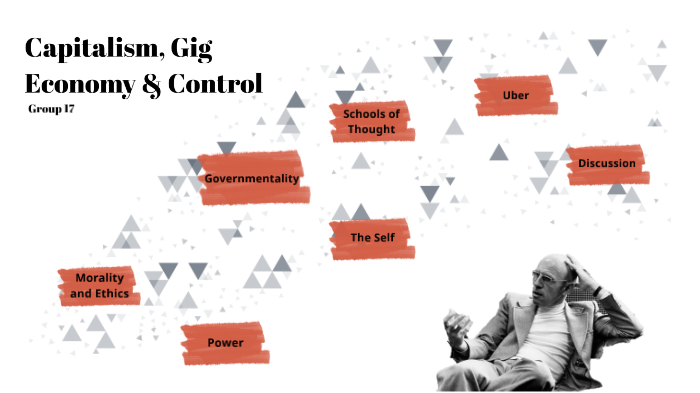
The gig economy has dramatically transformed labor markets and the nature of work itself, ushering in a new era of flexible, task-based employment. As capitalism evolves to accommodate and exploit this burgeoning sector, it enters a complex phase marked by both innovation and contention. The next phase of the gig economy is not merely an extension of its beginnings but rather a pivotal juncture that challenges traditional economic paradigms, labor relations, and regulatory frameworks. This article investigates how capitalism engages with the ongoing metamorphosis of the gig economy, what content readers can expect when exploring this topic, and the multifaceted dimensions that underscore this intricate relationship.
Historical Context: From Traditional Labor to Gig-based Models
The gig economy did not arise in a vacuum but is the culmination of decades of transformation in labor practices under capitalism. Initially characterized by long-term employment contracts and structured corporate hierarchies, capitalist economies gradually embraced flexibility to adapt to globalization and technological advancements. The subsequent rise of digital platforms—Uber, Airbnb, TaskRabbit—catalyzed a shift towards on-demand work, providing unprecedented autonomy for workers but also exposing them to greater precarity. Readers will find content that elaborates on the historical trajectory that contextualizes the gig economy’s emergence and reveals the fundamental capitalist drive towards labor flexibilization.
Capitalism’s Embrace of Flexibility and Efficiency
The gig economy’s appeal to capitalist interests lies primarily in its unparalleled efficiency and cost optimization. Corporations have adopted this model to reduce fixed labor costs, shift risks onto workers, and tap into global labor pools. Expect to encounter detailed analyses illustrating how capitalism valorizes flexibility not just as a worker benefit but chiefly as a mechanism to maximize profit margins. Articles will delve into the economic logic behind platform capitalism and the use of algorithmic management to enforce productivity and streamline operations, underscoring capitalism’s relentless quest for innovation in labor exploitation.
The Labor Supply Paradox: Autonomy Versus Exploitation
Central to the debate on the gig economy’s evolution is the tension between worker autonomy and systemic exploitation. Content on this front examines the paradoxical experience of gig workers: the allure of independence counterbalanced by precariousness, lack of benefits, and unpredictable income streams. Readers can anticipate nuanced discussions that interrogate capitalist narratives promoting self-entrepreneurship while critiquing the erosion of worker protections. Such writings often deploy sociological insights and labor theory to illustrate how capitalism constructs autonomy as a means of disguising intensified labor control.
Regulatory Challenges and Capitalism’s Adaptive Strategies
The burgeoning gig economy has precipitated a regulatory quagmire, compelling capitalist systems to continuously adapt. Readers can expect detailed expositions of how governments and capitalists negotiate regulatory frameworks. These analyses illuminate the strategies adopted by capitalist stakeholders to influence policy-making—lobbying for deregulation or crafting “flexible” labor laws that preserve profitability. The content here reveals capitalism’s dynamic capacity to reconfigure itself via legal ambiguity, leveraging regulatory gaps to sustain the gig economy’s growth while mitigating potential disruptions.
Technological Advancements and the Algorithmic Architecture
At the heart of the gig economy’s next phase is the proliferation of sophisticated technological infrastructure. Content on this subject explores the rise of algorithmic management systems, artificial intelligence, and data analytics that underpin gig platforms. Readers will find thorough explanations of how these innovations enable capitalists to exercise unprecedented control and surveillance over disparate workers. Discussions often address the influence of technology in deepening capitalist exploitation, highlighting the dual-edged nature of digital progress that simultaneously empowers and subjugates labor forces.
The Socioeconomic Implications and Capitalism’s Critique
The gig economy’s expansion raises profound socioeconomic questions that are ripe for exploration. Readers will engage with content dissecting income inequality, labor market polarization, and social stratification fueled by gig work. Reflective essays and empirical studies critique capitalism’s role in perpetuating these disparities, fleshing out a portrait of a labor market bifurcated between precarious gig workers and resilient capital owners. This segment also includes explorations of resistance movements, unionization efforts within gig sectors, and alternative economic models challenging capitalist orthodoxy.
Future Trajectories: Capitalism and the Gig Economy’s Next Iteration
Looking ahead, readers can access forward-looking analyses that speculate on the gig economy’s unfolding under capitalist regimes. Content in this vein explores emerging trends such as platform cooperatives, regulatory recalibrations, and technological decentralization. It highlights potential scenarios where capitalism might evolve either towards greater inclusivity and worker protections or intensified commodification and surveillance. Such discourse is crucial for understanding the dynamic interplay between capitalism’s imperatives and the gig economy’s possibilities.
Navigating the Information Landscape: What Readers Can Expect
When investigating how capitalism treats the gig economy’s next phase, readers should anticipate encountering a diverse array of content types. Scholarly articles provide rigorous theoretical frameworks and empirical rigor. Opinion pieces and editorials offer critical perspectives and normative arguments. Case studies bring empirical depth to the lived experiences of gig workers and platform operators. Interactive content, including infographics and data visualizations, elucidate complex economic trends and labor statistics. Altogether, this multiplicity ensures a comprehensive understanding of a multifaceted topic, blending data-driven analysis, critical theory, and narrative storytelling.
In sum, the intersection of capitalism and the gig economy’s next phase is a terrain rich with contradictions and transformations. Deep dives into historical evolution, economic logic, labor dynamics, regulatory maneuvering, technological innovations, and socioeconomic impacts reveal not only the adaptability of capitalism but also the profound challenges facing gig workers and policymakers alike. Readers embarking on this exploration will encounter a powerful narrative of change, resilience, and contestation at the forefront of contemporary labor capitalism.


