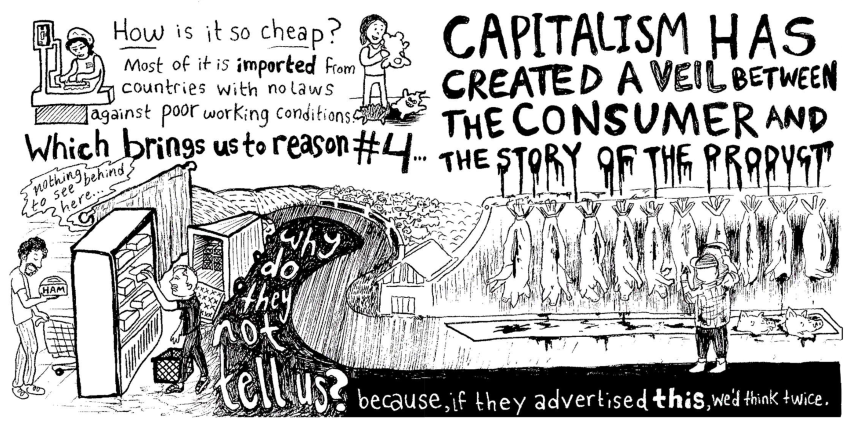
Ever felt like you’re watching a vast, intricate dance unfold around you, driven by millions of individual decisions, none choreographed but all contributing to a bizarre, self-organizing system? Perhaps you’ve heard whispers about *capitalism* and wondered what exactly lies beneath that term. A system, an engine, a force – it certainly feels pervasive. This guide isn’t about dry numbers or obscure theories; it’s about revealing the fundamental mechanics of this dominant economic framework. By the end, you’ll grasp its core logic, its driving forces, and its profound impact on how societies allocate resources, create value, and move through cycles of boom and bust. Prepare for a shift in how you perceive the very fabric of modern economic life.
Defining Capitalism: More Than Just Money
At its heart, capitalism is an economic system built upon a specific foundation: private ownership. Yes, that’s the starting point, but don’t let the simplistic catch-all term fool you. Capitalism is a complex system where individuals and businesses own and control the **means of production** – the factories, the land, the technology, the capital itself. This isn’t just about accumulating wealth; it’s about harnessing human ingenuity and resources to create goods and services. Think of it less as a rigid structure and more like a language – a complex system of symbols, rules, and incentives built over centuries, tracing its roots back to medieval trade guilds and the mercantilist theories of thinkers challenging the feudal order. Understanding this language is key to understanding how a civilization directs its energy towards creation and exchange.
The Spark Plug: Private Ownership and Profit Motivation
Why the intense focus on ownership? Because ownership implies **control**. This control empowers individuals and groups (enterprises) to make independent economic decisions. They decide what to produce, how to produce it, and who gets it. The crucial spark connecting ownership is the **profit motive** – the powerful incentive that drives nearly every action within the system. Profit, the difference between revenue generated from selling goods or services and the costs incurred to produce them, serves as the primary fuel for decision-making. A factory owner, for instance, doesn’t produce chairs unless they believe consumers will buy enough to turn a profit. This relentless pursuit of profit acts as an invisible hand, coordinating millions of separate decisions across the economy without any central planner. It rewards efficiency, innovation (think that brilliant app idea!), and responsiveness to consumer wants.
Finding Direction: The Price System
Navigate the complex world of capitalism? Enter the **price system**. This seemingly simple mechanism – the number displayed on a tag, the listed cost of a service, the fluctuating value of cryptocurrency – is arguably the system’s greatest feat of complex coordination. Prices don’t exist in a vacuum; they convey information, a sophisticated communication network linking producers and consumers across vast distances and time. How does that work exactly? They dynamically reflect the **interaction of demand** (how many consumers desire a particular good or service) and **supply** (the total amount of that good or service firms can produce and offer for sale at various price points), the price essentially summarizes this relentless push and pull.
Whispers of Opportunity: Competition and Innovation
Talk about evolution! Within the competitive environment set by the price system and private ownership, capitalism fosters an environment akin to natural selection. Think of the market as an ecosystem – numerous players, each striving to capture a larger share of the available profit. This intense rivalry, **market competition**, is the engine driving constant adaptation. Producers are forced to improve their products, lower their prices, or find entirely new solutions just to stay afloat. This “survival of the fittest” mindset spurs relentless innovation – from manufacturing efficiencies to groundbreaking research. Would a revolutionary new smartphone exist without companies fretting about competitors offering similar features at lower prices? It’s a powerful pressure cooker.
The Dance Floor: Understanding Market Flows
Economists often diagram the flow of a modern economy to understand its mechanics. Imagine vast interconnected rivers. There’s the primary flow: resources (raw materials, labor, energy) moving from **businesses** (soliciting them via factor markets like labor and capital markets) in exchange for wages and salaries. Simultaneously, businesses transform these inputs into final goods and services and release them into the market. Consumers, receiving income from businesses, use their earnings to purchase these goods and services, completing the cycle by sending money back to the producers. This ceaseless circulation is the very pulse of the market.
Beyond Tranquility: The Business Cycle
Though often associated with predictable, steady growth, capitalism is inherently dynamic. This dynamism inevitably introduces cycles – periods of expansion and contraction often termed the **business cycle**. Imagine ripples on a pond. A new invention, a surge in consumer confidence, an unexpected discovery of oil – these can trigger an **economic expansion**, where production ramps up, prices might moderate, and jobs increase almost inevitably. However, the boom, by its very nature, can create its own stresses – inflationary pressures as demand outstrips supply, imbalances between industries, and speculative booms built on shaky ground. At some point, the cycle reverses, leading to a period of economic contraction or **recession**, characterized by falling GDP, rising unemployment, and reduced production.
The Unseen Hand (or Is it?) – Government’s Role
Though characterized by its “laissez-faire” ideals – the French term meaning “let do,” signifying limited government intervention – a mature, stable capitalism relies heavily, perhaps paradoxically, on government institutions. Think beyond mere coin minting. A modern economy requires a framework: **clear property rights** to protect ownership and facilitate trade without constant conflict, enforced **contracts** that make long-term planning and credit extension possible, and a stable **monetary system** (usually national currency) enabling smooth transactions. Furthermore, as societies develop, citizens elect governments to address market failures – situations where the profit-driven system on its own produces inefficient or unjust outcomes, such as **public goods** (national defense, clean air, basic research) or issues arising from externalities (pollution, negative effects of production not paid for by the producer). Regulating monopolies and ensuring fair competition are also common government responsibilities in this economic landscape.
Treading Carefully: Assumptions, Limits, and Cracks in the Facade
Underlying much of classical economic analysis are powerful **assumptions**. Economists frequently model behavior as rational actors making decisions to maximize limited objectives, such as profit or utility (pleasure/satisfaction). They assume markets clear freely, lacking significant friction or artificial impediments, and that competition remains perfectly competitive. However, reality is messier. Markets can exhibit **monopolies**, situations where a single seller dominates, crushing the competitive pressure that drives prices down and innovation forward. Externalities, like pollution, can cause societal harm not reflected in market prices. Moreover, the relentless pursuit of profit doesn’t automatically prevent exploitation, unfair labor practices, the creation of artificial wants, or an economy structured to serve only the wealthy. Capitalism operates best under its inherent assumptions, presenting observers and participants alike with ongoing challenges of managing its inherent tensions and harnessing its immense potential for good while mitigating its risks.

