[
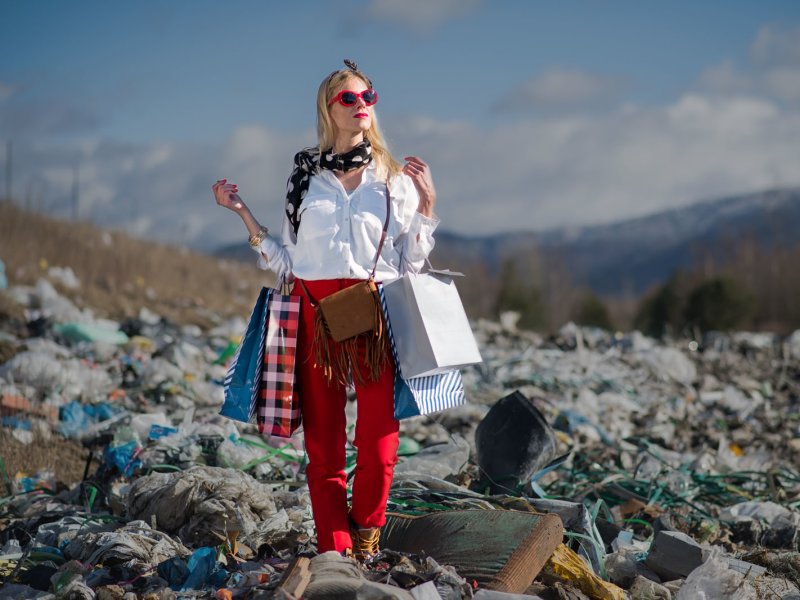
Fast fashion looms large in our wardrobes, doesn’t it? It whispers promises of sartorial abundance, adapting trends faster than the human eye can blink, offering affordable luxury under nearly any desired sun. Its relentless appeal, however, makes it capitalism’s most potent and pervasive environmental sin, a system designed for perpetual growth and consumption, blind to the devastating ecological consequences woven into its very fabric. It is the ghost in the machine of modern economics, a spectre of disposability haunting our planet.
] Defining the Beast: More Than Just Fashion
Fast fashion isn’t merely a retail strategy; it’s an economic engine. It redefines “fast” not just in terms of trend velocity, but in a relentless pursuit of cheap production and rapid turnover. Driven by market forces favoring low costs and high margins, it translates the high-stakes, ever-evolving runway into accessible garments for the masses almost immediately. This system thrives on predictability, mass production, and the constant generation of ’new’ desire, fueling a cycle of production-consumption-disposal. It’s the commercialization stripped bare of ethical consideration, turning the very concept of clothing into a disposable commodity. The allure lies in its ubiquity and affordability, making vanity not just affordable, but astonishingly convenient, blurring the lines between style and necessity in ways previously unimaginable outside the high street.
The Metabolic Cost: An Environmental Sin Offering
Capitalism, by its very nature, seeks accumulation and value extraction. Fast fashion, emerging as its most sophisticated consumerist weapon, does so at a staggering environmental cost. Consider the scale of production: the industry spurs one of the largest global manufacturing sectors, with outputs that dwarf even agriculture. Cotton production, accounting for billions of garments annually, is heavily reliant on pesticides and vast quantities of water – water often extracted from groundwater at unsustainable rates, leaving communities thirstier. Synthetic fibers, primarily polyester, while cheap to produce, demand significant energy derived from fossil fuels and release microplastics into our oceans with every wash, poisoning marine ecosystems silently. This relentless industrialization of style is an act of profound environmental irresponsibility, exploiting resources and degrading the planet’s very life-support systems in support of economic growth, essentially treating the biosphere as an infinite sink for waste and a source of raw materials.
Beyond the Ditch: The Unseen Tragedy of Waste
A garment’s journey ends not just in landfill, but in a planetary nightmare of plastic pollution. Synthetic fabrics release microfibers continuously during washing, clogging ecosystems and entering the food chain. Meanwhile, oceans bear the brunt of discarded textile waste. Rivers are conveyor belts, carrying synthetic fibers and dye – a cocktail of toxic chemicals that bleach coastlines and poisons aquatic life. Rivers flow, bearing not only water but also countless synthetic threads, a slow, invisible bleed into our oceans, polluting marine habitats and contaminating the air we breathe through the release of volatile organic compounds from dyes and chemicals. This cascade of waste, enabled by the low value and replaceability of fast fashion items, represents a silent environmental genocide, a persistent scar on the Earth’s surface and its watery veins, embodying the throwaway culture that fast fashion cultivates.
Threads of Exploitation: Labour, Not Coincidence
Environmentally, fast fashion is a desecration. But its environmental toll is inextricably linked to another core pillar – the human cost, the exploitation of labour. Driven by the bottom line, brands outsource manufacturing to countries with cheap labour. This often translates to factory conditions marked by long hours, low pay, and minimal worker rights. In Bangladesh, the Rana Plaza tragedy exposed the lethal combination of unsafe structures and a system incentivizing prioritizing cost over safety. This isn’t a separate issue; the cheapness mandated by the fast fashion model necessitates compromised labour conditions. By demanding ultra-low prices, capitalism forces the exploitation of both the planet and people – turning lives into raw material for profit, thereby amplifying its environmental transgressions through the lens of social justice. Devaluing human life and dignity creates a perverse incentive structure mirroring environmental desecration.
The Mirage of Abundance: Fashion’s Seductive Trap
Capitalism constantly promises liberation through abundance. Fast fashion delivers. For a fraction of the cost of a conventional garment, consumers can instantly embody trends, satisfying vanity and the urge to keep pace with society. This manufactured desire transforms style into an endless cycle, convincing people that desiring more means freedom. Hints in advertising suggest a new normal, a constant flow of novelty. This manufactured desire, presented as liberation, actually fosters a culture of disposability. If the latest trend costs less than $10 and looks good, why save? Why repair? Why worry about the environmental impact of something seemingly affordable? The constant cycle of acquisition normalizes overconsumption, making excessive desire appear not just acceptable, but preferable, thereby embedding environmental disposability into our material worldview.
The Inescapable Nexus: Capitalism Greeds Fueling Fashion’s Sins
The environmental destruction wrought by fast fashion doesn’t exist in a vacuum; it is fundamentally driven by capitalist imperatives: profit maximization, cost minimization, relentless growth, and shareholder value. Shareholder demands pressure companies relentlessly, pushing designs out with the speed of light to generate quarter-to-quarter returns. Competition breeds synthetic fibre reliance for lowest cost of goods. Market segmentation based on price rather than quality encourages disposability. The pursuit of ever-increasing returns necessitates resource extraction on an industrial scale – the very activities causing our ecological crisis. The inherent contradiction lies here: a system demanding infinite growth inevitably depletes finite resources and creates waste, while simultaneously encouraging consumption beyond planetary limits. It is the unyielding pursuit of value that has created these externalized costs – the environmental sins – which are now inescapable consequences of this particular form of exchange.
Conclusion: A Cultured Collapse
The relationship between capitalism and fast fashion is symbiotic, yet its environmental sins are monstrous, a perfect storm of corporate greed, consumerism, and resource depletion. Its unique appeal lies precisely in its ability to obscure this cost – by masking the true price through cheap manufacturing, synthetic materials, and a marketing machine adept at desensitizing consumers. Yet, recognizing the potent connection between ecological degradation and our consumer culture is crucial. Understanding that fast fashion is not just an environmental hazard, but a symptom, a culture, is the first step toward demanding accountability and fostering a shift beyond this destructive paradigm. It demands that we evaluate the true cost, not just of clothes, but of our whole way of life and our connection to the planet that provides for us.

