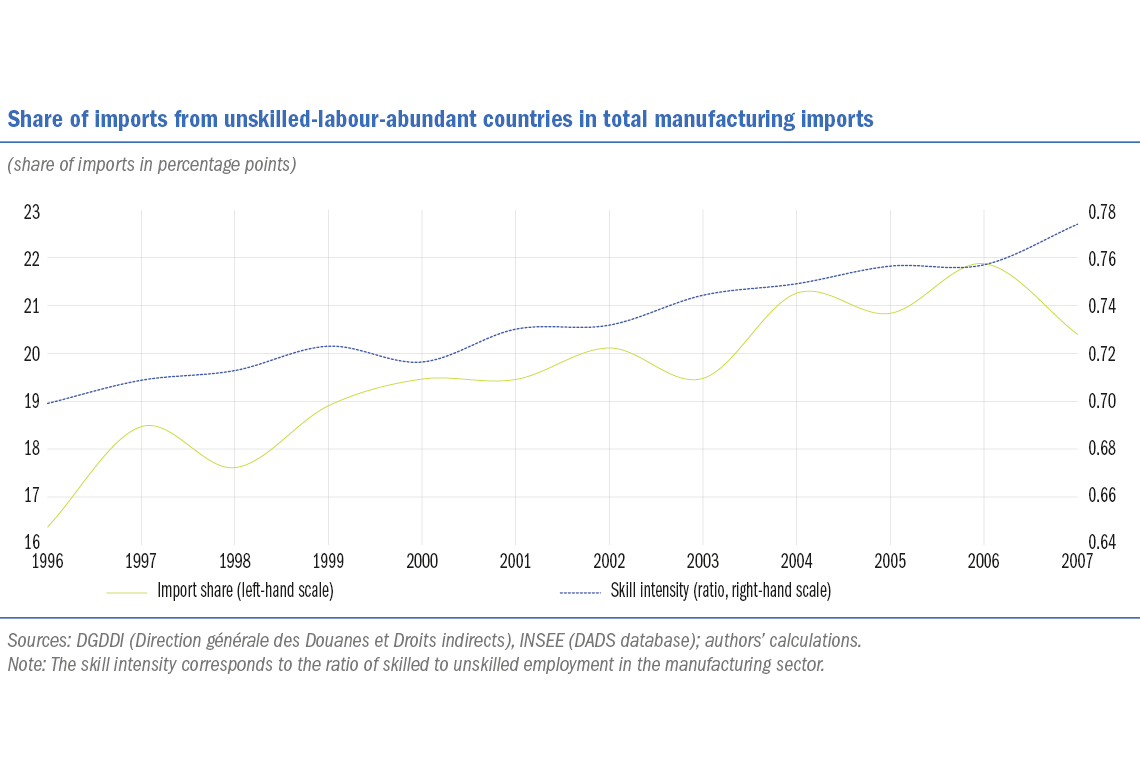
In the grand tapestry of modern capitalism, offshoring has often been heralded as a strategy that unlocks unprecedented efficiencies and economic growth. Corporations gleam with promise, touting the virtues of reduced costs and access to global markets. Yet beneath this polished veneer lies a more intricate narrative, one rife with contradictions and unseen casualties. The impact of offshoring on workers in affluent nations is both profound and paradoxical. Contrary to tales of universal prosperity, many find themselves grappling with precarity, diminished prospects, and a shifting sense of economic identity. Understanding how offshoring affects rich country workers invites a profound reevaluation of the prevailing economic doctrine and its assumptions about progress.
The Facade of Economic Rationality: Offshoring’s Promised Prosperity
At first glance, offshoring represents an unassailable economic logic: by relocating production to regions with lower labor costs, companies reduce expenses, boost competitiveness, and potentially pass savings to consumers. This logic is often framed within the seductive narrative of global integration and the rise of a borderless marketplace. Investors revel in the augmented profit margins, and policymakers champion job creation in high-value sectors at home, such as technology and services—presumed beneficiaries of freed capital and managerial focus. Yet, what is often obscured beneath this economic rationality are the tangible human costs borne by a vast swath of the workforce. The redistribution of labor-intensive jobs abroad precipitates not just job loss, but a frictional displacement that is less easily remedied than the textbooks suggest.
Displacement of the Middle Class: Erosion of Economic Security
The middle class, traditionally the bedrock of affluent economies, has borne much of the brunt of offshoring’s backlash. Manufacturing and routine service jobs, once reliable sources of stable wages and upward mobility, have migrated overseas, peeling away the economic scaffolding upon which countless households relied. The resultant vacuum is not merely quantitative but qualitative: surviving employment often shifts toward lower-paying, less stable, or more contingent work. The specter of underemployment and wage stagnation looms large, sapping economic security and fomenting societal unease. This erosion stretches beyond economics, affecting the social contract and threatening the cohesion once fostered by shared prosperity.
The Polarization of Labor Markets: Winners vs. Losers
Offshoring intensifies labor market bifurcation, magnifying disparities between high-skill professionals and low-skill workers. While capital and certain skilled workers—engineers, executives, designers—may capitalize on new opportunities spawned by globalization, those with less formal education frequently encounter dwindling prospects. This divergence reinforces socioeconomic stratification. The privileged few reap the benefits of globalization’s technological and managerial leads, while a growing cohort contends with employment instability and diminishing bargaining power. The resulting polarization challenges traditional narratives of upward mobility and exposes fault lines within capitalist economies, prompting questions about inclusivity and justice.
Deindustrialization and Its Ripple Effects
Offshoring contributes directly to the phenomenon of deindustrialization in wealthy nations. As factories close or relocate, entire communities suffer reverberations far beyond job loss. Local economies buckle under reduced demand for auxiliary services, housing markets deflate, and civic institutions strain under reduced tax bases. The cultural and psychological repercussions—loss of identity tied to industrial pride and community solidarity—compound economic hardships. Such transformations disrupt intergenerational continuity and reshape regional landscapes in ways that defy simple economic metrics.
Undermining Collective Bargaining and Worker Power
The global reallocation of production fundamentally alters labor’s bargaining position. Employers wield enhanced leverage, threatening relocation to cheaper labor markets, which stymies wage demands and weakens unions. This asymmetry diminishes collective worker power and accelerates wage suppression, even for jobs that remain domestically. The specter of “offshore competition” becomes a potent tool in managerial arsenals, encouraging concessions and atomizing labor solidarity. In this way, offshoring reshapes not only the geography of work but also the dynamics of labor relations.
The Illusion of Job Creation in High-Skill Sectors
Promises that offshoring leads to a net proliferation of higher-skilled, better-paying jobs at home merit cautious scrutiny. While it is true that sectors such as technology, finance, and professional services have expanded, these gains are not universally accessible or sufficient to offset losses in traditional sectors. Entry barriers, educational disparities, and geographic mismatches constrain worker mobility. Moreover, automation and digitalization increasingly threaten these very sectors, casting doubt on their permanence as reliable job engines. Hence, the vision of seamless transition to a knowledge economy remains, to a significant extent, aspirational rather than assured.
The Psychological Toll: Alienation and Economic Anxiety
Beyond tangible economic impacts, offshoring exerts a profound psychological toll. Job displacement and economic insecurity feed into feelings of alienation and loss of purpose. For many workers, employment is more than income; it embodies dignity, social connection, and identity. The erosion of these anchors can engender disaffection, political polarization, and societal malaise. This intangible dimension underscores that the costs of offshoring ripple beyond balance sheets, penetrating cultural and emotional spheres.
Reimagining Capitalism: Toward a Responsive Economic Paradigm
The challenges posed by offshoring to rich country workers impel a reconsideration of capitalism itself—not its existence, but its orientation and priorities. A recalibrated economic paradigm might emphasize resilience, equitable opportunity, and social cohesion alongside efficiency. Policies that encourage reinvestment in worker skills, robust social safety nets, and responsible corporate stewardship could mitigate adverse effects. Recognizing that global supply chains are not merely financial constructs but social ecosystems may, paradoxically, restore balance and invite a more holistic conception of prosperity.
Ultimately, the story of offshoring is not merely one of economic calculations and corporate strategy, but one deeply entwined with human experience and societal destiny. To grasp its full implications is to question comfortable orthodoxies and to seek a capitalism more attuned to the fabric of society it shapes.

