What if the very tool designed to invigorate capitalism subtly alters its foundational game? Quantitative easing (QE), a monetary strategy once hailed as a panacea during financial crises, invites not only praise but also profound scrutiny. Could this unconventional approach, aimed at stimulating economies, unwittingly challenge the core tenets of capitalism itself? Understanding how quantitative easing affects capitalism demands a journey through its mechanisms, consequences, and the intricate interplay with market dynamics.
The Essence of Quantitative Easing: An Unorthodox Catalyst
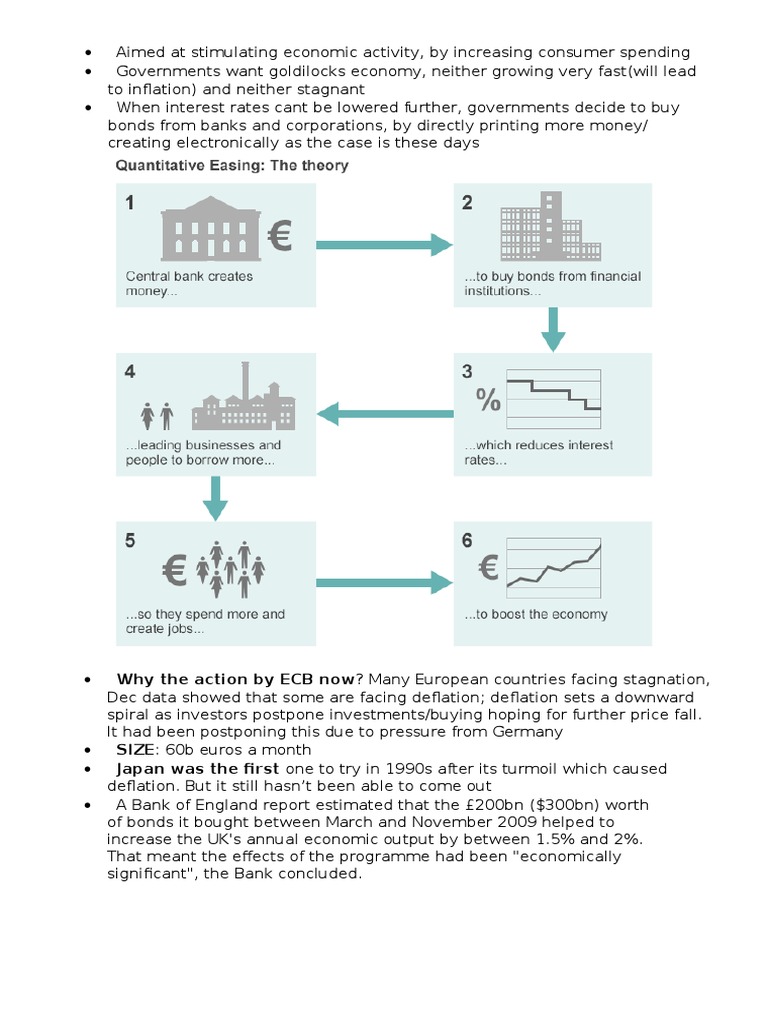
At its core, quantitative easing is a monetary policy wherein central banks inject liquidity into the financial system by purchasing long-term securities, such as government bonds and corporate debt. Unlike traditional interest rate adjustments, QE targets the broader financial landscape by expanding the monetary base. This infusion is intended to lower borrowing costs, spur lending, and ultimately fuel economic growth. Yet, this approach transcends mere stimulus; it reconfigures the contours of capital flow and investment behavior within capitalist economies.
The Paradox of Liquidity: Stimulating Growth or Distorting Markets?
Capitalism thrives on the efficient allocation of resources driven by market signals. By flooding markets with newfound liquidity, QE blurs these signals. Capital becomes more accessible, but at what cost? The surfeit of cheap money often chases higher yields, inflating asset prices beyond fundamental values. Equities, real estate, and bonds can become artificially buoyant, fostering financial bubbles and exacerbating wealth disparities. Instead of channeling funds into productive enterprises, speculation and risk-taking are emboldened, potentially undermining the vigorous creative destruction that capitalism necessitates.
Inflation, Deflation, and the Price of Stability
One of the cardinal objectives of quantitative easing is to stave off deflation and rekindle moderate inflation, a state considered conducive to sustainable economic expansion. However, the relationship is far from linear. While QE can nudge inflation upward by boosting demand, its impact is often uneven and delayed. At times, the influx of liquidity merely inflates asset prices without permeating the real economy. This creates a dichotomy where consumer prices remain subdued while wealth concentrated in financial assets surges. Such dissonance challenges capitalism’s equilibrium, complicating the balance between price stability and growth.
Wealth Inequality: QE’s Unintended Consequence
The capitalist framework is predicated on opportunity and competition, yet quantitative easing may inadvertently entrench economic disparities. By disproportionately enhancing asset prices, QE predominantly benefits individuals and entities holding significant wealth portfolios. The middle and lower-income groups, less likely to own such assets, derive minimal direct advantages. This widening gulf can erode social cohesion and question capitalism’s promise of upward mobility. Furthermore, wealth concentration may translate into amplified political and economic power, skewing market competition and democratic accountability alike.
Corporate Behavior and Risk Dynamics in the Era of QE
Empowered by cheap capital, corporations have ridden waves of expansion, mergers, and stock buybacks, sometimes prioritizing shareholder returns at the expense of long-term innovation and resilience. The liquidity glut encourages risk-taking and leverage, fostering an environment where short-term gains overshadow sustainable growth. This morphs capitalist enterprise from an engine of innovation into a mechanism for financial engineering. The delicate equilibrium between entrepreneurship and financialization risks tipping toward the latter, raising questions about the enduring vitality of capitalism under expansive monetary regimes.
The Sovereignty of Central Banks: Guardians or Governors of Capitalism?
Quantitative easing marks a watershed in the role of central banks, positioning them as powerful arbiters in capitalist economies. Their unprecedented intervention challenges laissez-faire ideals, prompting debates about the limits of monetary authority. While stabilizing financial markets, central banks also assume an active part in wealth distribution and economic direction. This duality evokes a conundrum: does QE enhance capitalism’s dynamism by preventing systemic collapse, or does it engender dependency and moral hazard, compromising market discipline? The evolving role of central banks embodies this tension, reshaping capitalism’s governance.
Long-Term Implications: Will QE Redefine Capitalism’s Future?
As central banks contemplate tapering or unwinding QE, the residual effects linger. Asset valuations, debt levels, and investor behavior have been recalibrated in its shadow. How capitalism adapts to this transformed environment remains uncertain. Will it revert to self-correcting cycles of boom and bust, or has QE ushered a new paradigm where monetary omnipresence is the norm? The potential for chronic market distortions, coupled with burgeoning inequality and shifting corporate incentives, signals that capitalism must evolve. The challenge lies in balancing monetary innovation with preserving the competitive, dynamic essence that fuels growth and prosperity.
A Playful Question to Contemplate
Imagine capitalism as a high-wire act, where risk and reward are finely balanced. Now, what happens when the safety net is continually lowered by quantitative easing? Does it embolden daring feats of innovation, or does it dull the performers’ instincts, making them reliant on support rather than agility? This metaphor invites reflection on whether QE is a boon that nurtures capitalism’s resilience or a crutch that stifles its edge.

