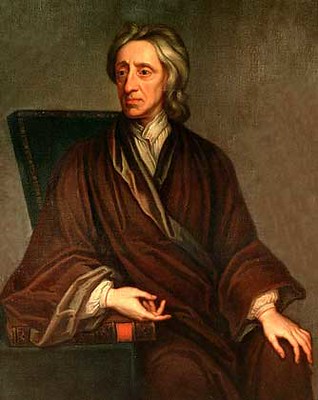
The enduring mystique surrounding John Locke is evident in how deeply his philosophy permeates modern economic thought, particularly capitalism. While many recognize Locke as a foundational figure in liberalism, few fully appreciate the intricate ways his ideas underpin the principles and practices of market economies. Observers often marvel at the seamless impact of Locke’s theories on property, individual rights, and governance, yet the fascination runs deeper—anchored in his nuanced exploration of human nature and societal order. This exploration seeks to unravel the profound influence Locke wields over capitalist ideology, elucidating why his legacy continues to resonate within economic discourse.
The Philosophical Bedrock of Property Rights
Central to Locke’s impact on capitalism is his distinctive conception of property. Locke posited that property rights are natural rights, derived from labor and individual effort, not merely social constructs. In his “Second Treatise of Government,” he famously argues that when a person expends labor upon natural resources, those resources become their property. This principle irrevocably shifted the understanding of ownership from a feudal or arbitrary allocation to a right grounded in personal endeavor and merit.
This notion catalyzed the capitalist emphasis on private property as a fundamental element of economic activity. The sanctity of property rights fosters the incentive structures necessary for prosperity and wealth generation. By legitimizing personal acquisition and accumulation within a moral framework, Locke sowed the intellectual seeds for a system where entrepreneurship and innovation could flourish.
The Moral Dimension of Labor and Value Creation
Locke’s labor theory of property extends beyond legalistic ownership; it imbues labor with moral significance. Labor is not just toil—it is the transformative force that confers value. This view resonates deeply with capitalist ideals, where productivity and effort are paramount virtues. Unlike economic theories that treat labor as a mere market commodity, Locke’s perspective acknowledges labor as a purposeful human activity tied to dignity and entitlement.
By framing labor as the origin of value, Locke provides a philosophical justification for individuals to reap the rewards of their industriousness. This concept cultivates a societal ethos supportive of meritocratic principles where success is attributed to effort and ingenuity, not inherited status or arbitrary privilege. It subtly reinforces a merit-based economic hierarchy central to capitalist thought.
Individual Rights as Guardians of Economic Freedom
Integral to Locke’s philosophy is the primacy of individual rights—including life, liberty, and property—which collectively create the framework for economic freedom. He envisioned a society where individuals possess the autonomy to engage in contracts, own assets, and pursue their economic interests. This freedom from undue interference is essential for dynamic market interactions and wealth creation.
Capitalism thrives on the assurance that individuals can freely exchange goods and services within a predictable legal environment. Locke’s insistence on natural rights acts as a bulwark against governmental overreach and arbitrary confiscation, establishing a boundary that protects economic agents. This protective role fortifies the confidence necessary for investment, innovation, and risk-taking—the lifeblood of capitalist economies.
The Social Contract and the Legitimacy of Economic Institutions
While Locke’s influence is often associated with the defense of private property and individual rights, his doctrine of the social contract also undergirds the legitimacy of economic institutions. Locke argued that governments exist by the consent of the governed, with the primary role of safeguarding natural rights. This reciprocal relationship grants ethical justification to political and legal systems that enforce property rights and contracts crucial for market operations.
The social contract concept legitimizes the institutional frameworks—courts, regulatory bodies, and enforcement agencies—that stabilize capitalist economies. These institutions enable predictable transactions, resolve disputes, and enforce rules, thereby reducing uncertainty. Through this lens, capitalism’s structural foundations derive not just from market forces but from a collective agreement to uphold mutual rights and responsibilities.
Locke’s Nuanced View of Wealth and Its Limits
Contrary to the stereotypical caricature of capitalist profiteering, Locke presents a balanced and circumspect view of wealth accumulation. He acknowledges natural limitations, such as the spoilage of goods and the ethical imperative not to hoard beyond one’s needs, which injects a moral compass into economic behavior. This temperance reveals Locke’s deeper concern with harmony between individual pursuits and communal well-being.
This facet is significant because it complicates simplistic narratives about capitalism being unrestrained greed. Instead, Locke can be seen as advocating a capitalism tempered by reason and morality—where wealth is both a personal right and a social responsibility. Such a perspective invites ongoing discourse on sustainable and ethical economic practices that remain relevant today.
The Enduring Fascination: Locke as Intellectual Progenitor of Capitalism
The common observation that Locke is the “father of liberalism” barely scratches the surface. The deeper fascination stems from how his ideas provide a comprehensive philosophical architecture supporting capitalism’s ethical, legal, and economic dimensions. His writings articulate a vision of human nature as rational, industrious, and rights-bearing—attributes that align seamlessly with capitalist aspirations.
Furthermore, Locke’s subtle integration of morality with economic rights invites continual reinterpretation and debate. His legacy is not a static doctrine but a living, breathing intellectual tradition that challenges societies to balance liberty, property, and justice. Understanding Locke’s nuanced philosophy illuminates the enduring magnetism of his thought in shaping the past, present, and future trajectories of capitalism.

