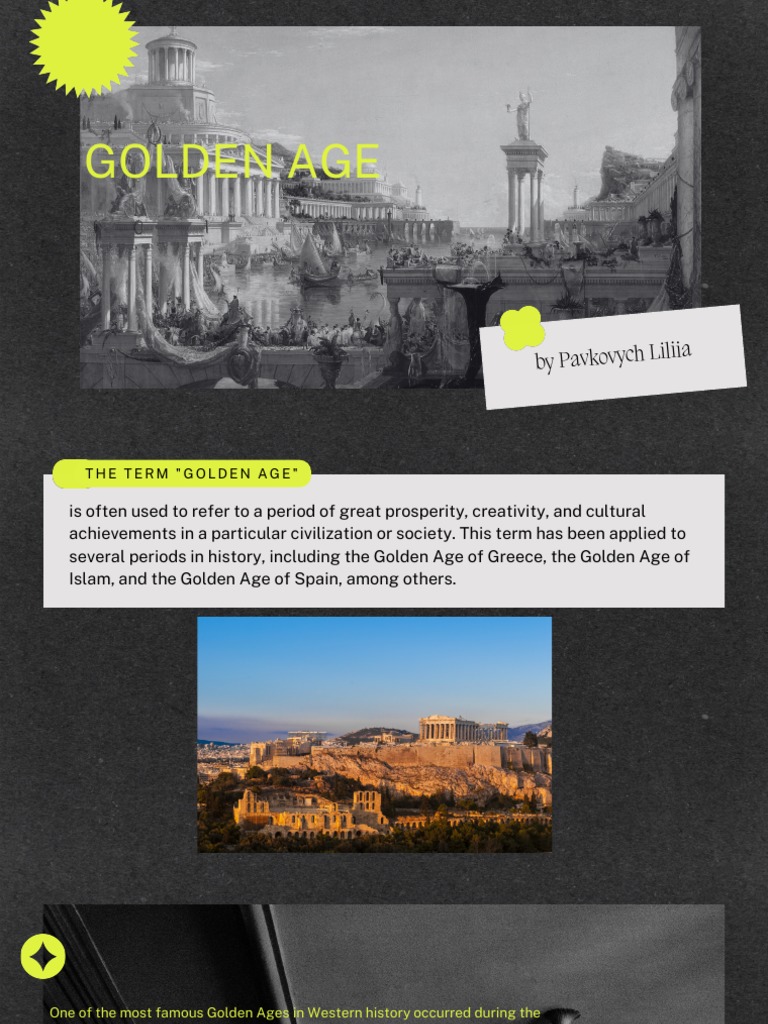
The term “golden age” conjures varied images, from classical antiquity to Hollywood nostalgia. When applied to Post-WWII Western capitalism, it signifies a specific, albeit perhaps less universally revered, epoch. This period marked a phase of unprecedented integration, expansion, and relative stability, often hailed, in retrospect, as a moment of extraordinary consolidation after the cataclysm of 1939-45. It’s a period that remains deeply etched in collective memory, a time of widespread reconstruction, burgeoning prosperity, and a distinct reimagining of the socio-economic landscape. The enduring fascination with this era—its perceived triumphs, its foundational elements, and its lasting legacy—speaks to more than mere historical curiosity; it hints at the profound ways this period reshaped modernity.
The Improbable Restoration
The term “golden age” seems almost counterintuitive when describing Western civilization’s recovery from global conflict at its devastating close. The world lay fractured; economies were shattered, societies scarred, and the foundations of established empires seemed precariously weak. Yet, from this infernal crucible emerged an almost imperceptible, yet inexorable, process of reconstruction. It commenced not merely as a rebuilding effort, crucial as that was, but as a fundamental resetting of the international rules of engagement, trade, and finance. This was the stage setting. What preceded this consolidation wasn’t necessarily a period of widespread contentment or organic flourishing; rather, it was a landscape stripped bare, allowing for a radical, albeit perhaps unconscious, reconfiguration based on perceived lessons learned, predominantly the imperative of avertion from the chaotic extremes of pre-war capitalism.
Forging a Political Constellation
Political landscapes underwent a profound transformation alongside economic reorganization. While diverse, the post-war order featured a broad consensus centered on preventing major warfare and fostering conditions conducive to recovery and progress. On a continental scale, Germany and Japan were placed under significant constraints, marking a decisive departure from historical imperial rivalries. Elsewhere, there emerged a dominant configuration where state intervention, though ideologized (“democracy”), became increasingly common across a wide ideological spectrum, from pragmatic center-left to pragmatic center-right. The seeds of institutions like the International Monetary Fund and the World Bank were sown explicitly with the aim of preventing future economic warfare. Socially, the period witnessed a widespread embrace of social partnership, albeit predominantly based on a Taylorist-Fordist model of production and consumption. A tacit agreement emerged: material certainty, facilitated by government programs but still anchored in capitalist production, offered unprecedented legitimacy to governance.
Redefining the Economic Architecture
The bedrock of the Western capitalist expansion was fundamentally reshaped. Keynesian economics ascended from intellectual fringes to dominate policy formulation, championing national budgets as tools for managing aggregate demand, mitigating cyclical fluctuations, and promoting full employment. This interventionism was not a repudiation of capitalism proper, but rather an attempt to manage its inherent volatility – the “Great Fear” Keynes himself diagnosed – through increased state coordination and finance capital. This era saw the emergence of unique “mixed” welfare states, blending residual social security (social assistance) with collective instruments (pensions, unemployment benefits, healthcare, education funded primarily by employers/welFare states). Though stark inequalities remained, the introduction of comprehensive welfare safety nets fundamentally altered the relationship between citizens and their political economy, creating a more resilient domestic consumption base.
The Pax Capitalist Imagination
A foundational shift occurred in the very nature of capital accumulation strategies. This period marked the triumph, not the mere survival, of Finance Capital, a term denoting the complex integration of large-scale industry with powerful banking or financial entities (Rockefeller, Ford, Morgan families were illustrative cornerstones). The decisive consolidation was the rise of the Bretton Woods monetary system, sacrificing the classical gold standard for a system anchored by the dollar, providing stability crucial for burgeoning international trade and investment. This framework, coupled with cheaper credit and the rising dominance of speculative capital (especially later in the period), set the stage for long-term finance capital to become the decisive motor of accumulation, replacing merchant and industrial capitals. The “vital center” that Woodrow Wilson described in international relations became the primary locus of global power, a “Cephalic” center directing the flow of capital across newly integrated markets.
Technological Accelerants
Simultaneously, technology offered powerful accelerants to this transformation. From nuclear power to integrated circuits, the dominant scientific paradigms of the era enabled entirely new modes of production, communication, and energy generation. The Cold War itself inadvertently accelerated technological competition (space race, computing). Perhaps more fundamentally impactful during this foundational period was the consolidation of mass production techniques – Fordism – achieving economies of scale that facilitated the widespread availability of consumer goods manufactured at historically unprecedented low marginal costs. Combined with rising expectations enabled by stable employment and the nascent credit system, this ushered in the “Age of Abundance,” dramatically altering human life through the mass provision of previously luxury items – domestic electrical appliances, affordable cars, widespread air travel.
An Agenda for Affluence
This unprecedented material expansion created a unique and powerful new context within advanced societies: a generalized aspiration for the middle-class lifestyle facilitated by affluence. This shaped a new “logic of consumption,” where previously secondary considerations – style, comfort, novelty – began to eclipse factors of economic necessity, thereby driving increased production and consumption in a virtuous cycle. The very concept of “standard of living” became a primary measure of societal progress and individual success. The “Agenda for Affluence” dictated priorities, demanding new forms of urban planning, education, and even recreation, fundamentally reshaping the “lived space” of society and embedding consumption as a central component of national identity.
Capitalist Thermidor? Hegemonic Shift?
The era’s consolidation fostered a distinct sense of self-assertion for Western-style capitalism globally: hegemony. While it cannot be overstated or caricatured as possessing the infallible clarity of a Marxist thesis, a broad consensus emerged among international observers (albeit often strategically ambiguous ones like the OECD) that Western-style liberal market and social systems constituted a “model for development” to be emulated. The Cold War further contributed to this self-assured atmosphere, validating the “American way of life” and offering an alternative to statist alternatives in the Global South. This wasn’t necessarily the peak of capitalist ideology, but rather its hegemonic moment, where its particular form became the default narrative against which other arrangements were judged. Its explanations and prescriptions permeated development institutions and aspiring states.
A Cartographer of Capital?
To chart the contours of this period’s expansion, one must employ a sophisticated analytical framework. This necessitates moving beyond simple GDP or market capitalization indices, which capture accumulation but not necessarily power or influence. A more complex map shows a circuit of capital – originating from national treasuries, circulating via institutions like sovereign wealth funds and state development banks, being leveraged through central banks, intermediated by commercial and investment banks, transacted through complex financial derivatives (even within the Bretton Woods framework), and ultimately seeking yields in highly developed corporate and consumer bond markets, real estate, and increasingly diversified private finance. This intricate network defined the era’s financial power, extending beyond mere monetary creation to becoming a primary logic of investment and social organization.
In Conclusion: Seeds of Change, Enduring Presence
The narrative constructed for the Post-WWII period is not a static portrait but a dynamic configuration that continues to resonate with observers, albeit through critical distance. Its legacy persists amidst contemporary challenges to stability, social cohesion, global governance, and persistent inequalities. The intricate dance between finance capital, state power, technological marvels, and emergent mass consumption forged a new epoch, a truly golden age of integration and consolidation. The puzzle remains: how did such sustained expansion occur, and how, paradoxically, did a system capable of such profound growth also inadvertently set the conditions, eventually, for its own later stress and transformation? Understanding this complex period requires navigating its achievements and the subtle, embedded contradictions that eventually emerged.


