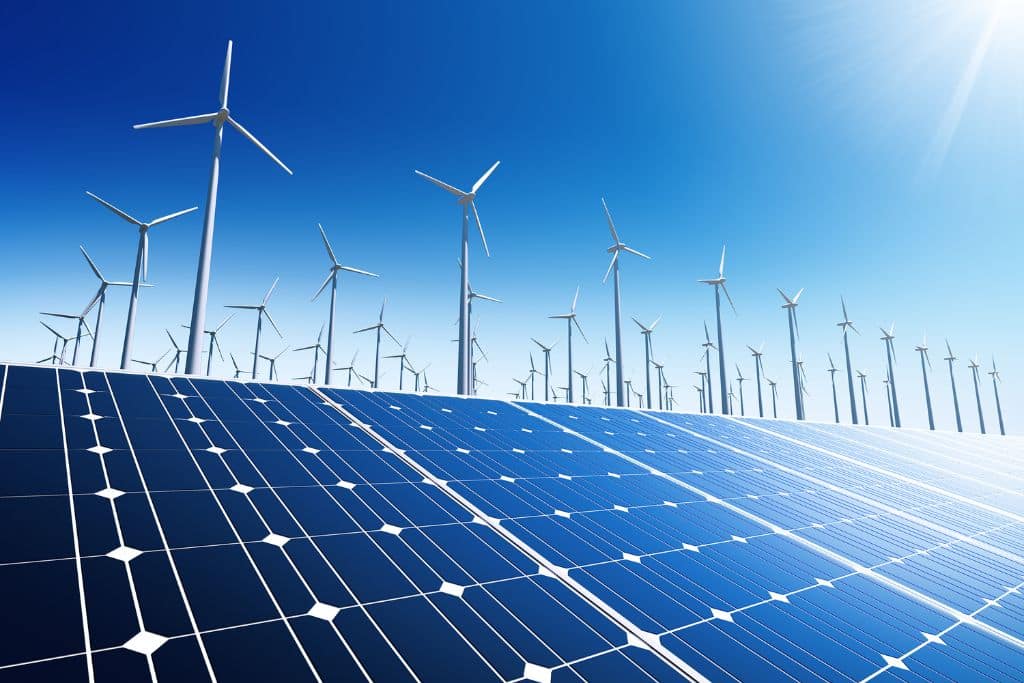
The realm of renewable energy stands today not merely as a testament to technological advancement, but as a paradigm of capitalist ingenuity put to the service of sustainable futures. It’s an industry built on the foundational principles of innovation, capital investment, and market-driven growth. Delving beneath the surface, however, reveals a complex narrative of profit motives converging with ecological imperatives, crafting a success story that is as financially robust as it is environmentally progressive.
From Niche Innovation to Market Mainstream
Initially confined to niche applications and driven largely by research grants and idealistic ventures, renewable energy technologies—photovoltaics, wind turbines, battery storage—have undergone a remarkable transformation. This evolution wasn’t organic; it was catalyzed by a confluence of factors. Falling costs through manufacturing scale and technological refinement created a competitive advantage. Simultaneously, escalating fossil fuel prices and mounting geopolitical instability, often intertwined with market speculation, exacerbated the economic case for renewables. Capital, drawn by these synergistic forces, flocked into ventures promising reliable returns coupled with positive externalities. Early-stage investors smelled blood in the water, and subsequent rounds reflected increasing market confidence, moving renewables from a philanthropic exercise into a genuinely profitable asset class. The market mechanisms shifted from subsidized adoption to commercial viability, proving that green could indeed be profitable, aligning ecological targets with financial bottom lines.
The Business Model Revolution: Pay-as-You-Go and Beyond
Capitalism thrives on accessible entry points and scalable models. Renewable energy adoption was significantly accelerated by the innovation of new financing structures. The “pay-as-you-go” or solar-as-a-service model, for instance, decoupled upfront investment from immediate access to clean energy. This model democratized ownership previously locked behind hefty initial capital expenditure barriers. It reframed investment in solar panels or wind turbines not just as a business expense but as an operating cost, enhancing cash flow predictability for businesses and generating attractive returns for financiers offering these leases. This creative financial engineering allowed the technology to penetrate broader markets quickly, turning consumers from hesitant buyers into paying customers within established economic frameworks. Similar models emerged for wind energy and energy storage, proving adaptable and lucrative. Venture capital fuelled not only hardware innovation but also the software platforms managing this distributed energy revolution, optimizing grid integration and resource allocation through market-driven algorithms.
Energy Arbitrage and the Gig Economy
In a sophisticated twist, the capitalist engine leveraged the volatility of renewable generation itself. Demand for sophisticated forecasting tools, grid management software, and energy storage solutions surged as the system became more complex and dependent on optimizing intermittent sources. This created opportunities for specialized market players. Energy trading platforms, increasingly algorithmic and predictive, allowed rapid buying and selling of energy commodities with higher renewables penetration. Sophisticated value arbitrageurs emerged, profiting from the fluctuations by balancing supply from diverse renewable sources and selling energy into the grid or directly to users at opportune times. Furthermore, the service-oriented sector expanded, encompassing installation, maintenance (a burgeoning gig economy niche), consulting, and data analytics – all driven by market demand for localized expertise within the expanding renewable sector.
The Speculative Engine: Investment Meets Scale
No capitalist success story is complete without addressing the role of scale and speculation. As the viability of renewables solidified, massive investment flooded in. Sovereign wealth funds, pension funds, institutional investors, and private equity firms sought long-term, stable returns, and renewables fit this bill increasingly well. Giant turbine manufacturers, massive solar panel producers, and battery technology companies engaged in competitive global consolidation, forming vast conglomerates focused on maximizing market share and achieving economies of scale crucial for global deployment and lowering costs further. This scale created a powerful feedback loop: larger scale attracted even more investment, driving down costs, which in turn increased global adoption, justifying even higher valuations. The pursuit of market leadership, fueled by substantial capital, pushed the boundaries of efficiency and affordability, effectively catalyzing the transition itself.
The Ownership Transition: From Installers to Energy Providers
The final stage in this capitalist success story involves the transition of energy system value. Initially, renewable energy projects were typically owned by developers who secured financing, built the assets, and sold the power under long-term contracts (PPPs). Gradually, ownership models diversified. Self-generation became feasible for both residential and commercial users. Crucially, the ownership layer of the energy assets themselves began to mature. Sophisticated systems facilitated the transfer of ownership rights, tokenized in some experimental cases, or even securitized as financial instruments. While often localized, the true scale lies in the development of global financial markets that value carbon abatement credits, green bonds specifically targeting renewables, and, eventually, the direct ownership of operating renewable assets. This allows capital to be deployed globally, optimizing portfolio diversification and risk management across the planet’s energy transformation, driven by purely market-based, though environmentally conscious, logic.
The Looming Question: Maturity and Market Saturation?
With renewables now integrated into the grid on a massive scale, powered by decades of investment driven by capitalist imperatives, does this market face a natural plateau? Could we be entering a phase not defined by rapid discovery and expansion, but by consolidation, optimization, and perhaps even slight contraction in growth rates? As efficiency gains approach limits and the low-hanging fruit of cost reductions is harvested, are the profit margins sufficient to continue the pace of transition solely through market forces? While costs continue to fall, the sheer scale required to meet climate targets suggests ongoing significant investment is necessary. The success story has reached a monumental tipping point; capitalism has delivered a potent engine for decarbonization.
This intricate dance between profit motive, technological development, and environmental imperatives has propelled renewable energy into the mainstream, showcasing capitalism’s capacity for positive societal impact. While the narrative of “green profits” was once met with skepticism, it is now a driving force shaping the future of energy.

