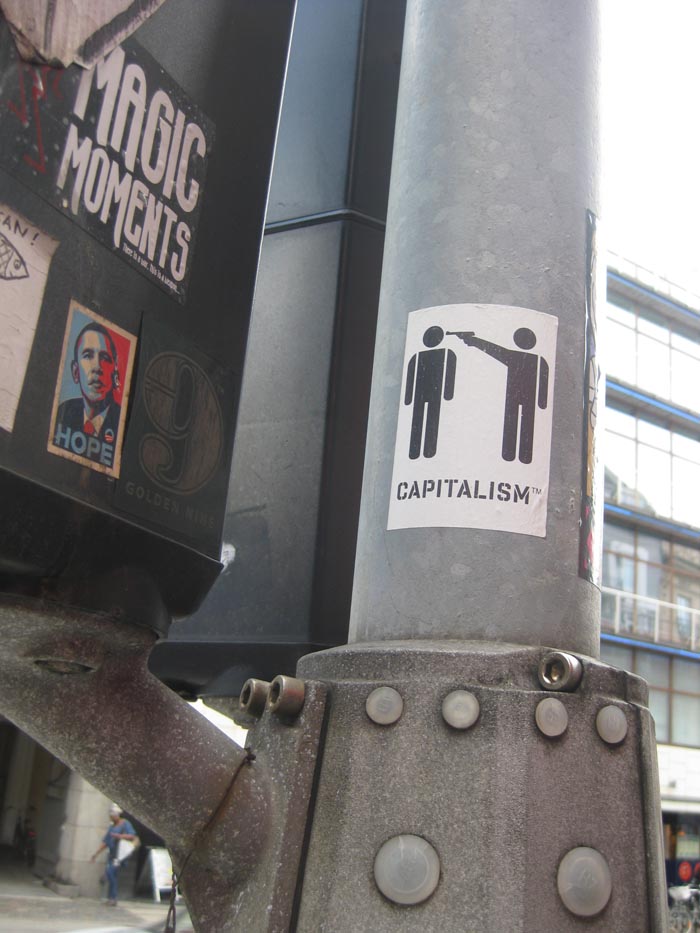
Street art, vibrant and often ephemeral, sprays across urban landscapes, claiming unoccupied spaces and breathing defiance into the sterile environment of the modern city. More than mere decoration, it is a powerful medium, a visual language capable of piercing the often-unquestioned reality constructed by dominant economic forces. Capitalism, with its relentless pursuit of profit, commodification of almost everything, and subtle pressures towards conformity, creates a landscape ripe for counter-narratives. It is within this specific tension that street art emerges not just as art, but as a significant form of resistance, challenging the structures, values, and lived realities imposed by capitalist systems. This form of expression is a testament to the enduring human impulse to critique, imagine alternatives, and reclaim public space—a space often eroded by the invisible hand of market logic.
Wall as Witness: The Physical Act of Intervention
The very act of creating street art on public walls, sidewalks, or railings constitutes a direct challenge to the established order. In a world where private property is aggressively protected and spatial segregation deepens economic divides, the act of painting over a wall, tagging a surface, or transforming an eyesore into a vibrant image is inherently subversive. This intervention declares: “This space exists for more than just surveillance or corporate advertisement.” It is a physical act that questions the authority of property owners, often private entities beholden to market forces, and implicitly, the city’s role in allowing or ignoring these actions. As philosopher Henri Lefebvre argued concerning the ‘sens des lieux’ or ‘sense of place’, capitalism often deadens this sens, reducing locations to mere coordinates within a system of exchange. Street art actively re-inhabits these locations, imbuing them with meaning and challenging the spatial logic that serves capital.
Capital’s Canvas: Imagery and Thematic Directness
If the physical space is a key site of conflict, the imagery chosen by artists is the primary weapon of critique. Street art lays bare the hypocrisies and harsh realities hidden beneath the glossy surface of consumer culture. One common theme involves direct confrontations with conspicuous consumption. Artists depict luxury lifestyles that are unattainable for the majority, highlighting the vast inequalities produced by unchecked capitalism. Graffiti tags or intricate murals might depict beggars alongside luxury yachts, or starving individuals beside overflowing liquor store displays. Another theme critiques labor. Portraits of factory workers, delivery drivers, or cleaners contrast starkly with images of CEOs, questioning the value system that elevates one over the other, implicitly referencing wages, job security, and the human cost of production. The proliferation of images mocking the “starving artist” stereotype itself becomes a postmodern critique—suggesting that the pursuit of art under capitalism might itself be perceived as an unviable, desperate endeavor against a backdrop of secure, even lucrative, commodified roles.
The Gaze of Critique: Personification and Symbolism
Capitalism, an abstract system without a tangible face, is often personified in street art. Figures representing ‘Capital’ appear menacingly, sometimes depicted as aggressive geometric shapes, dollar signs leeching life from urban environments, or money spilling from wounds in representations of dehumanization. This personification makes the abstract concrete, giving a form to the forces that shape individual lives often unseen. Symbols are also repurposed. The dollar sign, the ubiquitous logo, may be twisted or inverted. The clenched fist, a historical symbol of proletarian struggle, appears frequently, signifying defiance or solidarity against exploitative forces. The ghost or shadow figure is another recurring motif, suggesting the unseen economic drain, the rent being paid to unseen landlords, or the lingering impact of historical economic exploitation. These visual shorthand allows complex ideas like alienation, exploitation, and precarity to be communicated quickly and powerfully, often communicating more in seconds than lengthy text can in pages.
Reclaiming Narratives: Counter-Histories and Marginalized Voices
Capitalism frames narratives centered on innovation, individual success, and competition. Street art frequently offers a counter-narrative, celebrating collaboration, historical struggles, or simply everyday heroes ignored by the mainstream. Many artists use the public streets to share stories from marginalized communities, depicting their specific struggles against classism, racism, sexism, or gentrification. These narratives challenge the dominant, often Eurocentric or corporate-history perspective, offering multiplicity of viewpoints that the market often suppresses or commodifies selectively. The anonymity sometimes afforded to street art allows for truths not acknowledged by institutions. Whether depicting the systemic pressures faced by young people, the environmental cost of unchecked industrial growth, or simply the everyday joys denied under austerity, these artworks propose alternative visions and validate experiences often dismissed or ignored by a society obsessed with measurable output and GDP.
Fractional Forms: From Spray Paint to Digital Platforms
If physical intervention marks one form of resistance, the range of platforms street art utilizes is vast and demonstrates its adaptability. Beyond the spray can, artists employ wheatpasting (large-scale, often anonymous posters) or installing temporary stickers—small, sharp interventions designed to be temporary yet impactful, easily placed outside the approved flow of consumption and surveillance. Graffiti, with its roots in marginalized youth cultures (often in direct response to urban decay and lack of opportunity), uses bold letters and often stark images to communicate messages of defiance and identity. Social media platforms represent a relatively new, albeit ephemeral, canvas. Artists bypass traditional gatekeepers, reaching global audiences instantly to critique their own society or corporate behemoths. This digital street art often mimics the aesthetics of its physical counterpart but explores different modes of distribution and audience interaction, constantly redefining the boundaries of resistant art in a capitalist media landscape.
Temporal Tactics: The Fleeting and the Lasting
The temporality of much street art speaks to its critical nature within a system that, despite its desire for permanence, operates on shifting sands of value and profit motive. The typical graffiti piece or paste-up is temporary, subject to rain, decay, removal by authorities (or property owners seeking to monetize the space), or being painted over by others. This ephemerality underscores the fragility of the critiques offered – they are born, they exist, they may be erased – yet they leave an imprint while they are present. However, murals carved into permanent outdoor sculptures, detailed pieces that earn high-profile commissions funding their creation, or works captured meticulously in documentation exist beyond the immediate, material act. These forms coexist with and sometimes challenge the fleeting nature of the art itself, suggesting that perhaps the act, the moment, and the documentation can all be forms of lasting critique, even if the physical surface inevitably fades or is overwritten.
In conclusion, street art’s function as resistance against the tenets of capitalism is complex, diverse, and deeply embedded in the urban fabric. It operates on multiple levels – visually disrupting conformity, using public spaces against the logic of private property, directly critiquing economic exploitation and inequality, offering alternative narratives and symbols, reclaiming marginalized stories, leveraging new digital platforms, and utilizing the fleeting nature of existence as a statement in itself. As long as capitalism continues to shape urban environments, commodify experiences, and generate deep social fractures, the surfaces upon which street art appears will undeniably serve as crucial counterpoints. The gesture of defiling the clean wall in spray paint, the intricate mural offering social commentary, the anonymous poster appearing on a city pole – these are not merely aesthetic interventions; they are enduring acts of imagination, defiance, and the persistent effort to make visible the often-invisible tensions and possibilities for change within a capitalist world.


