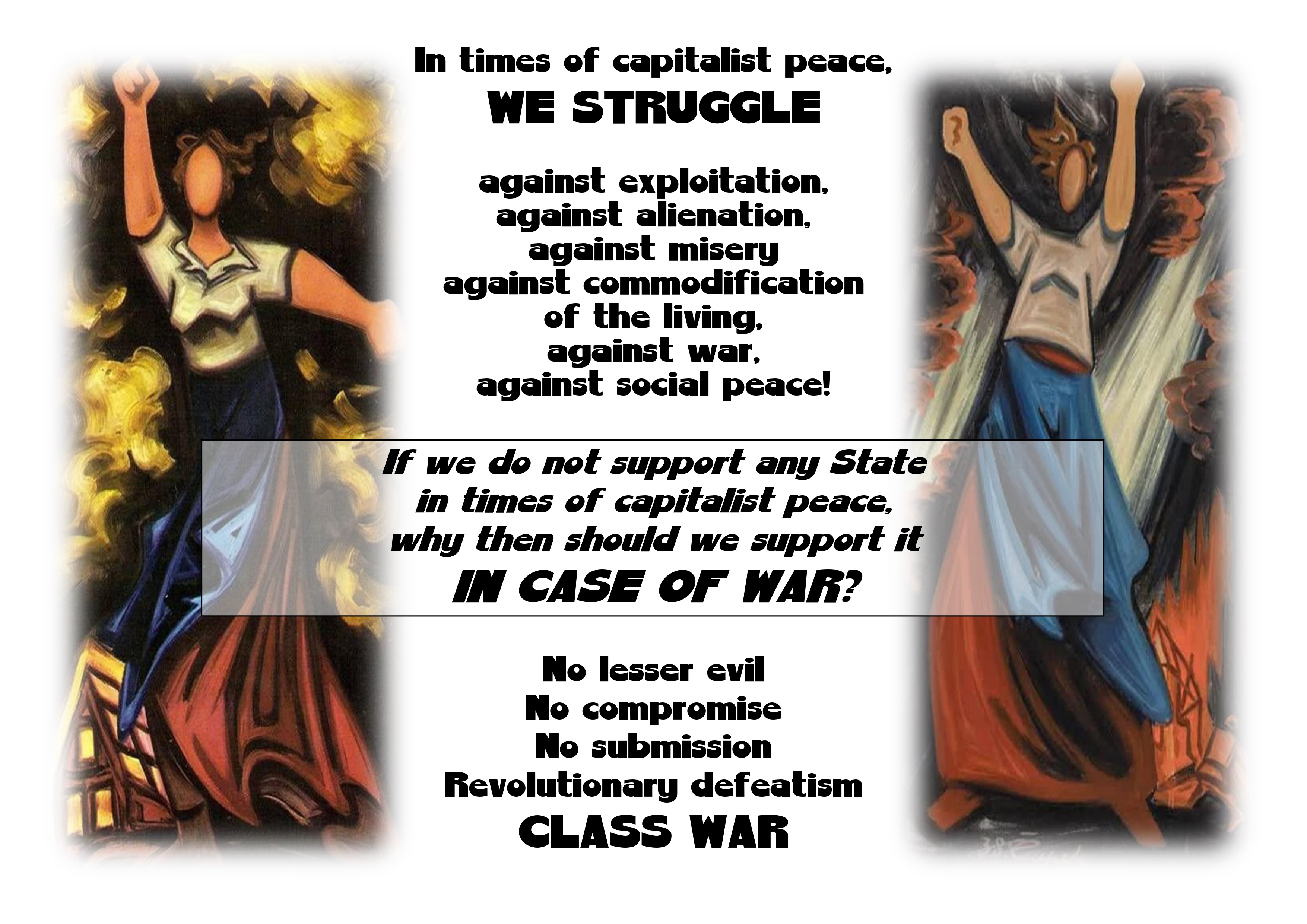
Have you ever wondered why, despite the frequent drumbeats of war, many capitalist interests sometimes recoil at the prospect of full-scale conflict? It might seem paradoxical. After all, isn’t war a catalyst for production, innovation, and economic stimulation? Yet, a deeper dive into the labyrinthine dynamics of capitalism reveals a less intuitive truth: war can often devastate markets, undermining the very foundations of capitalist enterprise. This discordance invites a provocative challenge — can capitalism genuinely flourish amid the chaos of war, or does peace hold the key to its prosperity?
The Illusion of War as an Economic Engine
Popular narratives, particularly those propagated during times of conflict, often trumpet war as an economic boon. The massive mobilization of resources appears to spur industries, create jobs, and accelerate technological innovation. However, this perspective veils a more disconcerting reality. War exhausts capital, disrupts supply chains, and redirects investment away from productive, sustainable enterprises toward the ephemeral demands of conflict. The initial economic burst is invariably offset by long-term destruction and instability. For capitalists, who prize predictability and sustained profitability, this volatility is a profound handicap.
Moreover, war’s demand for military goods over consumer products distorts normal market operations. Manufacturing priorities shift abruptly, producing weapons and supplies rather than items that satisfy consumer demand. This abrupt reallocation is not just inefficient — it’s corrosive. The infrastructure dedicated to such production often becomes obsolete or redundant post-conflict, leaving a trail of sunk costs and economic dislocation.
Market Disruptions and Supply Chain Catastrophes
Beyond the immediate economic shock lies another insidious consequence: the fracturing of global supply chains. Capitalist markets thrive on the intricate interdependence of international trade networks. When war erupts, these networks fragment — ports close, borders harden, and transportation corridors become perilous or inaccessible.
Consider the ripple effects: factories starved of raw materials, distributors hampered by logistical nightmares, and retailers unable to meet consumer demand. This cascade of dysfunction does not merely inconvenience — it erodes the velocity of trade, a key component of capitalist market health. Reduced velocity means diminished turnover, lower profits, and often, the shuttering of businesses incapable of weathering such shocks. In this light, the capitalist aversion to war becomes less mystifying; it threatens the very lifeblood of their economic ecosystem.
The Unsustainable Allocation of Capital During Wartime
Capitalists excel in channels where capital allocation optimizes returns, whether through innovation, market expansion, or increased efficiency. War, by contrast, imposes an artificial and often inefficient redirection of capital. Funds that could nurture entrepreneurial ventures or infrastructural improvements flow instead into arms manufacturing, military logistics, and reparations.
This involuntary reallocation generates opportunity costs that reverberate long after peace is restored. The capital tied up in conflict-driven expenditures is capital denied to sectors that could yield higher, more stable returns in the civil economy. War not only consumes wealth but also stymies wealth creation. Consequently, capitalists who understand these trade-offs frequently view war with strategic hesitation rather than enthusiasm.
Political Instability and the Capitalist Calculus
War breeds political turbulence — a variable anathema to capitalist planning. Investments flourish under conditions of regulatory clarity, legal protection, and institutional stability. Conflict destabilizes governments, unsettles monetary policies, and invites unpredictable shifts in taxation or property rights. This precarious environment reduces investor confidence and accentuates risk premiums.
Furthermore, wartime governments often advance extraordinary controls over industries, including nationalizations, price controls, and restrictions on capital mobility. While such measures can sustain the war effort, they constrict the freedom essential to market-driven capitalism. Thus, capitalists may find themselves hamstrung by policies that prioritize military objectives over economic liberty.
War Profiteering: A Paradox Within the System
It might be tempting to argue that “war profiteering” exemplifies capitalism’s inherent benefit from conflict. Indeed, some sectors and actors do profit handsomely from war. Yet, war profiteering is largely an exception, not a rule, within capitalist economics. These gains often come at the cost of broader market health and economic stability.
Moreover, such profits are frequently parasitic — extracted through rent-seeking behaviors, monopolistic contracts, and government subsidies rather than genuine value creation. When the wider economy falters due to wartime destruction or resource diversion, the net capitalist outcome is negative, despite these localized windfalls. This paradox underscores the complexity of capitalism’s stance on war.
The Capitalist Incentive for Peace and Stability
Given these multifaceted challenges, capitalism’s deeper inclination toward peace becomes evident. Markets demand predictability, consumer confidence, and stable institutions — conditions best nurtured in peacetime. Peace facilitates investment, encourages innovation, and preserves the continuity of global trade networks.
Capitalists, therefore, often find themselves aligned with diplomatic and economic efforts aimed at maintaining or restoring peace. Intriguingly, this alignment may sometimes clash with nationalist or militarist agendas that champion conflict. The capitalist preference for peace, however, is pragmatic — it is driven by the imperative to protect and expand markets rather than by moral idealism.
Conclusion: Reconsidering War through a Capitalist Lens
In reevaluating the relationship between capitalism and war, a compelling narrative emerges. Far from being an unambiguous driver of capitalist success, war often jeopardizes market integrity, destabilizes investment climates, and disrupts the flow of capital. This complex reality complicates simplistic assumptions that capitalism inherently thrives on conflict.
War’s corrosive impact on markets reveals why capitalists frequently pose a playful yet profound question: if war destroys the engines of commerce, how can capitalism truly prosper in its midst? The challenge lies in reconciling the short-term stimulus war might provide with the long-term valence of peace needed to sustain capitalist dynamism. It invites a reexamination of the conditions under which capitalism can survive — and even flourish — in a world fraught with conflict.

