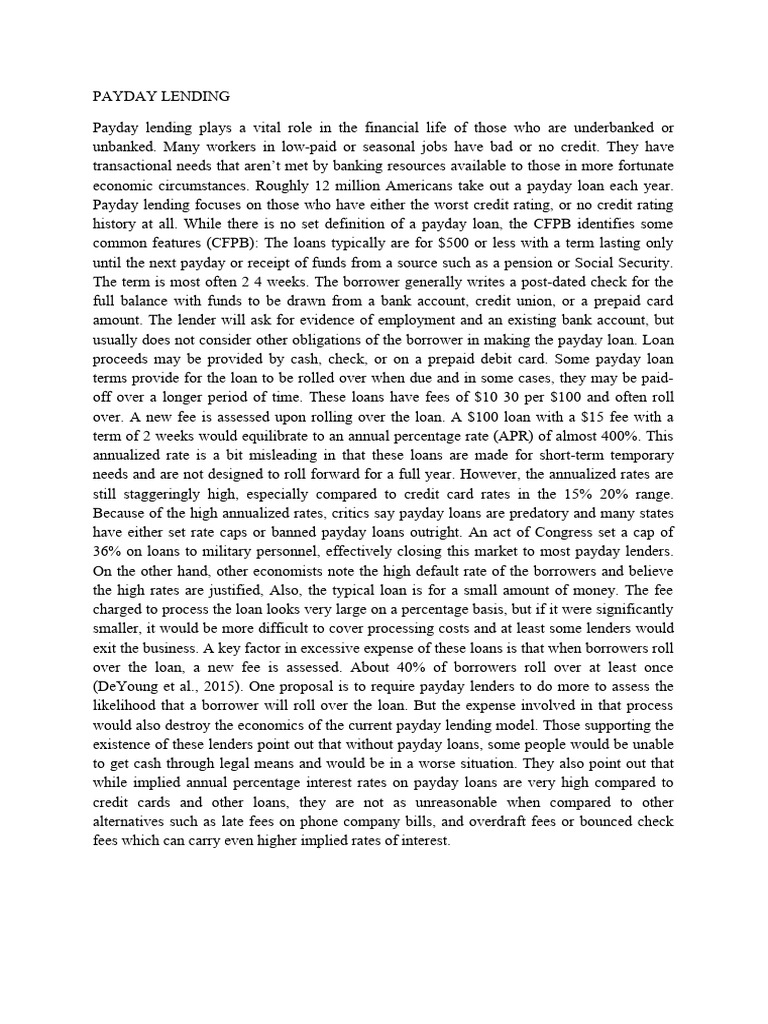
In the intricate web of modern finance, payday lending emerges as a stark testament to the prevailing capitalist ethos, intertwining profit imperatives with socioeconomic disparities. This industry, often lauded for its accessibility and swiftness, conceals a more complex and contentious narrative beneath its veneer of convenience. To understand the capitalist logic driving payday lenders, one must delve beyond surface-level perceptions, exploring the financial structures, ethical considerations, and systemic dynamics that sustain this contentious form of credit. This exploration unravels the multifaceted nature of payday lending, highlighting the economic incentives, market forces, and regulatory landscapes that shape its existence.
The Economic Foundations of Payday Lending
At its core, payday lending is rooted in the capitalist principle of risk and reward—a direct transaction whereby lenders provide short-term loans with exorbitant interest rates in exchange for quick capital turnover and high returns. This business model thrives on asymmetrical information and urgency: borrowers, often facing immediate financial shortfalls, are willing to accept predatory terms to bridge temporary gaps in income. The elevated interest rates function as a calculated premium for the perceived risk of default coupled with the cost of convenience and accelerated service.
Capital availability coupled with consumer demand creates a fertile ground for payday lending. These lenders capitalize on the liquidity crunch faced by lower-income demographics, effectively monetizing financial desperation. The industry’s resilience is further augmented by minimal barriers to entry and limited regulatory interference in certain jurisdictions, commodifying economic vulnerability. Within this framework, the logic of capitalism manifests not solely in profit maximization but also in the commodification of risk and immediacy, interlacing capital accumulation with socioeconomic stratification.
Predatory Practices and the Cycle of Debt
Integral to the payday lending paradigm is its proclivity for engrossing customers in vicious cycles of debt, an outcome that aligns with the capitalist motive for sustained revenue generation. High-interest rates and short repayment periods impose significant financial strain, frequently resulting in repeated loan renewals or rollovers. This perpetuates indebtedness, extracting prolonged streams of profit at the borrower’s expense. The structure is inherently designed to capitalize on borrower recidivism, underscoring a transactional relationship where dependency becomes a lucrative asset.
Such cyclical indebtedness underscores a paradox within capitalist logic: while competition ideally incentivizes fairness and transparency, payday lending’s market dynamics exploit asymmetries in education, financial literacy, and access. Borrowers often lack the agency or information to fully comprehend the long-term implications, embedding economic precarity more deeply into marginalized communities. This exploitation raises ethical questions about the commodification of poverty, yet it persists due to the relentless pursuit of capital accumulation within a deregulated or under-regulated environment.
Regulatory Landscape and Its Implications
The capitalist logic powering payday lenders is inextricably linked to the regulatory frameworks—or lack thereof—that govern them. In jurisdictions with stringent consumer protections, payday lending faces constricted profitability and operational limits, curtailing its expansive potential. Conversely, lax regulatory environments act as incubators for aggressive lending practices, amplifying the extraction of wealth from economically vulnerable populations.
Regulation thus becomes a battleground where capitalist interests and social welfare priorities clash. Payday lenders, responding to regulatory pressures, adapt through creative mechanisms such as storefront chains, online platforms, or relabeling fees to circumvent restrictions. This dynamic interplay reflects capitalism’s adaptive capacity, constantly innovating to preserve profit margins even amidst institutional attempts to impose constraints.
The Role of Technological Innovation in Payday Lending
Technology has transformed the payday lending industry, reinforcing its capitalist logic through enhanced efficiency and expanded reach. Digital platforms and algorithms streamline loan approvals, create tailored risk assessments, and facilitate immediate fund disbursal. This increased accessibility expands the market, reaching previously underserved or geographically isolated borrowers—transforming payday lending from a localized storefront phenomenon into a ubiquitous online financial service.
However, this digital shift simultaneously intensifies concerns about data privacy, automated decision-making biases, and predatory algorithmic lending. The fusion of technology and capitalism here exemplifies how the relentless drive for profit innovation may advance accessibility while deepening systemic inequities. Technological proliferation thus raises pressing questions about the ethics of credit provision within capitalist frameworks where scalability often overshadows borrower advocacy.
Socioeconomic Impacts and Critiques of Payday Lending
The broader social implications of payday lending elucidate the profound tensions embedded within capitalist financial systems. Critics argue that payday lending perpetuates poverty by siphoning limited financial resources into high-interest repayments, exacerbating wealth inequality. The industry arguably acts as a symptom rather than a remedy for inadequate social safety nets, highlighting failures in public policy and financial inclusion efforts.
Conversely, defenders contend that payday lending fulfills a critical role by offering immediate liquidity to individuals who lack access to traditional credit instruments. This pragmatic perspective emphasizes borrower autonomy and the utility of quick credit in times of crisis, positing payday loans as essential albeit imperfect instruments within complex economic realities. This dialectic underscores the enduring challenge of reconciling capitalist imperatives with inclusive, equitable financial ecosystems.
Alternatives and the Future of Short-Term Lending
In light of growing scrutiny, alternative models of short-term lending are emerging, seeking to disrupt the exploitative capitalist logic of payday loans. These include nonprofit loan programs, community-based lending circles, and fintech platforms emphasizing transparency and affordability. By reimagining credit provision as a service rather than purely a profit venture, these alternatives aspire to mitigate the harms endemic to traditional payday lending.
The future trajectory of short-term credit will likely hinge on a confluence of regulatory evolution, technological innovation, and shifting societal values towards economic justice. Sustainable models must balance profitability with borrower protection, fostering financial empowerment rather than indebtedness. Reconciling these objectives poses a formidable challenge but is essential for addressing the systemic contradictions illuminated by the capitalist logic of payday lenders.

