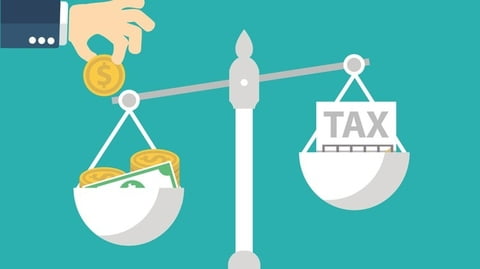
Imagine the global economy as an intricate tapestry, woven with threads of ambition, profit, and policy. Each strand represents a country’s fiscal sovereignty, corporate maneuvers, and the relentless tug-of-war between competitive advantage and moral responsibility. In this vast and complex fabric, the concept of a global minimum tax emerges as an enigmatic yet potentially transformative stitch — one that seeks to repair the delicate balance between capitalism’s dynamic energy and its unintended fissures. The global minimum tax debate is not merely a technical discourse on rates and regulations; it is a profound narrative on the architecture of fairness, the ethics of wealth distribution, and the future trajectory of international economic cooperation.
The Genesis of the Global Minimum Tax Concept
The global minimum tax finds its roots in the labyrinthine world of international taxation, where multinational corporations, endowed with vast resources and strategic ingenuity, navigate through regulatory loopholes and jurisdictional arbitrage. This phenomenon, often called “tax competition,” has evolved into a race to the bottom, where countries slice their corporate tax rates to attract investment, sometimes at the cost of eroding their own tax bases.
This relentless downward spiral fundamentally challenges the integrity of national tax systems and questions the sustainability of public goods funding. The global minimum tax was conceived as a countermeasure — a stabilizing fulcrum intended to set a baseline beneath which no jurisdiction could fall. It functions as a global safety net designed to prevent the fragmentation of fiscal authority and curb the pernicious effects of tax avoidance and profit shifting.
Capitalism’s Dance with Taxation: An Intricate Choreography
Capitalism thrives on incentives, competition, and the accumulation of capital. Corporations, in chasing profit maximization, strategically position themselves where the fiscal climate is most conducive. Yet, this dance is precarious: if the floor beneath the dancers becomes slippery with low taxes, the choreography risks collapse. The global minimum tax introduces a new rhythm — an imposed tempo that seeks to moderate the beat and prevent the tumultuous free-for-all of aggressive tax planning.
Here, the tax system ceases to be a mere backdrop and becomes an active participant in the capitalist spectacle. It attempts to reconcile the need for economic dynamism with the imperative of tax justice. This duality reflects the tension between laissez-faire ideals and the pragmatic necessity of governance. By setting a floor, the global minimum tax aims to curtail the shadow economies lurking beneath the official financial arenas, ensuring that capitalism’s dance is not just fast and flamboyant but also fair and sustainable.
The Mechanics: How Does a Global Minimum Tax Function?
At its core, the global minimum tax proposes a harmonized tax rate applied to large multinational enterprises, regardless of where they declare profits. It works on the principle that if a corporation pays less than the agreed minimum rate in a given jurisdiction, its home country can tax the difference, thereby discouraging profit shifting to low-tax or no-tax havens.
This mechanism involves intricate coordination between jurisdictions, facilitated by international bodies and treaties. It requires transparent information exchange, consistent accounting standards, and compliance monitoring. The objective is to establish a level playing field — a shared understanding that profits should bear a fair share of taxes, regardless of geographic manipulations. The envisioned tax floor mitigates the incentive for countries to engage in ruthless tax competition, thereby preserving national revenue streams essential for infrastructure, health, and education.
Arguments in Favor: Stabilizing the Economic Landscape
Proponents herald the global minimum tax as a critical tool to restore equilibrium in international fiscal policies. One compelling argument is that it can reduce income inequality by ensuring corporations contribute their fair share, thereby funding social programs and public investments. It reduces the “race to the bottom” phenomenon and supports smaller economies, which often lose significant tax revenues to multinational profit shifting.
Moreover, the global minimum tax can enhance corporate transparency and accountability. It deters artificial profit allocation strategies and discourages the exploitation of tax havens that offer minimal scrutiny. For governments, it translates into more predictable and stable revenues, facilitating long-term planning. For taxpayers, it rekindles trust in the system, fostering a sense of fairness and shared responsibility in the capitalist enterprise.
Critiques and Challenges: A Tapestry Rife with Knots
Despite its lofty ideals, the global minimum tax debate is far from unanimous. Critics argue that it may impinge upon national sovereignty, constraining countries’ abilities to tailor tax policies to their economic circumstances and competitive needs. Especially for developing nations, lower tax rates often serve as crucial tools to attract foreign direct investment.
Furthermore, operationalizing such a tax globally requires unprecedented multilateral cooperation, which is often hampered by divergent interests and geopolitical tensions. There are concerns over enforcement complexities, interpretation of accounting rules, and potential loopholes that corporations might still exploit. The global minimum tax might also inadvertently encourage some countries to increase rates aggressively, triggering new forms of fiscal tension.
The Broader Implications: Rethinking Capitalism in a Globalized World
The debate around the global minimum tax extends beyond fiscal mechanics; it invites a fundamental reconsideration of capitalism’s frameworks in the 21st century. It challenges the notion that capital flows are inherently borderless and questions the adequacy of traditional regulatory environments. The tax minimum is emblematic of a larger paradigm shift, nudging capitalism toward greater institutional responsibility and ethical pragmatism.
In this light, the global minimum tax is more than a policy instrument — it is a symbol of emerging international solidarity. It reflects a mature recognition that in an interconnected world, economic success must be coupled with fairness, sustainability, and cooperation. It exemplifies the delicate art of balancing national interests with global welfare, ensuring that capitalism’s vibrant tapestry does not unravel under the weight of its own disparities.
The Path Forward: Navigating Complexities with Vision
As the global minimum tax gains traction in international negotiations, its future depends on nuanced diplomacy, robust enforcement frameworks, and adaptive policy design. Achieving consensus requires empathy for diverse economic realities and a commitment to collective gain.
Success will demand vigilance against unintended consequences, continuous dialogue among stakeholders, and a willingness to refine the system as new challenges emerge. If navigated wisely, the global minimum tax could serve as the keystone in a new era of equitable capitalism — a vital thread weaving together prosperity, responsibility, and global cohesion in the ever-expanding economic tapestry.

