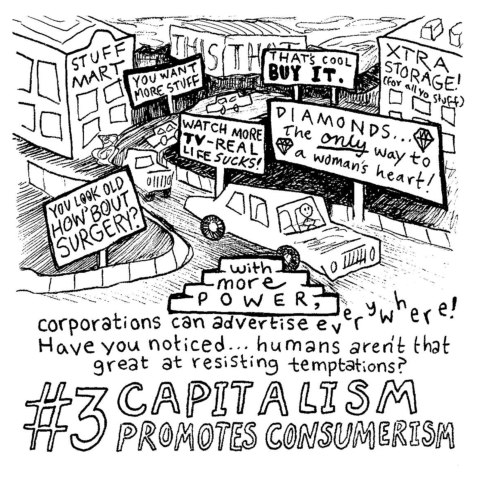
The phrase “Golden Rule” is often bandied about, but its interpretation can be elusive. Within the unforgiving landscape of the free market, however, there exists a principle – the true Golden Rule of capitalism – far more profound and consistently operative than its moralistic tenets: the imperative to create value. At its heart, capitalism isn’t about redistributing existing wealth; it is an engine designed to generate and amplify wealth through the relentless pursuit of meeting consumer desires more effectively than competitors do. This rule, in its simplest form – producing what people want, or seemingly needing, and capturing their willingness to pay – is the bedrock upon which all successful enterprises and thriving economies are built.
The Core Proposition: Value Creation, Not Redistribution
To grasp this Golden Rule, one must discard preconceived notions and consider the fundamental premise behind capitalism: that resources are scarce, and competition is inherent. Individuals and businesses operate under constraints, seeking to maximize gain, be it profit, security, or comfort. The allocation of these scarce resources must be guided by the principle of value creation. Raw materials, labor, time, and ideas – even in today’s knowledge-driven economy – become inputs not into some abstract social fund, but into goods and services perceived as desirable by those who wield the power of purchasing power. The act of exchange centralizes here; value exists not inherently in money, but in the benefit derived by the consumer.
Consider this: a transaction occurs because both parties believe they are receiving something of greater value in return for what they provide. The business owner provides a product (or service, a crucial distinction emerging) and believes it offers a solution, utility, or desire fulfillment not otherwise widely available. The consumer provides the price (and implicitly, the payment of that price signals the value they place upon gaining this utility). This mutual agreement, freely undertaken and beneficial to both, aggregates and magnifies wealth. It is a cumulative process, building from individual transactions into profitable ventures and, ultimately, robust national economies.
The Mechanics Explain: How the Rule Operates
Capitalism provides the structure and feedback loops for this rule to function effectively. Decentralization is key: decisions regarding production, pricing, and distribution rest with individuals and firms closest to the information and resources. This allows for a constant flux of experimentation. Businesses are incentivized not just to meet demand, but to discover demand, innovate solutions, or improve existing ones. Competition forces this; complacency leads to obsolescence. Prices, famously determined by the interplay of supply and demand, embody a fundamental mechanism for signaling value.
The price tag is more than a mere number; it represents the perceived amount of value a consumer is willing to part with (usually money, but value can be exchanged in many forms, including through barter in more primitive applications of the principle) for a specific bundle of goods or services. If a product sells for a higher price, it signifies perceived greater value. Conversely, lower prices may indicate either lower production costs (allowing for competitive advantage or higher margins) or less perceived desirability by consumers. The market, therefore, serves as an ongoing, dynamic conversation between producers (offering value) and consumers (demanding it). Capital itself is not a prerequisite for starting the process; an idea, a willingness to work, and access to basic inputs (credit can be secured based on the promise of future value creation) suffice to begin generating wealth from almost any field, from software development to street vending.
Fulfillment or Misinterpretation? The Nuances
As the system matures, however, the operation of this rule can lead to more complex manifestations. What begins simply – offering a useful, relatively cheap product – can evolve into branding, innovation cycles, customer service, even speculative investment in new technologies or market expansion. Yet, the original, purest form remains potent: the creation of genuine, usable value that addresses a need or desire that has been identified and met profitably. This isn’t restricted to physical products; services, which now dominate much of the economy, operate under the same principle: delivering perceived benefits more effectively or efficiently.
You will also observe, particularly in advanced or heavily regulated forms of capitalism, the tendency towards certain deviations from the “pure” rule. Corporations can become bloated, inefficient, or divorced from the needs they purport to address – a phenomenon often termed the “value capture trap.” They focus on maximizing short-term shareholder value through methods that don’t necessarily create long-term consumer or societal value, such

