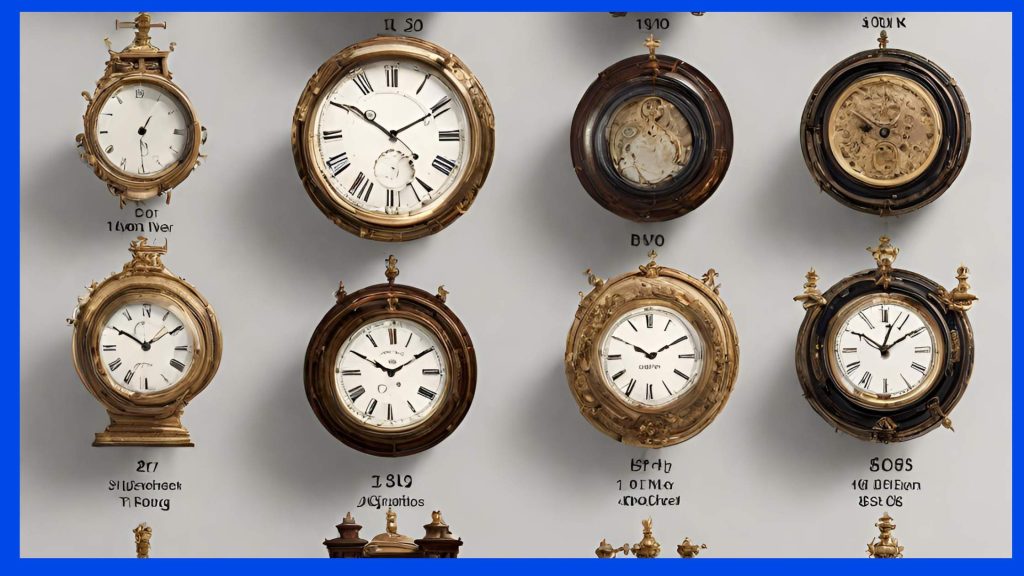
Time, an ever-flowing continuum, has long governed human existence. Yet the ways in which societies have measured and conceptualized time have undergone profound transformations that ripple beyond mere chronology. The history of the clock is not merely a tale of technological ingenuity; it is a narrative intertwined with economic paradigms, social upheavals, and, most notably, the rise of capitalism. Peeling back the layers of this intricate relationship promises a shift in perspective—inviting us to reconsider how the seemingly neutral ticking of a clock became a powerful catalyst for reshaping labor, productivity, and the human experience.
The Pre-Mechanical Conception of Time: Fluidity and Natural Rhythms
Before the mechanical clock emerged, time was a malleable concept, measured through sundials, water clocks, and the natural rhythms of day and night. Societies predominantly adhered to a cyclical perception of time, deeply rooted in agriculture and religious observances. This fluidity allowed liberties in daily activities, governed more by seasons and natural cues than rigid schedules.
In these pre-industrial contexts, labor was often task-oriented rather than time-oriented. The notion of “working hours” was nebulous. People labored until the work was complete, with time measured in terms of productivity rather than segmented intervals. The clock as a device did exist, but its social significance was limited. It served primarily monastic or astronomical functions, rather than regulating societal rhythms.
The Mechanical Clock: The Inception of Precision and Regulation
The invention of the mechanical clock in medieval Europe around the 14th century marked a seismic shift. These early machines were marvels of engineering, designed to measure time with unprecedented precision. Initially housed in church towers and public squares, they began to impose a uniform temporal framework over communities.
This newfound exactitude was not merely technological; it introduced a new social discipline. The clock enabled synchronization—scheduling events, coordinating activities, and standardizing daily life. This external imposition of time began to erode the fluid, organic relationship people had with their environment and replaced it with regimented temporal order.
Industrial Revolution: Clocks and the Capitalist Zeitgeist
The intersection between the clock and capitalism crystallized during the Industrial Revolution, when factories became the new epicenters of production. Here, the clock transcended symbolism to become a vector of control. The rhythmic ticking of factory bells dictated the pace of labor—punctuating every shift, break, and deadline.
This regimented timekeeping catalyzed a transformation in work ethics. The capitalist imperative demanded efficiency, regularity, and maximization of output. Time literally became money—an economic resource to be meticulously managed, optimized, and commodified. Workers’ autonomy waned as their existence conformed to the mechanized rhythms of industrial time.
Moreover, time discipline extended beyond the factory floor, permeating societal norms and expectations. The punctuality once celebrated as virtuous evolved into a capitalist necessity, a signal of reliability and professionalism. This temporal restructuring facilitated capitalist accumulation by disciplining labor and standardizing production cycles.
Time as a Commodity: The Monetization and Quantification of Human Hours
Capitalism’s logic inexorably transformed time into a commodity. Labor hours became quantifiable units to be bought and sold in the marketplace. This commodification introduced novel socioeconomic dynamics, converting human existence into temporally bounded parcels.
The wage system exemplifies this transformation. Workers were no longer remunerated for the completion of tasks, but rather for clocked intervals of presence. Such a system shifted the focus from the quality of output to the quantifiable expenditure of time. This commodified temporality sculpted new relations between employers and employees, fraught with power asymmetries and surveillance mechanisms epitomized by time clocks and punch cards.
Temporal Discipline and the Rise of a Capitalist Subjectivity
Beyond structural economic transformations, the clock’s influence permeated individual consciousness. The internalization of clock time helped forge a capitalist subjectivity centered on punctuality, time management, and productivity. This self-disciplining ethos became intertwined with identity and self-worth.
Modern capitalism demands an incessant reckoning with time—deadlines, schedules, and efficiency imperatives produce a ceaseless temporal pressure. Psychological theories such as Max Weber’s analysis of the “Protestant work ethic” partly attribute this to the interplay of religious morality and capitalist temporality. The clock became emblematic of a broader cultural shift, where every moment is charged with economic significance.
Technological Advances and the Acceleration of Capitalist Time
As clock technology advanced, particularly with the introduction of pocket watches, wristwatches, and eventually digital timekeeping, the regulation of time proliferated into ever more nuanced aspects of life. With the rise of telecommunications, global finance, and mass production, capitalist time accelerated, chronos yielding to an almost frenetic kairos—a qualitative moment of opportunity and urgency.
This acceleration underlies contemporary phenomena such as the 24/7 economy and the gig workforce, where traditional temporal boundaries are blurred or erased. Time’s commodification mutates and adapts, exemplifying capitalism’s capacity for temporal colonization.
Reckoning with Time: Contemporary Critiques and Alternative Temporalities
In recent decades, critiques of capitalist time have emerged, questioning the dehumanizing effects of relentless temporal commodification. Movements advocating for work-life balance, slow living, and deceleration represent attempts to reclaim temporal sovereignty from capitalism’s grasp.
Moreover, indigenous and alternative temporal frameworks challenge the universality of mechanical time, offering visions where relationality, nature, and cyclical rhythms resist capitalist abstraction. These paradigms invite a reimagining of time not as a scarce commodity but as a shared and qualitative dimension of life.
The history of the clock coupled with capitalism thus reveals a complex interplay—not just between technology and economy, but between temporalities, power, and identity. Understanding this dynamic opens pathways to rethink our contemporary relationship with time, potentially unveiling modes of existence less tethered to profit and more attuned to human flourishing.

