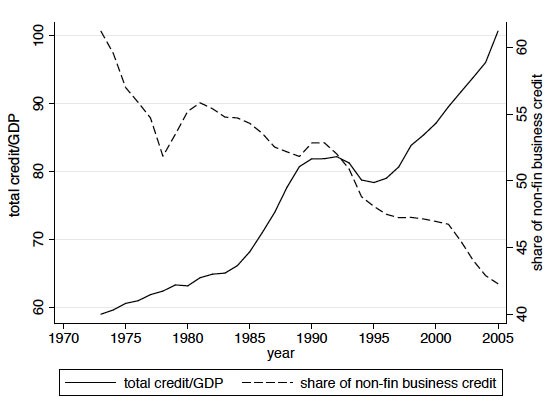
In the grand tapestry of economic history, the deregulation of finance emerges as a cautionary tale—a vessel set adrift in tempestuous seas, promising freedom but navigating towards ruin. Beneath the alluring veneer of unshackled markets lies a profound miscalculation: the belief that removing constraints on financial institutions would naturally channel capital into productive, innovative ventures. Instead, this laissez-faire gambit has often yielded a tempest of speculation and systemic risk, undermining the very foundations of sustainable economic growth.
The Illusion of Invisible Hands Unbound
The philosophy behind deregulating finance under capitalism is predicated on the myth of the “invisible hand”—the idea that market forces, when free from government interference, will allocate resources efficiently and spur prosperity. Yet, this metaphor itself falters when unleashed without guardrails. Financial markets are not simple mechanistic systems; they are intricate ecosystems populated by actors driven not solely by rational investment but by greed, herd mentality, and intricate webs of informational asymmetry.
Removing regulatory boundaries gave financial institutions carte blanche, akin to a ship stripped of its rudder in open water. The promise was that capital would flow seamlessly to entrepreneurs and industries that drive innovation and employment. Instead, it often morphed into a river swollen with speculative torrents — volatile and directionless. The unregulated financial sphere did not empower the productive heart of capitalism; it encased it in a bubble of ephemeral value, untethered from real-world outputs.
Speculation as the Siren’s Call
Speculation, in essence, is the shadowy twin of investment—where the latter builds, the former bets on price movements disconnected from underlying assets. Deregulation unwittingly unleashed speculation’s seductive siren song. Financial institutions, no longer constrained by prudential limits, ventured into increasingly risky and complex derivative instruments, seeking rapid gains rather than long-term stability.
This phenomenon transformed capital markets into elaborate gambling parlors, where leverage magnified potential winnings but equally exacerbated losses. The intricate, opaque structures birthed by deregulated finance—credit default swaps and collateralized debt obligations—obfuscated risk, creating a perilous latticework vulnerable to collapse. The predominance of speculation diverted essential capital from tangible sectors like manufacturing, infrastructure, and technology, thereby stalling broad-based economic advancement.
Systemic Fragility and the Illusion of Control
Deregulation cultivated a dangerous misconception: that financial markets could self-correct without intervention. However, history reveals a pattern of periodic crises, each more devastating than the last. The 2008 financial meltdown stands as a stark testament to the fragility engendered by deregulated finance. It exposed how interconnected institutions—emboldened by deregulation—could transmit shocks globally, triggering a cascade of failures across economies.
The financial system, thus, resembles a suspension bridge—ornate yet delicate—where too much weight in one sector without proper oversight risks a catastrophic collapse. Regulations function as structural reinforcements, distributing tension evenly and ensuring resilience. Their erosion under neoliberal faith in markets jeopardizes this equilibrium, transforming an intricate network into a fragile house of cards prone to toppling.
The Misalignment of Incentives
At the core of the deregulation debacle lies a profound misalignment of incentives between financial actors and society’s broader interests. The architecture of deregulated markets often privileges short-term profit maximization and executive bonuses over long-term economic health. This misalignment fosters practices such as predatory lending, asset stripping, and creating “too big to fail” behemoths whose collapse demands public bailouts.
Moreover, the detachment from productive purposes undermines social trust in financial institutions. When banks prioritize speculative ventures over underwriting productive enterprise, they erode the social contract—a tacit agreement that finance should serve as the lifeblood of economic development, not as an arena for unchecked extractive behavior. Deregulation, by dismantling safeguards and oversight, accelerates this erosion, precipitating public disillusionment and political backlash.
The Opportunity Cost of Deregulated Capital
Capital is not merely a fungible resource; it is the elixir that fuels innovation, infrastructure, and human capital development. Deregulated finance redirected capital flows into volatile markets and financial engineering instead of industries generating sustainable employment and societal benefits. This redirection imposes a substantial opportunity cost—a kind of economic myopia that prioritizes short-lived profits over enduring prosperity.
In this context, deregulation behaves like a termite colony gnawing silently at the beams of a grand economic edifice. While surface appearances of liquidity and market vitality persist, the underlying structures—basic manufacturing capabilities, green energy investments, and small business growth—remain undernourished. Prolonged underinvestment in these sectors handicaps future resilience, exacerbating inequalities and hampering broad-based wealth creation.
Reimagining Finance: Regulation as Stewardship, Not Shackles
Far from being antithetical to capitalism, thoughtful regulation can be its steward. It ensures markets function fairly, transparently, and sustainably, mitigating systemic risks while channeling capital toward productive ends. Regulation should not be viewed as restrictive chains but as navigational instruments—instrumental in steering the vessel of finance through unpredictable economic waters.
Capitalism thrives on dynamism and innovation, but the financial sector must act as a responsible catalyst, not a reckless gambler. This involves reinstating robust capital requirements, enhancing transparency of complex financial instruments, and rigorously monitoring systemic risk. Importantly, alignment of incentives with societal welfare—through measures such as clawbacks on bonuses, tighter oversight of executive pay, and encouraging long-term investment horizons—must be prioritized.
The Path Forward: Balancing Freedom and Responsibility
The metaphor of deregulated finance as a ship adrift ultimately underscores the imperative of balance. Wild freedom in financial markets, without a framework of accountability, breeds instability and undermines capitalism’s productive capacity. Yet, overly rigid controls can stifle innovation and economic vitality.
A nuanced synthesis is necessary—one that embraces the creative potential of markets while recognizing the inherent fallibility of human actors and the importance of societal safeguards. This delicate equilibrium supports sustainable growth, preserves market integrity, and protects communities from the fallout of speculative excess.
Understanding the mistake of unfettered financial deregulation under capitalism is instructive not only for historians but for policymakers, investors, and citizens striving for economic models that promote genuine prosperity and resilience in an uncertain future.


