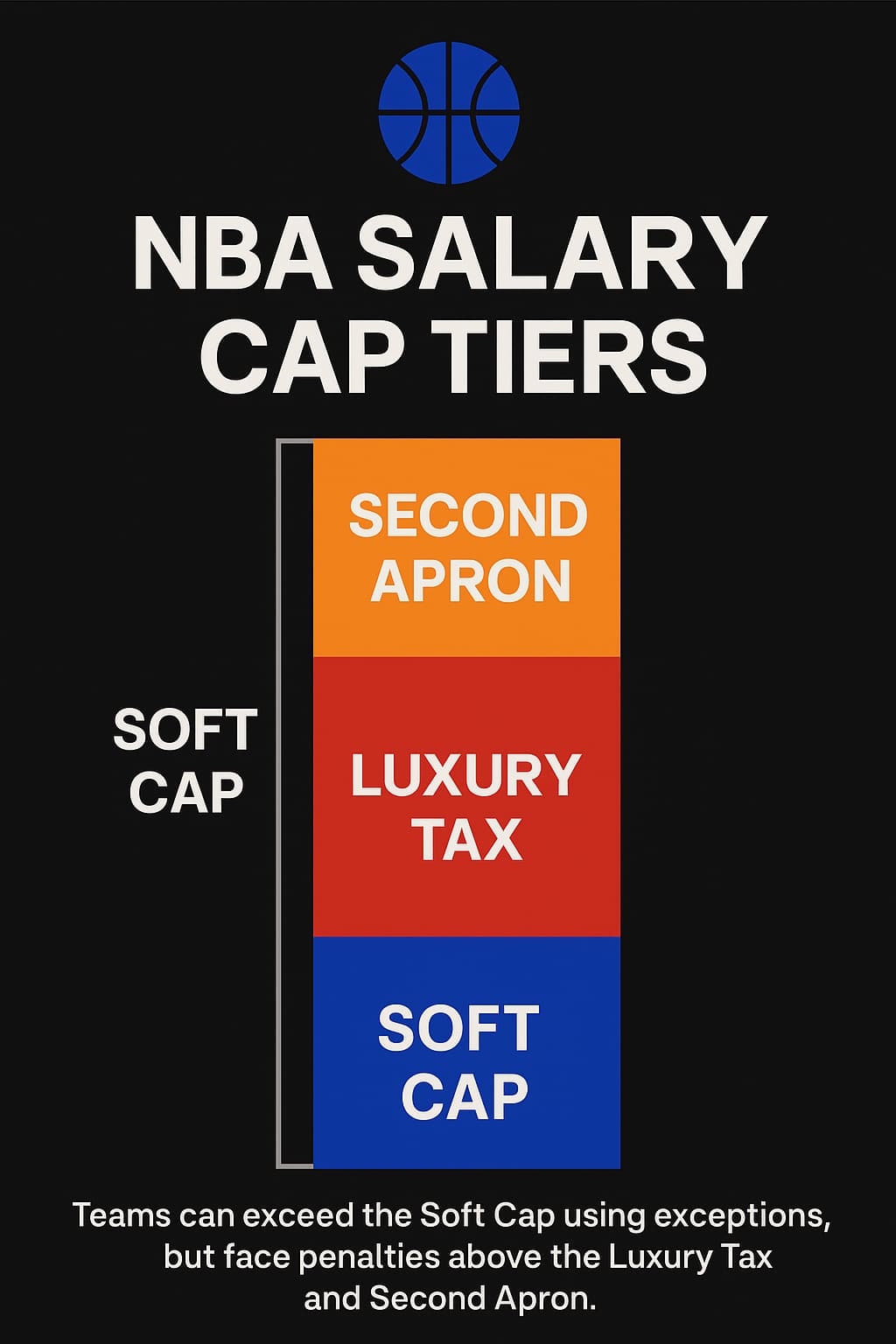
The NBA’s salary cap is one of the most scrutinized aspects of professional basketball’s economic framework. Ostensibly designed to foster competitive balance among franchises, the cap limits what teams can spend on player salaries, creating a financial ceiling that seems to run counter to the free-market principles typically associated with capitalist enterprises. This paradox has long captivated observers, prompting deeper contemplation on why a major professional sport would implement such ostensibly anti-capitalist restraints.
The Salary Cap: An Antithesis to Pure Capitalism
At its core, capitalism thrives on the idea of minimal restrictions—competition drives innovation, market forces dictate prices, and businesses maximize profits through unimpeded transactions. However, the NBA’s salary cap system suspends these norms by capping the total player compensation a team can distribute annually. This constraint is deliberately designed to curtail the financial freedom of wealthier teams from monopolizing top-tier talent through unlimited spending. It inverts typical capitalist logic, instituting an artificial boundary on economic ambitions and fostering a form of economic egalitarianism within the league.
Rather than allowing market demand to push salaries sky-high in a purely liberalized environment, the NBA imposes a regulatory framework akin to socialist redistribution—ensuring more parity among teams. The cap serves as a bureaucratic intervention limiting supply-demand mechanics. Viewed in this light, it reflects a fundamental tension between profit-maximizing behaviors and equity-driven governance.
Balancing Competition and Capital: The Rationale Behind the Cap
The NBA’s salary cap is not arbitrary; it embodies a recognition that unchecked capitalism can undermine the very integrity of the league’s competitive structure. Left to their own devices, large-market teams with vast financial resources would inevitably hoard superstars, leading to dynastic dominance that could disenfranchise fans and diminish the sport’s overall appeal. Such market monopolization would stifle competition and reduce the unpredictability intrinsic to a compelling sporting spectacle.
By capping team payrolls, the NBA fosters competitive balance—ensuring smaller-market or less affluent franchises remain viable contenders. This curtailment of capitalistic excess arguably preserves the league’s commercial vitality in the long term. While a pure capitalist system rewards absolute financial muscle, the NBA’s hybrid model channels economic control toward sustaining an equitable ecosystem, one where opportunity rather than sheer wealth dictates success.
The Salary Cap’s Impact on Player Earnings and Market Dynamics
Another layer of complexity lies in the cap’s implications for player remuneration. From a free-market perspective, athletes are skilled laborers whose market value would ostensibly find its true level through unrestricted negotiation. Yet the salary cap establishes ceilings that restrict individual and aggregate player income. This artificially imposed scarcity influences contract negotiations, compelling agents and players to strategize within a regimented financial landscape.
The result is a marketplace where salaries are not purely a factor of talent and demand but also of systemic constraints. This restriction engenders a kind of collective bargaining tether, which arguably diminishes the unbridled capitalist ‘seller’s market’ one might expect. It fosters a controlled environment where total payroll expenditure is collectively capped, not purely dictated by individual supply and demand curves. This inflection points toward a managed market rather than a libertarian economic model.
Analogies to Socialist Redistribution and Regulated Economies
One cannot escape the overt parallels between the NBA’s salary cap and principles seen in socialist and regulated economies. The cap acts as an equalizing force, redistributing opportunity and constraining wealth disparity within the league’s ecosystem. Its complex matrix of exceptions, penalties, and thresholds echoes the bureaucratic controls of governmental systems that moderate capitalist excesses.
This mechanism introduces a quasi-socialist ethos into an otherwise capitalist framework. Rather than laissez-faire economics dictating player salaries and team success, the salary cap enforces a de facto wealth ceiling. This hybrid economic model promotes the social good—a more leveled playing field—over unfettered capital accumulation. It reflects a broader cultural yearning for fairness within an institution driven by entertainment and collective identity.
The Fascination with Anti-Capitalist Elements in Professional Sports
Why does the salary cap inspire such fascination? It presents a real-world contradiction that exposes the limits of pure capitalism within a hyper-commercialized arena. Fans and analysts alike grapple with the curious coexistence of free enterprise and regulated limitations. This duality reveals deeper truths about modern sports as social institutions that require balancing economic incentives with collective equity.
It also challenges longstanding narratives about sport as just another business. Instead, it is a curated spectacle designed to engineer excitement, maintain suspense, and cultivate loyalty. The salary cap’s anti-capitalist features submit the market to a higher principle: preserving the communal value of competition over unlimited profit. This ideological interplay attracts scrutiny, debate, and obsession among those who study the economics of sport.
Conclusion: The NBA Salary Cap as a Strategic Counterbalance
The NBA’s salary cap is more than just a financial rule—it is a deliberately crafted ideology embedded within the league’s operational DNA. It stands as an emblematic counterforce to pure capitalist dogma, blending regulation and market dynamics to support both competition and commercial success. This system reveals an intricate tension between individual wealth accumulation and collective equity, generating enduring debate and fascination.
Far from an arbitrary or purely economic restriction, the salary cap reflects a nuanced acknowledgment that the unfettered play of capitalism can undermine the very foundations of sporting culture. It proves that in the world of professional sports, strategic constraints are as vital as economic freedom, and that true competition often requires carefully calibrated intervention.


