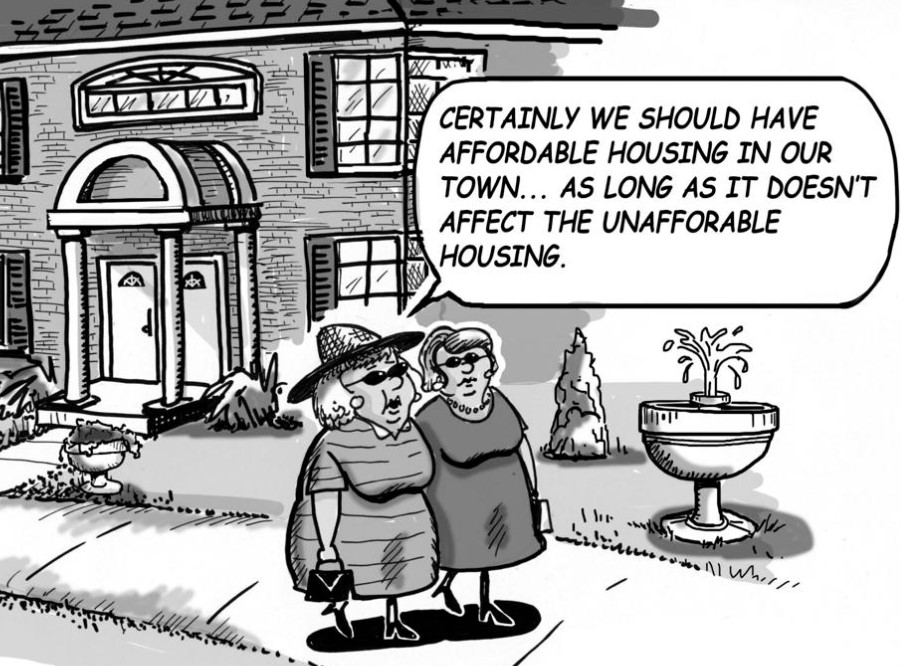
The NIMBY (Not In My Backyard) phenomenon is a familiar hurdle for developers and planners seeking to build schools, parks, hospitals, or even renewable energy facilities in affluent neighborhoods. At its core, NIMBYism is a localized expression of opposition to unwanted developments, often justified by concerns over property values, traffic, noise, or aesthetics. But dismissing it as mere petulance obscures a deeper truth: the NIMBY problem is intrinsically a byproduct of capitalism, an economic system inherently prone to generating winners, losers, and spatial conflicts driven by profit motives rather than communal equity.
Uneven Development and the Creation of ‘Ok’ and ‘Not Ok’ Zones
Capitalism operates on the fundamental principle of concentrating value and resources in specific areas to maximize returns. This often necessitates the development of certain amenities and infrastructure – schools, clean water, energy grids – while simultaneously creating areas of concentrated disamenities – ports, waste transfer stations, industrial zones, or, perversely, high-density housing or green energy plants near affluent areas. The capitalist mandate to seek profit maximizes requires strategic siting, which inevitably involves sited development – building things where value or revenue can be extracted, and locating disamenities elsewhere. This spatial logic inevitably creates friction zones where the benefits of economic activity clash with the perceived burdens and devaluing effects experienced by nearby residents, particularly in areas where property constitutes a major asset.
The Profit Imperative and Dissonant Landscapes
The relentless pursuit of profit under capitalism often means focusing on specific needs in specific locations while ignoring the broader community impact or diluting solutions for wider benefit. When a new hospital or school is built, it’s often a calculated investment in a specific catchment area expected to generate value. Capitalist actors look for markets where demand can be met profitably. This can mean building the exact type of facility society needs, but often the cheapest, most profitable, least intrusive version. The result is a landscape increasingly shaped by market logic: schools funded by property taxes in affluent areas might focus on preparing children for university entrance exams, while those in less affluent zones might be under-resourced, creating educational dissonance that capitalism tends to ignore unless directly profitable.
Market Solutions Failing to Address Inherent Inequities
Recognizing NIMBYism as a capitalist problem is crucial because it implies that purely market-based or even certain governmental solutions might not fundamentally solve it. Market logic inherently creates winners who bear the costs and loseouts who suffer the disamenities. Compensation schemes or eminent domain, however well-intentioned, often fall short of true justice. They might require relocating businesses or individuals, but the original community impact remains, and the value offered often fails to account for the profound disruption to lives and neighborhoods built over generations. Capitalism’s focus on transaction and exchange value often obscures the intrinsic value of place and community, which isn’t easily quantifiable or traded.
The Rise of the Property Rentier and the NIMBY Mindset
In many developed capitalist societies, homeownership has become a primary vehicle for wealth accumulation, solidifying the position of property owners as “value holders.” This creates a powerful incentive to protect and enhance the value of one’s investment. Situated in areas often enjoying public amenities (schools, low crime, green spaces funded partly by taxes on property owners generally), affluent homeowners have more leverage in their political negotiations. This rentier mentality – deriving income primarily from owning assets rather than participating actively in production – can foster indifference towards the needs and well-being of tenants or those in adjacent, potentially lower-valued properties. Resistance to NIMBY projects, even if ostensibly about perceived negatives, often masks a deep-seated defensiveness towards anything that might slightly ruffle the feathers or, crucially, *potentially* undermine the perceived value stability of their primary asset.
The Tyranny of the Status Quo and Capitalist Ideology
NIMBYism can be seen as a defense mechanism against the dislocations and inequalities inherent in capitalist expansion. The “not in my backyard” refrain often masks a fear of change – of new, less expensive housing types displacing older ones; of economic activity encroaching; of systems or people different from the residents feeling more entitled to the area. Capitalism, with its endless quest for efficiency, growth, and profit, constantly pushes against established ways of life. The resistance it provokes is a manifestation of the social costs capitalism ignores. It’s a reminder that abstract concepts like “growth” and “investment” have tangible, often negative, consequences.
A Different Framework: Beyond the Capitalist Approach
If the NIMBY problem is indeed a product of capitalism’s inherent contradictions – spatial inequality, uneven development, the prioritization of profit over community well-being, the commodification of social and environmental factors – then solutions must operate at a deeper level. Shifting towards frameworks that emphasize distributive justice, equitable access to public goods and amenities, and stakeholder involvement that goes beyond superficial consultation might be necessary. Fostering models beyond purely market-driven development isn’t about stopping progress but about ensuring that progress doesn’t become synonymous with extracting value at the expense of certain neighborhoods and inhabitants, fundamentally challenging the capitalist dynamic that breeds the NIMBY response in the first place.


