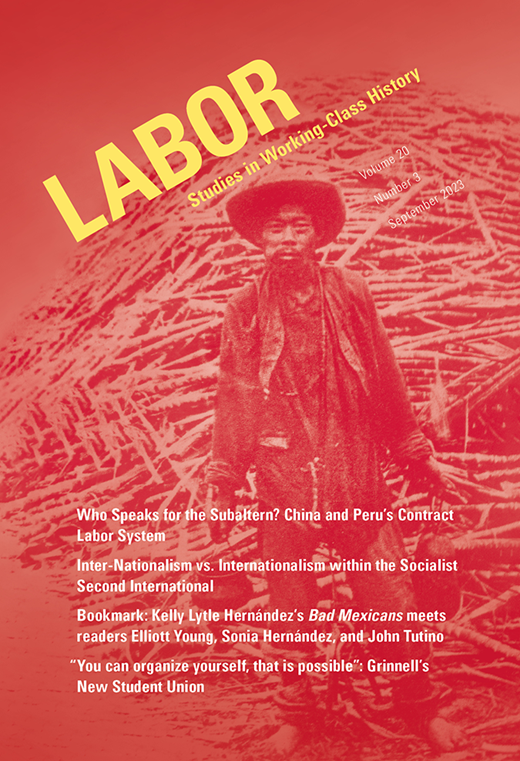
What if the very structure that propels modern economies forward harbors within it a deeply entrenched mechanism of segregation—not merely by class, but by race—and how might this challenge our conventional understanding of labor and capitalism? The racialized division of labor under capitalism is more than an historical artifact; it is a persistent phenomenon, shaping economic relations, social hierarchies, and individual lives in profound ways. This examination ventures beyond surface-level analyses to interrogate the intricate ways race and labor intertwine under capitalist frameworks, unveiling challenges that remain urgent and unresolved.
The Genesis of Racialized Labor Stratification
To unravel the racialized division of labor, one must first explore its historical genesis. Capitalism, far from being a colorblind economic system, co-evolved with racial hierarchies that justified the subjugation and exploitation of marginalized groups. Colonial enterprises and transatlantic slavery provided the initial blueprint for a labor system wherein racial identity dictated economic roles, wage disparities, and access to opportunity. This racial scaffolding offered capitalists an expanded palette for disciplining labor by fostering competition and fragmentation along racial lines.
Labor stratification was thus racialized by design, not accident. Enslaved Africans were relegated to grueling physical toil, while Indigenous peoples were displaced or coerced into subordinate labor roles. This division solidified a racial labor hierarchy that commodified bodies differently based on perceived racial characteristics. The residues of this system persist, often in covert forms, influencing how labor markets operate today.
The Mechanisms of Racial Division in Contemporary Capitalist Labor Markets
Though overt legal segregation has largely faded, capitalism continues to reproduce racialized labor divisions through subtle and systemic mechanisms. Occupational segregation remains a hallmark, with racial minorities disproportionately concentrated in lower-wage, precarious employment sectors—often characterized by limited upward mobility and diminished labor protections. This phenomenon is far from coincidental; it arises from institutionalized barriers that govern hiring, skill recognition, and wage-setting.
Moreover, capital leverages racial categorization to fracture worker solidarity. By creating a hierarchy within the working class itself, divisions are cultivated that undermine collective bargaining power and foster competition among workers. This strategic exploitation of racial difference secures a pliable, segmented workforce that benefits capital accumulation but exacerbates socioeconomic inequalities. Thus, race operates as a determinant of labor conditions, simultaneously shaping experiences of exploitation and resistance.
Intersections of Race, Gender, and Labor in Capitalist Structures
Race intersects with other axes of identity, most notably gender, to produce intricate patterns of labor segmentation. Women of color, for instance, often occupy the most marginalized niches comprising low-wage domestic work, caregiving, and service industries—sectors deemed peripheral yet essential to capitalist economies. This intersectionality exposes compounded vulnerabilities, where racialized gendered labor is subjected to both economic marginalization and social invisibility.
Capitalism extracts surplus value not only through the exploitation of racial difference but also by monetizing these gendered roles. The feminization of certain labor sectors aligns with racial segmentation, creating a dual hierarchy that deepens disparities. These layered oppressions complicate efforts to dismantle racialized labor divisions, necessitating an approach that addresses multiple forms of stratification simultaneously.
The Role of State and Policy in Perpetuating or Mitigating Racialized Labor Divisions
State apparatuses have historically played a bifurcated role in the racialized division of labor. On one hand, laws and policies—from Jim Crow segregation to immigration restrictions—enforced racial labor hierarchies; on the other, welfare and labor reforms have intermittently attempted to address some inequities. Nonetheless, the state often serves as an arbiter that balances capital interests with limited labor protections, frequently reinforcing the underlying racial stratification within labor markets.
For instance, exclusionary labor laws have systematically disenfranchised certain racial groups from union membership, thus weakening their bargaining power and preserving racialized wage differentials. Even contemporary policy interventions sometimes fall short, unable or unwilling to tackle the embedded racial dimensions of labor exploitation fully. This paradoxical role challenges reformist frameworks, urging a critical reevaluation of how policy intersects with race and labor under capitalism.
The Global Dimensions: Racialized Labor Beyond National Borders
Capitalism’s reach extends globally, transplanting and reshaping the racialized division of labor in transnational contexts. The international circulation of capital leverages racial hierarchies to dictate labor conditions in different regions, often reserving low-wage labor for racialized populations within Global South economies. Global supply chains rely heavily on these segmented labor forces, exemplifying racialized exploitation on a planetary scale.
The outsourcing of manufacturing, agriculture, and service jobs to racially marginalized communities abroad is not simply about cost reduction; it is undergirded by enduring racialized narratives about labor value and social hierarchies. This global racial division fractures international working-class solidarity, posing formidable challenges to collective resistance and raising critical questions about the possibilities for transnational movements against racialized labor exploitation.
Resistance, Reclamation, and the Future of Racialized Labor
Despite its entrenched nature, the racialized division of labor under capitalism is neither inevitable nor immutable. Historically, those subjected to racialized labor exploitation have forged strategies of resistance ranging from labor organizing to cultural reclamation. These acts assert dignity and challenge the racialized codes that demarcate labor worth and social status.
Emergent movements call for a reimagining of labor that transcends racial and capitalist logics—aiming for solidarity that embraces difference rather than weaponizes it. This entails confronting not only economic structures but also the socially constructed meanings embedded in race and labor. Such a profound transformation requires grappling with complex challenges: How can solidarity be forged in contexts riddled with historical racial antagonisms? How might capitalism be restructured—or transcended—to eradicate racialized labor hierarchies?
Ultimately, the question remains: can the racialized division of labor under capitalism be undone without radically reconfiguring the socio-economic systems that perpetuate it? Exploring this conundrum invites us to envision a future where labor is emancipated from racial fetters, enabling genuine equity and justice within—and beyond—the economy.


