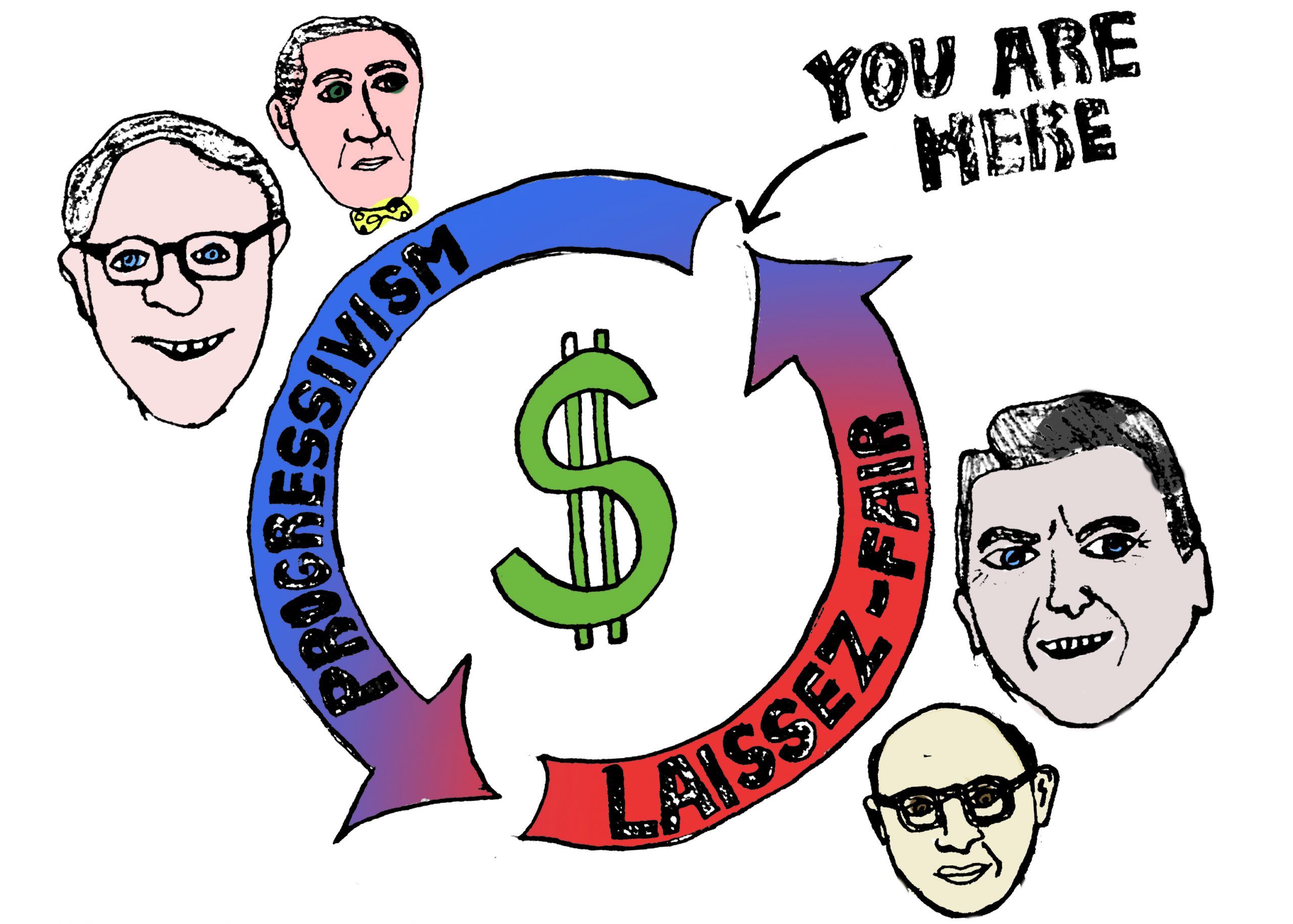
Capitalism stands as one of the most potent forces shaping modern society. Its ideology promises innovation, growth, and freedom, but beneath the surface lies an enigmatic question: does capitalism possess a definitive lifespan? This inquiry invites us to reconsider common assumptions and explore the cyclical nature of economic systems. Rather than a static ideal, capitalism is a dynamic phenomenon subjected to evolution, exhaustion, and transformation. Understanding its trajectory not only challenges preconceived notions but also unravels insights into the economic and social fabric that govern our lives.
The Genesis and Promises of Capitalism
Emerging from the embers of mercantilism and feudal structures, capitalism introduced a novel mechanism for wealth creation predicated on private ownership and market competition. It heralded unprecedented economic liberation by fostering individual enterprise and incentivizing innovation. The capitalist ideology promised efficiency through supply and demand, allocating resources with minimal interference. These promises, alluring and transformative, catalyzed industrial revolutions and unprecedented prosperity. Yet, the initial euphoria masked latent tensions, the seeds of which would later challenge capitalism’s sustainability.
Capitalism as a Cyclical Phenomenon
Contrary to the notion of a linear progression, capitalism behaves as a cyclical entity prone to recurrent phases of expansion, crisis, and reconfiguration. Economic historian Joseph Schumpeter famously described “creative destruction,” wherein innovation disrupts existing structures, paving the way for new models but also generating dislocation. This dialectic underscores capitalism’s inherent instability: booms are succeeded by busts, growth by recession, enthusiasm by skepticism. This oscillation compels us to examine capitalism not merely as an economic system but as a living organism subject to rhythms akin to biological lifespans.
The Exhaustion of Capital Accumulation
One compelling argument about capitalism’s lifespan involves the concept of diminishing returns in capital accumulation. As capital concentrates and markets saturate, opportunities for high-margin profits wane. Historical patterns bear witness to phases where capital’s accumulation inadvertently leads to stagnation. The 2008 global financial crisis serves as a stark reminder of how speculative excess and systemic vulnerabilities can culminate in spectacular collapses. It reveals a paradox: capitalism’s drive for expansion eventually encounters structural limits, undermining its own foundational impetus.
Socioeconomic Inequality and Its Discontents
Another critical dimension to consider is the exacerbation of socioeconomic disparities as capitalism matures. The system’s laissez-faire tendencies often engender wealth concentration among elites, engendering profound social stratification. Increasing inequality fuels political polarization, social unrest, and ideological backlash. These ramifications suggest that capitalism’s endurance hinges on its capacity to address distributive imbalances. Failure to do so risks delegitimization, provoking demands for alternative frameworks that promise greater equity and inclusion.
Environmental Constraints and Capitalism’s Viability
The ecological ramifications of relentless capitalist growth present an existential challenge to its lifespan. As capitalism prioritizes perpetual expansion, it often externalizes environmental costs—depleting natural resources and exacerbating climate change. The planet’s finite limits impose hard boundaries on endless growth paradigms. Recognition of these constraints has sparked emergent discourses around “sustainable capitalism” and green economies, signaling potential transitions rather than outright demise. The question remains: can capitalism reconcile its growth imperative with ecological stewardship before its contradictions become terminal?
The Role of Technological Innovation and Adaptation
Technology has historically acted as both a catalyst and a corrective within capitalism’s life cycle. Innovations reshape production, labor markets, and consumption patterns, offering revitalizing potential. Automation, artificial intelligence, and digital platforms exemplify forces capable of reconfiguring value creation and distribution. However, these shifts also introduce new challenges, such as job displacement and monopolistic tendencies. Capitalism’s lifespan may thus be extended or curtailed depending on its agility in integrating technological advancements while safeguarding societal welfare.
The Emergence of Hybrid Economic Models
Increasingly, the dichotomy between capitalism and socialism is dissolving into hybridized systems blending market mechanisms with regulatory oversight and social safety nets. This evolution reflects capitalism’s adaptive impulse to survive by incorporating corrective measures against its own excesses. Countries experimenting with mixed economies demonstrate resilience by tempering fierce competition with cooperative frameworks. This melding process may represent a new phase in capitalism’s lifespan—less about pure ideology, more about pragmatic governance in complex societies.
Philosophical Reflections on Capitalism’s Impermanence
On a philosophical plane, capitalism’s ephemeral nature aligns with the broader understanding of civilizations and ideologies as transient phenomena. No system, regardless of its ingenuity or dominance, remains impervious to entropy and transformation. This humbling perspective urges reconsideration of capitalism not as an eternal truth but as one chapter in humanity’s ongoing quest to organize economic life. Such awareness encourages creativity, vigilance, and openness to evolution rather than dogmatic adherence to any single paradigm.
Conclusion: A Call for Perspective and Preparedness
Scrutinizing capitalism’s lifespan demands a paradigm shift—viewing it less as an immutable framework and more as a contingent, evolving system. Its promises, challenges, and contradictions must be confronted with intellectual rigor and societal engagement. While capitalism has propelled remarkable advancements, its sustainability depends on confronting internal contradictions and external limitations. This juncture is not solely an endpoint but a potential transition toward new economic orders. Embracing this complexity equips us to navigate future uncertainties with clarity and resilience.


