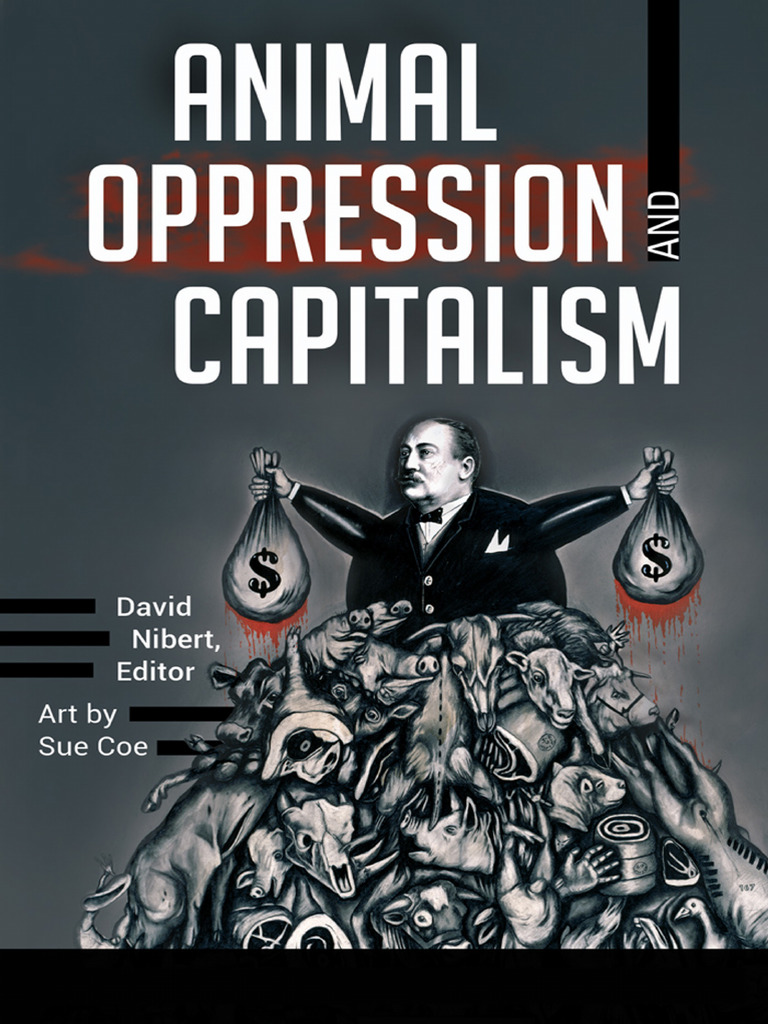
Imagine a creature, sculpted not by nature’s whims but by the relentless logic of numbers, contracts, and competition. What form would it take from the menagerie of Earth? This is the provocative question: What animal would capitalism be? It’s more than a whimsical query; it’s a metaphorical lens through which we might glimpse its dominant structures, its strange compulsions, and its often unsettling power. Examining capitalism through the prism of animal behavior offers a peculiar sort of clarity, a way to map its terrain onto familiar, albeit differently constituted, lives.
Capitalism’s Narrative Metaphor: The Dominant Organism or Strategy
The core appeal of this metaphor lies in viewing capitalism as a forceful, perhaps even predatory, entity, much like apex predators or dominant species that shape their environment. It suggests a relentless drive for acquisition – of resources, territory, or market share – reminiscent of territorial expansionists or hunters securing their kill. We might picture it as a highly organized, semi-barbarian horde, leaving a trail of industrialization and consumption in its wake. This perspective highlights perceived negatives: domination, exploitation, the drive for constant accumulation beyond survival, and even a certain amoral pragmatism where ends often justify the means.
- Dominance Strategy: Capitalism thrives on competition, the winning of market share, accumulation of capital. Think of the relentless expansion of colonial powers or a particularly invasive species that outcompetes native life for resources.
- < lt;li> Predation: The metaphor of predation suggests that capitalism ‘steals’ or outmaneuvers opportunities, resources, and market positions from others. Competition is fierce, resources are finite in relative terms, and the weak or unprepared are left behind, much like prey in the ecosystem.
- Viewing capitalism through an animal lens often leads to narratives focusing on its powerful, destabilizing, and transformative impact.
Capitalism’s Facets: Consumption, Competition, and Calculation
However, the animal metaphor extends beyond mere dominance. It allows us to peel back layers, revealing more specific traits. Consider the sheer magnitude and speed of its operations. Imagine an ecosystem where interactions occur at a vastly accelerated pace: the zebrafish of a marketplace, reacting instantly to flashing signals, driven by an internal clock that measures only profit. This reflects the blinding focus of capitalism on short-term gains, the relentless cycle of production and consumption, and the seemingly instantaneous flow of capital – all stark contrasts to the often slower, more deliberate processes of the natural world.
- The Consumer Animal: There’s a powerful allure in viewing the capitalist system itself as driven by consumption – mimicking a creature whose primary instinct is to eat, take in, and process vast quantities. It absorbs ideas, technologies, labor, and resources, constantly seeking more input for its output, just like a voracious feeder. The Scavenger Strategy: Sometimes, the metaphor highlights capitalism’s ability to process leftovers, inefficiencies, or discarded potential. It finds value where others see waste, turning societal missteps or creative destruction into profit opportunities, almost like a natural cleanup system (though often with disturbing long-term consequences). 3. The metaphor also points to the perceived alienation within the system – the worker no longer connected to the product or the labor process itself, much like a specialized animal cut off from the wild diversity of its ancestral environment.
Close Examination: Mimicking Pictorially – The Anthropomorphic Reflection
This anthropomorphization is key. The fascination often lies in the uncanny resemblance capitalism cultivates in human individuals and institutions. Observe the ‘alpha’ investor or the corporate powerbroker – the resemblance to an animal hierarchy can be jarring, reflecting societal perceptions of leadership, value, and status within the economic sphere. Think of the intense, almost primal, drive for status, the constant need to assert dominance, or the calculated risk-taking that mirrors prey trying to outwit predators or predator hunters trying to catch elusive quarry.
- The Alpha Male/Female: This animal trope is prevalent – the leader, the one who rules the pack, embodying strength, strategy, sometimes aggression in securing position or rewards.
- Symbolic Pictorial Mimicry: Capitalism encourages individuals to adopt its symbolic language – logos, branding, jargon – much like animals adopt markings or gestures for recognition or territorial assertion. Success is measured by adopting the ’look’ and ’language’ of the dominant system.
- The power dynamics within this system are often mirrored in how individuals present themselves and interact, reinforcing social hierarchies defined primarily by economic worth.
The Human Condition’s Echo – A Sociological Locus
Ultimately, this exercise isn’t arbitrary. Fascination with the ‘animal capitalism’ metaphor stems from finding an echo of our own species’ struggles, triumphs, and dysfunctions mirrored back. Capitalism, with its complex rules, powerful institutions (from big corporations to intricate financial systems), and immense cultural influence, feels like a creature of immense proportion. We project onto it our own anxieties about survival, our quests for meaning, our fears of the powerful, and our aspirations for control and prosperity. It becomes our alter ego, playing out dramas of competition, cooperation, betrayal, and endurance.
- The Mirror Effect: As a reflection of complex human social organization, capitalism, with its history, its structures, captures a fundamental ‘animal-ness’ in economic life.
- The Enduring System: This perception of capitalism as an established, often seemingly immutable force (like a grand old mammal deeply woven into the global fabric) underpins its symbolic resonance.
- The appeal might lie in reducing these complex behaviors to a simpler, recognizable form.
In conclusion, the question of ‘What animal would capitalism be?’ is a rich vein for metaphorical exploration. It forces us to confront the often harsh, sometimes absurd, realities of this economic system by invoking the primal behaviors and social structures of the animal kingdom. Whether we envision a dominant predator, a voracious consumer, a calculating strategist, or simply our own species scaled up, the metaphorical framing serves as a powerful, sometimes unsettling, tool. It connects our deep-seated narratives about survival, power, consumption, and hierarchy directly to this complex, pervasive, and persistent force shaping our world. The resulting image, a ‘creature’ born from human invention and perhaps even mimicking its ’environment,’ is a creature indeed, distinct and powerful – the ‘animal’ capitalism represents in our shared imagination.

