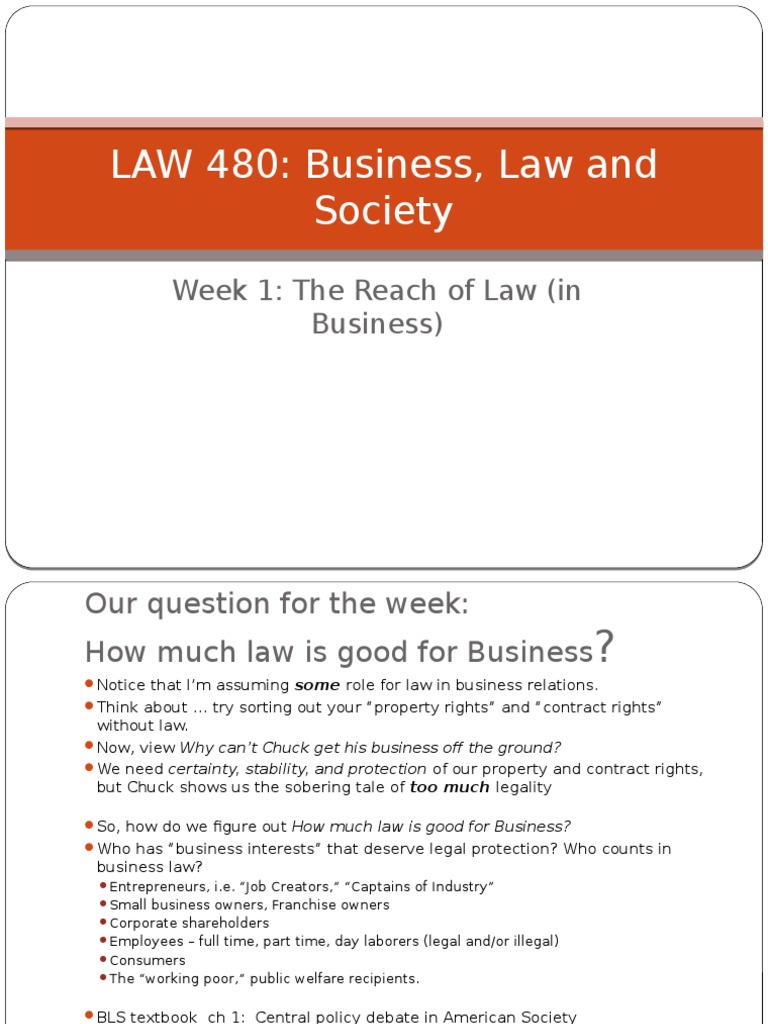
The concept of capitalism often conjures images of unfettered markets, boundless entrepreneurial spirit, and the relentless pursuit of profit. It is a system characterized by freedom—freedom to innovate, to compete, and to accumulate wealth with minimal interference. Yet, what if this freedom was not absolute? What if, instead of an open invitation, capitalism required a license, akin to the permits and certifications necessary in other professions? Such a premise challenges not only legal frameworks but also the cultural and ethical underpinnings of how societies engage with economic activity. This thought experiment invites us to unearth deeper reasons behind our fascination with capitalism and reconsider the balance between liberty and responsibility.
The Illusion of Unfettered Economic Liberty
Capitalism thrives on the mythology of boundless freedom. Entrepreneurs are celebrated as pioneers breaking barriers and redefining markets. However, beneath this veneer of liberty lies a labyrinth of implicit rules and regulations—tax laws, zoning restrictions, labor statutes—that already shape economic conduct in profound but often overlooked ways. Licensing capitalism would simply externalize and formalize these constraints into a visible, explicit construct. The notion of granting permission before entry juxtaposes the laissez-faire narrative with a mechanism for accountability.
Such a paradigm exposes the fallacy that capitalism is an entirely free system immune to oversight. Instead, it acknowledges that economic actors influence societal welfare in contexts requiring prudence and governance. Licensing would entail that capitalists demonstrate competencies spanning ethical stewardship, financial literacy, and social impact evaluation before participating. This would align the system more closely with how other regulated professions are managed, tempering chaotic excesses with informed responsibility.
Licensing as a Gatekeeping Mechanism
Granting capitalism a license positions it as a privilege rather than a right. This shifts the paradigm from unregulated access to markets toward stewardship of economic influence. Gatekeeping, though often maligned as elitist, serves protective and quality-assuring functions in many industries. Medicine, law, engineering—they all require rigorous vetting designed to harmonize individual competence with collective wellbeing.
Transposing gatekeeping to capitalism would erect evaluative thresholds, compelling would-be capitalists to meet standards beyond mere financial gain. Criteria might encompass adherence to fair labor practices, environmental sustainability, and transparency, effectively melding profit motives with public interest. This redefinition questions the often-held belief that capital accumulation is inherently virtuous, proposing instead that economic participation demands legitimacy and social license.
The Ethical Dimensions of Economic Participation
Capitalism’s dynamism is inextricably linked to moral considerations. The absence of explicit licensing allows for exploitation and externalities that disproportionately affect vulnerable populations and ecosystems. What societal cost is acceptable for economic innovation? A licensing system would implicitly force a reckoning with this question, assigning ethical responsibility as a prerequisite for market engagement.
Licenses could be structured to reward practices that contribute to social equity and punish those that create systemic harms. The necessity for approval from an impartial body introduces oversight that prioritizes ethics alongside efficiency. Beyond enforcement, such mechanisms cultivate a culture of conscientious capitalism—one where profit is not divorced from principle but integrated with communal stewardship.
The Impact on Innovation and Entrepreneurship
Critics might contend that licensing capitalism stifles innovation by imposing barriers that discourage nascent entrepreneurs. Indeed, bureaucracy and red tape are notorious for marring fresh creativity. However, this presumption overlooks the potential for licensing to act as a scaffold rather than a shackle. By setting clear rules and expectations, licensing may prevent predatory ventures and speculative bubbles that erode trust in markets.
Regulation under a licensing regime could incentivize responsible innovation that balances risk taking with foresight. Entrepreneurs vetted through such systems would arguably possess a heightened awareness of societal impacts, which translates into sustainable growth strategies. Far from quenching the entrepreneurial flame, licensing capitalism might ignite a new era of thoughtful, impact-driven enterprise.
The Socioeconomic Implications of Restricted Access
Introducing capitalism by license has profound implications for equity and social mobility. The design of licensing prerequisites could either democratize access by establishing transparent, merit-based standards or entrench privilege by imposing prohibitive costs and requirements. The challenge lies in crafting a system that is both rigorous and inclusive.
A licensing framework that emphasizes education, mentorship, and support mechanisms could serve as an equalizer, enabling underrepresented groups to navigate economic systems effectively. Alternatively, if wielded injudiciously, licenses could ossify existing power structures, denying marginalized communities participation and perpetuating disparities.
Thus, the politics of licensing capitalism become elemental in shaping the distribution of opportunity across society. It compels us to confront who is deemed worthy of economic agency and on what criteria. This interrogation reveals underlying biases and prompts efforts toward a more equitable economic architecture.
Regulatory Architecture and Enforcement Challenges
Implementing a licensing system for capitalism would necessitate an unprecedented regulatory architecture. Who would confer licenses, and under what governance structure? What standards would be codified, and would they be uniform or sector-specific? These questions raise practical and philosophical dilemmas regarding state power, market autonomy, and global coordination.
Enforcement poses another hurdle. Ensuring compliance and adjudicating violations require transparent, efficient institutions equipped to navigate complex market dynamics. The risk of corruption, regulatory capture, and bureaucratic inertia looms large. Nevertheless, the potential benefits—enhanced market integrity, reduced systemic risk, and heightened social trust—underscore the necessity for robust enforcement mechanisms.
The Psychological and Cultural Resonance of Capitalism Licensing
Behind the structural considerations lies a profound psychological and cultural fascination with the notion of licensing capitalism. Capitalism is often perceived as the ultimate expression of individual freedom and self-made success. The idea of requiring permission challenges ingrained values of autonomy and meritocracy. It provokes unease and curiosity alike.
This cognitive dissonance reveals a deeper societal ambivalence: a yearning for order and fairness coupled with an enduring desire for unimpeded agency. Licensing capitalism symbolizes a crossroads where ideals of freedom intersect with aspirations for justice and responsibility. This tension fuels ongoing debate about the role of markets, the reach of regulation, and the meaning of economic citizenship.
Conclusion: Navigating the Paradox of Freedom and Control
Imagining capitalism as a licensed enterprise illuminates the paradox at the heart of modern economies—the tension between freedom and control. Economic liberty, while foundational, is neither absolute nor apolitical. Formalizing participation through licensing reframes capitalism as a social contract with obligations that transcend profit-making.
Such a shift promises to recalibrate the relationship between markets and society, embedding accountability and ethics into the fabric of economic life. It challenges complacency toward existing disparities and externalities, urging a more deliberate and inclusive dialogue about how capital should be wielded. As capitalism continues to evolve amid global complexities, the question of licensing offers a compelling avenue to rethink what it means to participate in the economy meaningfully and responsibly.

