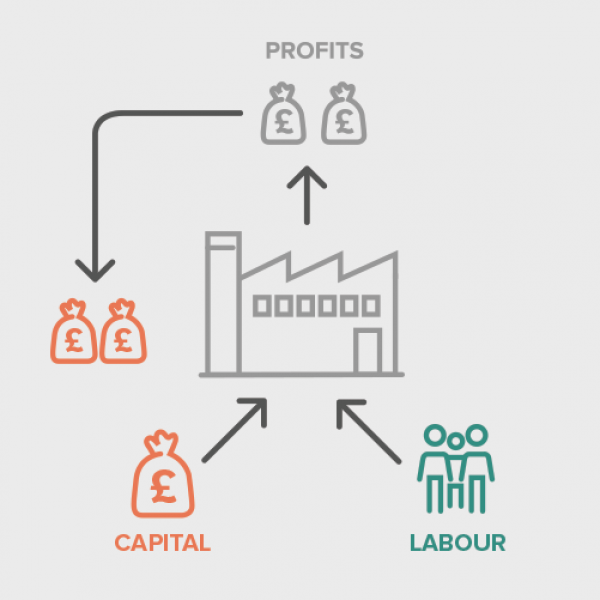
Imagining a capitalist system where charging interest becomes unlawful prompts a profound reexamination of economic fundamentals—fundamentals often taken for granted. Interest, a cornerstone of modern finance and credit systems, shapes not only individual borrowing and lending habits but also corporate investment strategies and national monetary policies. What ramifications would such a prohibition hold? How might capitalism morph in response to a ban on interest? Exploring these questions offers penetrating insights into financial ethics, societal equity, and market dynamics.
The Role of Interest in Capitalist Economies
Interest, by definition, represents the cost of borrowing money—the premium paid by debtors to creditors for the temporal transfer of purchasing power. Within capitalist economies, interest functions as both an incentive for lenders and a risk management mechanism. It compensates for inflation, opportunity costs, and borrower default risk. The accumulation of interest earnings facilitates capital formation, encouraging investments in innovation, infrastructure, and business expansion.
Without interest, the traditional risk-return calculus upon which financial institutions base their decisions would be destabilized. Lending would lose its intrinsic reward structure, potentially discouraging the pours of capital into ventures that catalyze economic growth. Therefore, understanding interest’s pivotal role reveals why its illegality would demand an entire financial architecture overhaul.
Disrupting Credit Markets and Lending Practices
With interest outlawed, the paradigmatic nature of credit markets would undergo radical transformation. Conventional loans charged with a stipulated interest rate would be replaced by debt arrangements devoid of added financial cost. This could lead to widespread reluctance among lenders to extend credit, as their remuneration for deferring current wealth would be nullified.
In response, alternative financing mechanisms might emerge—profit-sharing contracts, equity partnerships, or leasing models that emphasize shared risks and returns rather than fixed interest payments. Peer-to-peer lending platforms could evolve, foregrounding trust and social capital instead of numerical return rates. However, these models, while conceptually viable, would require robust legal frameworks and cultural buy-in to function on scale.
Impact on Savings, Investment, and Wealth Accumulation
The prohibition of interest impinges deeply on savings behavior and wealth accumulation. Traditional savings accounts, fixed deposits, and bonds yield returns via interest. Without it, individuals would face diminished incentives to defer consumption in favor of saving, potentially contracting the pool of investable funds.
This contraction might restrict the availability of capital necessary for corporate and infrastructural investments, curtailing economic dynamism. Investors may turn toward riskier assets promising capital gains or dividends, altering the overall risk profile of financial markets. Meanwhile, wealth accumulation mechanisms could shift focus toward tangible assets, entrepreneurial ventures, or innovative contractual arrangements structured around profit shares.
Monetary Policy and Central Banking Challenges
Central banks modulate economic activity by influencing interest rates, thus managing inflation, unemployment, and economic growth. An environment hostile to interest creation would severely compromise these monetary policy levers. The traditional transmission mechanism—adjusting benchmark interest rates to guide borrowing and spending—would become obsolete.
Consequently, central banks might pivot to unconventional tools such as direct credit controls, adjusted reserve ratios, or enhanced fiscal-monetary coordination. The rigidity imposed by interest prohibition would intensify the complexity of macroeconomic management, demanding innovation in policy design and implementation to sustain economic stability.
Social and Ethical Ramifications of Interest Prohibition
Beyond mechanics, outlawing interest invites ethical discourse. Charging interest has been historically contested on moral grounds, often associated with usury. By removing interest, capitalism might be compelled to embrace more equitable financing frameworks, potentially reducing exploitative lending practices that engender cycles of debt and impoverishment.
This paradigm could foster greater financial inclusion, empowering marginalized communities by eliminating exploitative cost structures. Yet, it also risks constraining credit availability, inadvertently stifling upward economic mobility if alternative financial services are not sufficiently developed or inclusive.
Potential for a Post-Interest Capitalism
Prohibiting interest introduces glimpses of a post-interest capitalism—an economic model wherein access to capital is uncoupled from the obligation of interest repayment. Such a transformation could spur the proliferation of cooperative enterprises, mutual credit systems, and Islamic finance-inspired instruments that emphasize risk-sharing over fixed returns.
Emerging financial technologies might facilitate decentralized, interest-free transactions leveraging blockchain and smart contracts. This could democratize capital flows, aligning financial systems with social objectives rather than profit maximization alone. The holistic effect could recalibrate capitalism toward sustainability, resilience, and collective prosperity.
Challenges and Risks in Transitioning to an Interest-Free Capitalism
Transitioning to a capitalism devoid of interest is fraught with formidable challenges. Legal, economic, and institutional frameworks would require extensive reengineering. Legacy contracts, debt obligations, and entrenched financial practices would present obstacles and potential disruptions.
Moreover, investor confidence could be undermined, precipitating capital flight or market volatility. Navigating these risks would necessitate phased implementation, transparent governance, and robust stakeholder engagement, enabling gradual adaptation rather than abrupt systemic shocks.
Conclusion: Envisioning the Economic Landscape Beyond Interest
The prohibition of interest in capitalist systems would instigate tectonic shifts across financial markets, social structures, and policy domains. By dissecting implications on credit, savings, investment, ethics, and governance, it becomes evident that the fabric of capitalism is tightly interwoven with the concept of interest. Yet, the prohibition also illuminates possibilities—inviting reconstruction through innovative, equitable financial paradigms that transcend traditional interest-based models.
Such speculative inquiry challenges prevailing orthodoxies and stimulates fresh perspectives on the future of economic organization. Whether through cooperative finance, technological innovation, or ethical investment, a capitalism without interest may ultimately herald a more inclusive and sustainable economic order.

