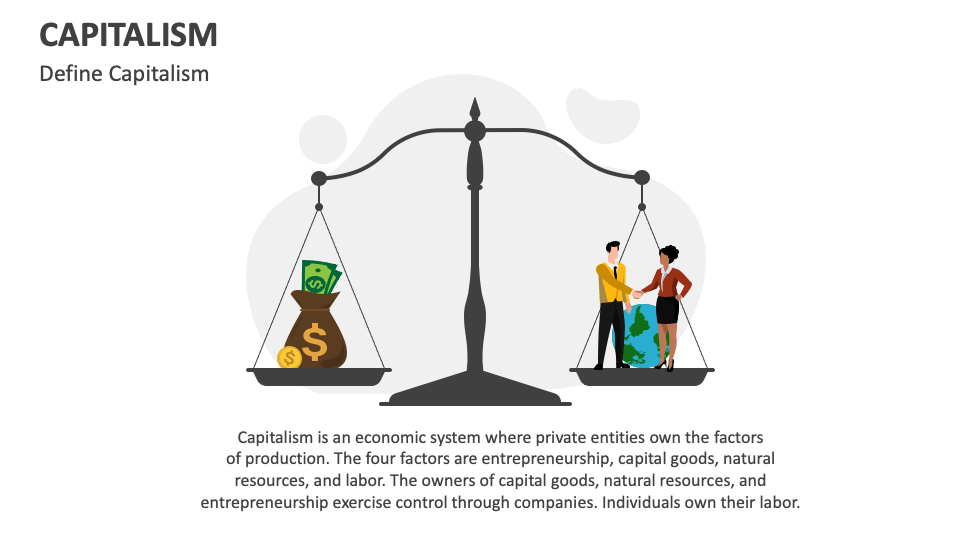
At its most elemental level, capitalism is an economic system founded on private ownership of the means of production – essentially, the resources, factories, technology, and capital necessary to produce goods and services. While the term encompasses various interpretations, a central, defining characteristic is **value-driven allocation**. Unlike centrally planned economies where authorities decide economic activity based on quotas and targets, capitalism directs resource use primarily through the mechanism of markets and prices.
The core engine is **private property**, granting individuals and businesses the right to own, use, and exchange assets for their own benefit. This incentivizes investment, efficiency, and innovation, as owners seek to maximize value. The interaction of buyers and sellers within a market determines the price of goods and services, signaling scarcity or abundance and guiding production and consumption towards perceived needs and wants. Competition is thus institutionalized, pushing entities to offer better products, lower prices, or innovate to capture a larger share of the market.
To effectively grasp capitalism, one must move beyond its simplest representation. It is not merely an economic philosophy but a socio-political arrangement deeply woven into the fabric of life. While predicated on market dynamics, most modern capitalist systems incorporate significant governmental roles. Think of laissez-faire capitalism, advocating minimal state intervention, versus mixed economies prevalent in Europe or North America, balancing market forces with social welfare programs and regulations designed to mitigate negative externalities or inequality. A truly defining feature is its potential for perpetual growth; systems focused on maximizing short-term returns often find long-term prosperity dependent on ongoing expansion, driving resource extraction, consumption, and international trade on a massive scale.
A History of Strains: From Guilds to Global Systems
Capitalism did not emerge fully formed. Analyzing its evolution provides crucial context, moving beyond abstract definitions. Though often linked to the profound economic shifts of the Industrial Revolution and the rise of nation-states, capitalism’s roots arguably stretch further back. Early forms included medieval merchant guilds, which were trade associations, and Italian city-states, with Florence’s Medici bank exemplifying capital accumulation and lending through finance. The Renaissance humanism fostered a mindset valuing individual ingenuity and trade, paving the way for later developments.
The pivotal centuries from the 16th through the 19th witnessed a radical transformation. Thinkers like Adam Smith (The Wealth of Nations in 1776) championed the “invisible hand” – the idea that self-interested individuals pursuing private gain could inadvertently benefit society through market efficiency. However, early capitalism was not devoid of friction. Workers sought unionization, cities enacted sumptuary laws trying to control rising inequalities, and state interventions aimed to stabilize burgeoning financial systems. Movements arose in response, from early democratic ideals aiming to temper capitalist excesses to influential critiques like Marxism-Leninism, which offered starkly contrasting visions of economic organization – one promising workers’ control and wealth equality.
The 20th century saw capitalism dramatically reshape the world. Following 1945, state-led capitalism in Europe implemented social democratic adjustments, balancing market mechanisms with welfare states. Meanwhile, the ideological tug-of-war between proponents of liberal democracy (which largely entailed capitalism) and socialism escalated, though globally, the triumph was the former. From post-WWII reconstruction to the fall of the Berlin Wall, state-backed businesses and international trade agreements fueled the globalization we observe today. Navigating the digital age means grappling with unique challenges: the rapid accumulation and control of wealth through tech platforms, disruptive business models like Uber, and debates surrounding algorithmic transparency, data ownership, and the very definition of work in an increasingly digital economy.
Benefits by the Books: The Case for Capitalism
Capitalism’s enduring global prevalence warrants scrutiny of its apparent advantages. Proponents argue that its power lies in its capacity to mobilize resources and drive innovation with remarkable efficiency. This system fosters spontaneous order, where millions of individuals, operating with only loosely aligned interests, collectively organize resources without central planning, generating immense complex wealth.
At its core, capitalism incentivizes economic actors to offer solutions to perceived, or sometimes real, market problems: a company might perfect logistics, another develops a cheaper renewable energy source, or one creates a more engaging social media platform. This mechanism, known as the creative destruction identified by Joseph Schumpeter, may be harsh, even destructive to specific sectors or established players, but proponents argue it is inherently dynamic and ultimately beneficial, freeing capital and labor for new, more valuable pursuits.
Capitalism facilitates the spatial transfer of goods and services, enabling a division of labor that would be impossible within isolated communities. Complex, geographically dispersed supply chains function with astonishing speed and efficiency, delivering consumer goods across borders – from smartphones containing rare minerals in Congo mines to hamburgers in Tokyo. Furthermore, capitalism underpins modern institutions by stimulating investment – private capital funds not only profitable enterprises but also underwrites the very infrastructure (roads, ports, communications networks) required for an interconnected global economy. The system generates vast wealth, which trickles down to many through wages, salaries, and profits, enabling consumption and a standard of living unimaginable in previous eras.
Countervailing Winds: The Uneasy Critique
Despite its successes, capitalism invites counterarguments concerning equity, opportunity, and sustainability. Critics highlight the stark reality of radical inequality. Unchecked pursuit of profit can lead to concentrations of wealth so vast that the world’s richest individuals possess assets exceeding the GDP of nation-states, raising questions about social cohesion, political influence, and the basic fairness of opportunity. While upward mobility *can* occur, stagnant or declining wages for vast segments of the population, alongside rising living costs, can corrode the perception of capitalism as providing widespread opportunity.
Capitalism is critiqued for fostering potentially non-economic motivations to dominate the scene. While efficiency is its hallmark, the relentless focus on shareholder value or market share can incentivize environmental degradation – depleting resources for cheaper energy or outsourcing production to areas with laxer pollution laws. Competition, so vital in promoting innovation, can become purely destructive through predatory pricing, aggressive advertising warping consumer choices, or corporate espionage damaging trust. The very dynamism of the market, pushing individuals to emulate “success,” can create immense pressure, linking personal identity and self-worth to market performance.
Market logic doesn’t function solely in the economic realm but spills over into social spheres – what might be termed economics culture. Corporatization trends affect non-profits, education, and even aspects of personal life. Perhaps most profoundly, critiques examine the system’s long-term viability. Focused on perpetual growth (often measured crudely in GDP) and short-termism (prioritizing immediate returns over sustainable practices or long-term investment), capitalism faces challenges. Some argue it inherently undermines planetary sustainability by incentivizing consumption and production without regard to environmental limits. Others note its structure may breed inherent unsoundness, operating on leverage and debt, potentially leading to periodic crashes or crises, demanding constant crisis management that can erode stability.
Beyond the Barter: The Future Labyrinth
Determining the future trajectory of capitalism, the system predicated on market allocation, defies facile predictions. It represents more than economics – it shapes artistic expression, cultural norms, political landscapes, and even individual biologies, from access to healthcare, particularly reproductive and end-of-life care, to the pressures of consumerism. Debates rage about how to integrate ethical considerations into market logic, foster more inclusive economic growth, maintain social safety nets, and address environmental degradation.
Whether the future holds predominantly unmodified laissez-faire capitalism, heavily regulated mixed economies, or entirely new forms designed for stakeholder (versus shareholder) primacy remains unclear. Technology will undoubtedly amplify existing trends and create new challenges; AI-driven markets, cryptocurrency, automated labor, and the potential for entirely different forms of economic structuring (like blockchain-based systems) are open frontiers. The central, unifying feature remains markets and the principles animating them – principles that drive innovation but also spark endless debate about fairness, freedom, and the very definition of a fulfilling and equitable life. Understanding capitalism involves appreciating its historical trajectory and tangible benefits, acknowledging its inherent tensions and criticisms, and navigating its immense power to shape our world.


