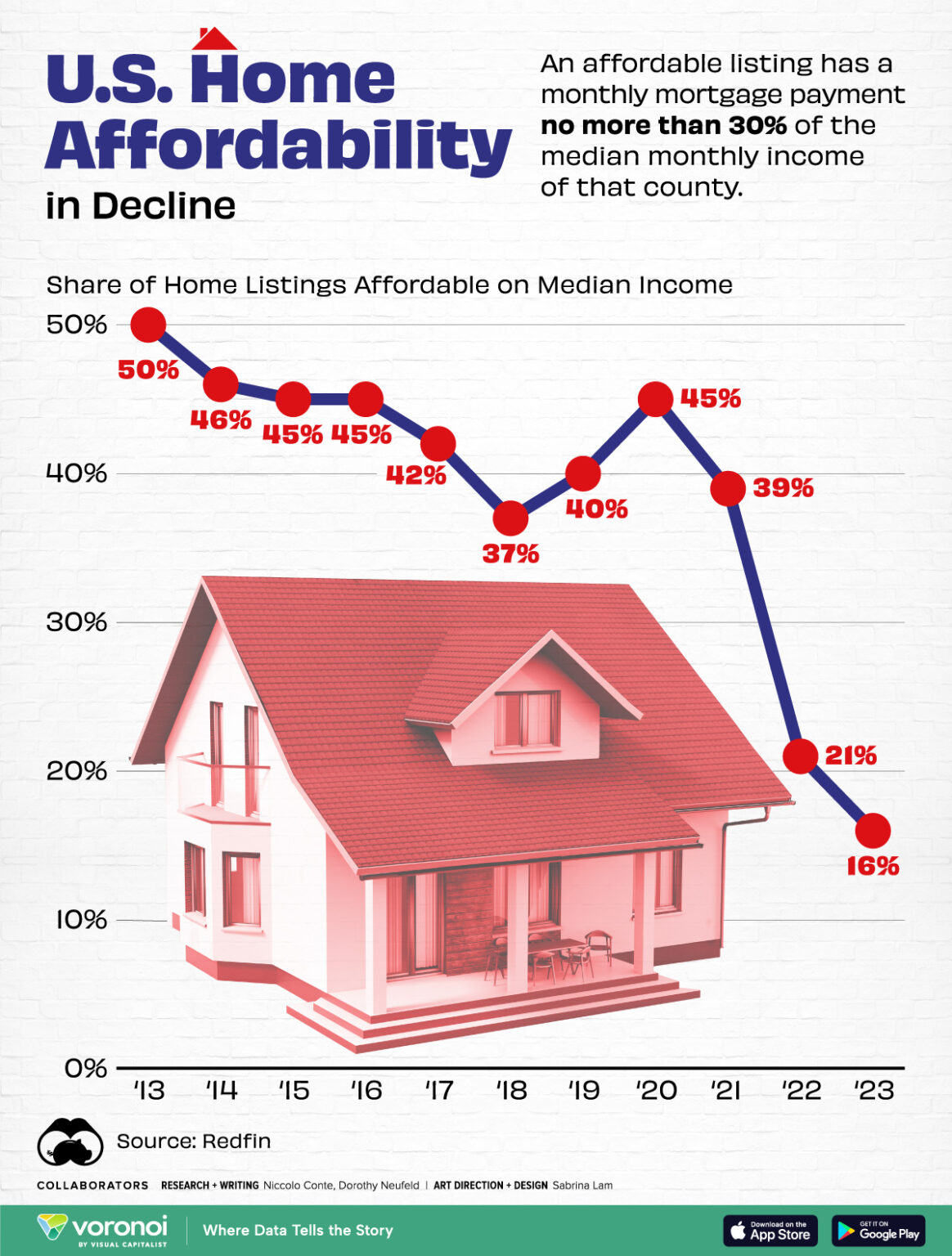
Capitalism, an economic system built upon private ownership, competition, and the relentless pursuit of profit, has woven the production and allocation of goods and services into the very fabric of modern society. Yet, within this framework, certain sectors behave differently. Perhaps none faces more persistent friction between its market logic and its fundamental human purpose than housing. While providing shelter is a basic necessity, under the pressures and imperatives of a capitalistic system, achieving widespread affordability has proven exceptionally difficult. The paradox lies at the intersection of economic efficiency, the drive for accumulation, and the universal need for shelter. Examining the core tenets of capitalism reveals a confluence of factors that systematically erect barriers against truly affordable housing for the majority.
- Scarcity and Supply-Demand Dynamics Ignited
At the heart of the challenge lies the fundamental law of supply and demand. In a free market, prices adjust to balance supply and demand. However, the demand for housing is incredibly stable and ubiquitous across populations. Everyone, somewhere, needs a place to live. On the supply side, building new homes and apartments requires significant investment, time, and resources, and is subject to physical constraints of land. The capitalist marketplace responds to fluctuations in profit potential far more readily than to the constant, baseline demand for shelter. When land values soar due to proximity to city centers or desirable amenities, the incentive to build intensifies there, often leading to localized surges in prices. Conversely, building in less desirable or cheaper-to-develop areas holds less profit potential, leading to neglect and effectively pricing those areas out of the market, even for basic needs. Furthermore, speculative land acquisition, where investors buy land anticipating future value appreciation rather than immediate development, exacerbates scarcity by removing potential building sites from active use.
- The Profit Imperative: Housing as Accumulation vs. Necessity
Capitalism’s primary engine is the accumulation of capital. This inherent drive for profit fundamentally reshapes resource allocation, including land and labor. The housing sector, in its purest capitalist form, functions much like any other market: value determines price, and price reflects profitability. When land becomes highly profitable due to its development potential or its location next to valuable properties, investors naturally gravitate towards acquiring and developing it. The profit motive, however, frequently collides with the underlying need for shelter. Building high-density, high-quality, and importantly, *affordable* housing projects can be inherently less profitable than luxury developments or commercial properties. As noted in the provided data, the fundamental economics often favor maximizing returns for investors, not minimizing costs for tenants. Consequently, building providers are often incentivized to maximize the price per unit, constructing fewer units with higher price tags to improve margins, directly increasing overall scarcity and reducing the number of available affordably priced homes. This relentless focus on generating profit pushes housing further into the category of commodity, something to be bought, sold, and managed for gain, rather than a place for community and stability.
- The Financialization of Shelter: Investment Over Dwelling
The past decades have witnessed a significant shift: housing is increasingly treated not just as a place to live, but primarily as an asset class for investment. Large financial institutions, private equity firms, hedge funds, and even sovereign wealth funds now actively purchase and manage vast portfolios of residential property. This phenomenon, termed ‘financialization’, fundamentally alters the purpose and operation of the housing market. Property becomes a speculative investment, subject to valuation, dividends (like rent), and potential appreciation for sale. This focus prioritizes yield and capital growth over providing homes for inhabitants. It leads to phenomena such as the rentalification of owner-occupied homes, or entire residential areas being transformed into giant apartment portfolios bought by investors seeking passive income. While this can increase available stock in some cases, it simultaneously drives up competition for rentals, inflates housing prices in desirable areas, and encourages the construction of high-yield rental units, often at lower quality and less regulated standards than owner-occupied housing, further distancing the market from the goal of universal homeownership or even basic, dignified tenancy at fair prices.
- Concentration, Sprawl, and Geographic Imbalance
Capitalism thrives on concentration – of labor, capital, and markets. Cities emerge as the primary engines of economic growth, offering more opportunities and attracting people. This naturally creates hyper-demand for housing in proximity to these centers. Capitalist actors, driven by profit, naturally cluster in these high-rent locations, building upwards, densifying existing areas, or, more often, developing the most expensive per-acre land on the edge of these zones (leading to sprawl). While sprawl might offer cheaper, but often less desirable and more car-dependent living, the initial pull towards central areas creates massive price premiums. This geographic mismatch significantly fuels the affordability crisis, as individuals must either overstretch financially or relocate to vastly different areas, potentially sacrificing job access or social networks. Urbanization trends, amplified by wage differentials between rural and urban areas, consistently increase pressure on limited housing stock in centers and its immediate periphery, forcing up prices across a wide swathe of the housing market.
- Regulatory and Zoning Complexities as Market Barriers
The free market excels in decentralized, flexible exchanges with minimal external interference. Capitalism historically emerged and thrived by minimizing landlord intervention. However, governance requirements, particularly land use regulations and zoning laws, act as significant constraints. These rules, established for various social, health, and aesthetic reasons, dictate how land can be used, the density of development, materials, setbacks, and floor area ratios. While well-intentioned (ensuring building standards, preserving neighborhoods, encouraging planned development), these regulations can also deliberately or indirectly stifle the development of lower-cost housing. Zoning restrictions might prevent multi-family housing in certain areas, limit the height and density of buildings (forcing more land to be used), create costly separation buffers, or mandate expensive setbacks. These constraints increase development costs and complexity, requiring more approvals, expertise, and capital – elements often avoided or streamlined in purely market-driven endeavors. Bureaucratic hurdles associated with planning permission, environmental reviews, and historical preservation can further slow or halt development projects, particularly those proposing lower-cost or denser forms of housing, thus reinforcing affordability challenges.
- The Human Dimension: Needs vs. Market Solutions
The cumulative effect of these economic and market dynamics translates into profound human consequences. Millions find themselves priced out of the housing market, choosing between strained homeownership dreams, unstable multi-generational living arrangements, or expensive and often precarious tenancies. Low-income families, disproportionately people of color, face immense struggle accessing safe, adequate, and stable shelter. In cities with the highest concentrations of capital and gentrification, displacement becomes a tangible reality, fracturing communities and displacing long-term inhabitants. While certain groups, such as affluent investors or newly successful individuals, may access housing through rising property values (capital gains), the overall distribution is uneven. The tension underscores that, for most, housing necessitates dwelling – a stable foundation that the unregulated market, driven solely by capital accumulation, often fails to provide. The gap between what the market deems profitable and what society requires for basic well-being widens, creating a persistent and complex challenge inherent to the system itself.

