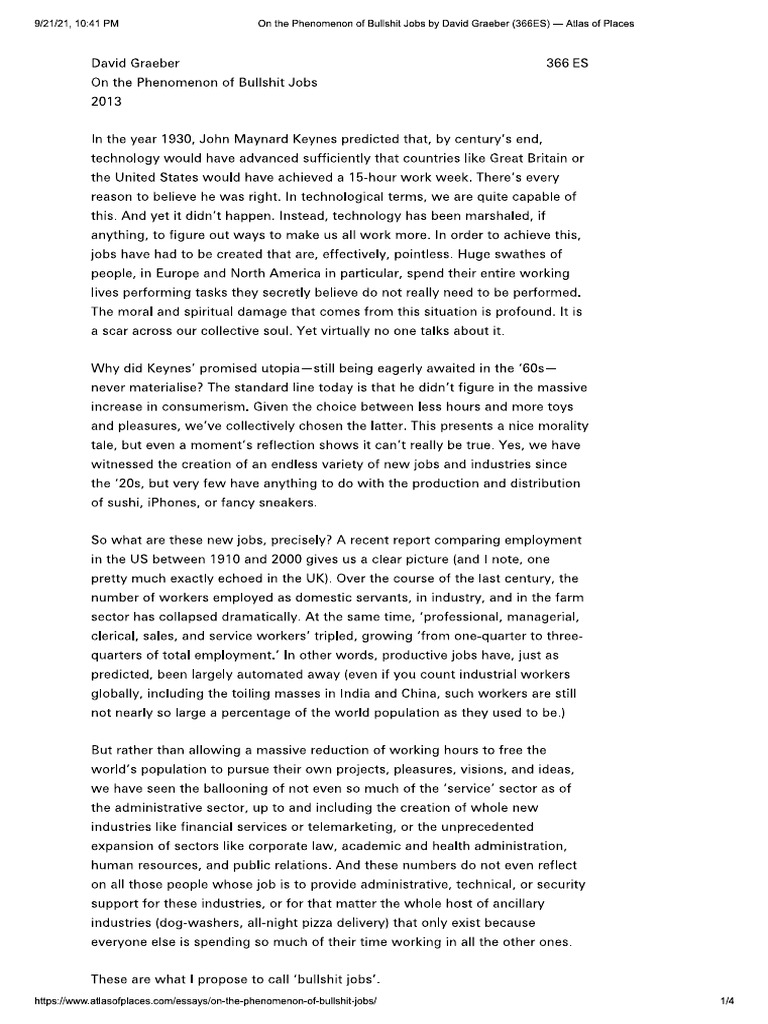
The term “bullshit job” has entered public discourse with startling frequency, offering a provocative lens through which to view the modern economy. Popularized by David Graeber’s ethnographic observations, it describes work perceived as largely pointless, unnecessary, and often experienced as gruelingly tedious, exploitative, or simply alienating. While its origins are debated, the phenomenon points towards a structural issue deeply rooted in the mechanisms of capitalism. Understanding how capitalism systematically cultivates such roles requires examining its relentless drive for profit maximization, its inherent contradictions, and its unique approach to value creation and destruction. Capitalism isn’t merely an economic system; it is a complex web of incentives, behaviors, and institutional logic that, in its pursuit of efficiency and surplus value, paradoxically generates labor that appears devoid of meaningful purpose.
Defining the Nuisance Postulate
Naming is a powerful act, and “bullshit job” possesses a unique potency. Unlike euphemisms, it confronts the absurdity directly. However, its definition relies on subjective and objective criteria. Subjectively, individuals might perceive tasks as lacking clear purpose, being creatively stifling, or contributing negatively to their well-being. Objectively, a bullshit job often fulfills criteria such as being redundant or demonstrably useless, wasting resources or polluting the environment. Yet, a chilling paradox arises: much of this labor persists precisely because it appears necessary to fulfill some requirement for others. It operates under the banner of utility but delivers obfuscation. This concept isn’t about casual dissatisfaction; it’s about roles that fundamentally fail the test of purpose, trapped within an economic logic that prioritizes labor transaction over genuine productivity. The very act of assigning a cost to performative or maintenance tasks within a disconnected hierarchy becomes the formal job itself.
Financialization and the Rise of Pointless Formality
The primary driver behind the proliferation of bullshit jobs, particularly in the contemporary period, is the trend known as financialization. This isn’t merely about finance industry employment; it’s a cultural shift where nearly every aspect of life and work is measured, segmented, and valued primarily through financial metrics, even where they are utterly inapplicable. In an unrelenting pursuit of quantifiable value extraction, certain human activities become “work” simply because they need to be performed according to corporate dictates, regardless of any intrinsic benefit. Compliance, gatekeeping, and internal coordination without real output often embody this principle. Consider the sheer weight of administrative overhead. For every line of code written or every unit produced, there exist layers of personnel dedicated solely to fulfilling bureaucratic requirements, managing schedules via complex software, ensuring internal policy adherence long after the policy’s original goal has been forgotten or been subsumed into its own compliance demands. This administrative bloat transforms essential functions, like scheduling or policy review, into protracted, opaque, and frequently redundant processes requiring specialized “schedulers” or “compliance analysts.”
Schism Between Labor and Productive Value
Under traditional craft-based or mercantile capitalism, the connection between the worker and the product or service was often clearer. The baker produced bread, the weaver wove cloth. Though distinct, labor specialization still aimed for direct contribution. Modern capitalism, however, operates differently. Its logic favors division of labor and compartmentalization, often severing the connection between specific tasks and tangible outcomes. Tasks are broken down to near-invisibility, lost within vast corporate machinery. Consider specialized roles for managing corporate social responsibility (CSR) programs. Are these roles truly “useful” given the well-documented disconnect between corporate rhetoric and genuine environmental or social benefit? Their existence requires a continuous, often elaborate performance, maintaining the appearance of ethical engagement, irrespective of the substantive reality. This fragmentation means individual roles lose sight of their broader impact, reducing identity to navigating internal workflows and often contributing to feelings of alienation, the very condition that Marx argued was perfected under the most developed forms of capitalism.
Bureaucratic Fortresses and Defended Zones
Bullshit jobs often flourish within the intricate, defensive architecture of large corporations and complex state bureaucracies. These institutions require vast levels of internal coordination and internal political maneuvering, far exceeding the coordination of external activities. Think about the sheer volume of meetings, internal reports, and inter-departmental email chains required to maintain operational semblance in a large organization. While some of this communication is vital, a significant portion exists solely for navigating organizational politics, securing approval for relatively minor tasks, or reconciling conflicting departmental needs. These duties, often falling to middle managers or specialized personnel, resemble the “meaningless busy work” of school, demanding time and cognitive energy without contributing to the overall bottom line in a measurable way. The internal landscape of even relatively efficient organizations often features swathes of work focused on preventing change, protecting established (but flawed) practices, or merely ensuring rules are followed. The energy expended simply existing within such systems, or “being on the job for the right,” constitutes a significant portion of the bullshit labor problem.
Labor as Transaction Cost Minimization?
A perspective offered by economists like Oliver Hart involves analyzing organizations as bundles of rights, defining who controls decisions regarding assets. Within this view, the structure of bullshirting within firms relates to minimizing transaction costs. If a specific task is complex and requires close coordination with other internal units, it might be cheaper for the firm to perform it itself rather than contracting it out, even while creating specialized roles to manage the *internal* coordination mimicking outsourcing. These roles ensure the “outsourced” task adheres to firm standards but drain value from the core activity. Another facet is risk mitigation – assigning costs to individuals increases perceived accountability, sometimes artificially, to appease oversight or protect against future liability, even if the individual bears little real responsibility compared to the outcome. Jobbing away risk isn’t just bureaucratic posturing; it can be a calculated, cost-accounted process contributing to the overall financial calculus, albeit a nonsensical one to the individuals bearing the labor.
Impact on the Individual Laborer
The consequences of this system, for the individual performing the labor, can be profound. Existential disorientation arises from tasks lacking clear importance. Productive alienation occurs; work feels not just physically or emotionally draining but fundamentally meaningless, contributing to widespread feelings of dissatisfaction and purposelessness even in affluence. Psychological strain is a significant, often overlooked factor as individuals engage in pointlessness day after day. This isn’t uniform, but trends indicate increasing burnout rates. Furthermore, as tasks lack intrinsic reward and social resonance, traditional tools for upward mobility or career satisfaction – feeling valued for tangible contributions – become increasingly elusive, fostering cynicism and detachment. Capitalism often promises autonomy and fulfillment through work, offering only the illusion of meaningfulness, leaving those trapped in bullshit jobs confronting a stark dissonance between expectation and reality.
Conclusion: The Architecture of Meaninglessness
The creation of bullshit jobs cannot be separated from the core logic of modern capitalism’s development. Financialization drives the quantification of even pointless tasks. The fragmentation of labor blurs purpose. Bureaucratic structures defend organizational territory with formal labor. And underlying these phenomena is often the calculus of transaction cost minimization or risk dispersion via contractual allocation. While capitalism has undeniably generated prosperity for many, its relentless focus on measurable, extractive value often bypasses genuine human contribution and purpose. The existence of bullshit jobs represents not a minor glitch but a systemic feature – an unavoidable byproduct of incentivizing structure over substance, process over purpose, and the cost of human labor over the intrinsic value derived from labor. Addressing this requires a fundamental rethinking of work, value, and organizational purpose, moving beyond purely financial metrics to prioritize genuine human need and fulfillment.

