High levels of job dissatisfaction persist across many capitalist economies, revealing a complex disconnect between the system’s profit-driven goals and the fundamental human need for meaningful work. While capitalism generates unprecedented wealth, its structures often inadvertently foster environments where employees experience marginalization, monotony, and lack of control – the very elements that underpin deep job satisfaction. Examining this paradox requires delving into how the pursuit of efficiency and productivity, cornerstones of capitalist enterprise, can simultaneously lead to alienation and diminished well-being for those performing the work.
Defining the Core: Motivation Beyond the Monetary
Often, the narrative surrounding job dissatisfaction points solely to wages or benefits. Indeed, economic insecurity is a significant factor, but it represents only one facet of a more nuanced picture. Maslow’s hierarchy of needs remains relevant; once fundamental physiological and safety needs are met, humans crave esteem and self-actualization, all of which can be derived from one’s work. Yet in purely utilitarian job roles focused solely on output and cost, the intrinsic motivation – the drive to learn, create, and contribute meaningfully – frequently diminishes. Consider intrinsically motivated tasks, often overlooked: a craftsman sanding wood or a gardener nurturing blooms finds satisfaction not in the salary, but in the craft itself. Capitalist enterprises often fail to institutionalize such purpose within repetitive or highly specialized roles, leading to frustration when the work feels empty or disrespectful to the worker’s contribution.
The Deep Roots of Alienation
The concept of alienation, famously critiqued by Karl Marx, remains powerfully relevant in contemporary capitalist workplaces. Alienation manifests as commodified labor. In a system where labor power becomes a commodity bought and sold, workers are separated from the fruits of their labor, their creativity, their connection to fellow workers, and even themselves. Imagine an assembly line worker meticulously screwing parts together. Does he identify with creating something valuable (the product he helps assemble)? Does he feel the intellectual spark of innovation (while following a manual)? Does he feel camaraderie among the line teams (likely mediated by speed and targets)? Capitalism, driven by profit maximization through efficiency, often flattens tasks, breaks down skills, and separates labor into highly fragmented components. This inherent atomization fosters feelings of powerlessness and insignificance. The worker becomes an anonymous cog, reducing the sense of connection to both the workplace and the final product.
Income Disparity and the Flickering Flame of Ambition
The widening gap between wages, however skewed the statistics, is a potent source of discontent. Income inequality creates a palpable atmosphere of unfairness and hinders collective aspirations. When a small number of individuals amass significant wealth while many others struggle to meet their basic needs or save for the future, the sense of shared purpose, a foundational element of job satisfaction, erodes. Furthermore, the intense competition often breeds anxiety, burnout, and a pervasive feeling of being constantly upstaged. This relentless comparison and struggle can overshadow any satisfaction derived from daily tasks, transforming work into a race rather than a fulfilling pursuit. The promise of upward mobility, once a hallmark of traditional capitalism, feels increasingly out of reach for many, shattering the dream of reward inherent to many feeling states.
The Paradox of Flexibility and Precariousness
While often touted as a benefit, non-standard work arrangements – the ‘gig economy’, zero-hours contracts, or understaffed permanent positions requiring second jobs – are frequently a source of profound dissatisfaction. Flexibility offers autonomy, but precariousness breeds anxiety about stability, hours, and income. These arrangements often negate the traditional benefits of employment, stripping away predictable schedules, clear career ladders, secure leave policies, and defined benefits packages. The constant need to prove oneself, secure the next gig, or manage income insecurity shatters the routine predictability crucial for psychological comfort and long-term planning, which are key components of lasting job satisfaction. The instability fosters feelings of being expendable and creates high stress, fundamentally undermining the quality of the work-life experience.
The Architecture of Discontent: Office Design and Corporate Culture
The physical and cultural environment of many workplaces actively contributes to dissatisfaction. Soul-crushing open-plan offices, while offering modicum of flexibility, compromise concentration, foster distractions, and negate the value of focused work. Cubicles can feel isolating, and open spaces can induce cognitive fatigue and stress for many, hindering creative thought and focus – core elements of engaging work. Company culture, often rife with internal politics, unrealistic demands, and top-down decision-making without meaningful employee input, breeds resentment and cynicism. Feeling unheard, undervalued, or merely a means to an end for management exacerbates feelings of disposability and diminishes trust, crucial elements for any positive workplace relationship.
Beyond the Workplace: Societal Impact on Occupations
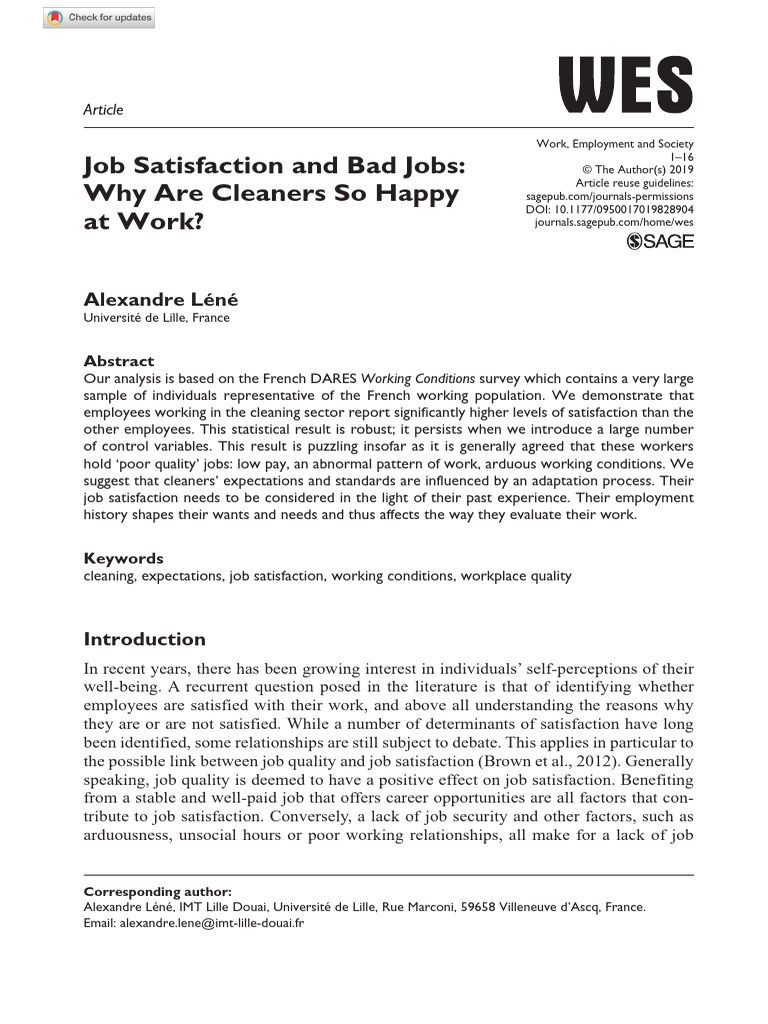
Job satisfaction is ultimately tethered to the perceived value and nature of the occupation itself. Capitalism, in prioritizing economic efficiency, often incentivizes the transformation of certain roles into less desirable (yet essential) tasks, or drives down wages for fundamental services to maximize margins. The perception that cleaning or sanitation positions are merely tasks for underpaid employees stems from market forces valuing service output, not the inherent cleanliness of the environment or the intrinsic quality of the cleaner’s work product. Societal views on these occupations are heavily shaped by economic factors, leading to a devalue of the work itself and, consequently, impacting the job satisfaction of those performing it. This reflects a broader issue: certain types of essential labor are consistently paid less and undervalued, irrespective of the worker’s sense of fulfillment.
Conclusion: Towards a More Satisfying Future
Capitalism’s structural imperatives often collide with the human pursuit of meaningful, fulfilling work. While the system generates wealth, its inherent drive towards profit can lead to work that feels arbitrary, insecure, or dehumanizing for those doing the actual work. Addressing the pervasive job dissatisfaction requires more than incremental workplace adjustments; it necessitates a fundamental reassessment of how value is measured – whether purely through economic output or through the dignity, meaning, and human flourishing derived from work itself. Without bridging this gap between productive activity and human well-being, the system risks perpetuating a large segment of society trapped in a paradox of dissatisfaction within a profitable framework.

