Have you ever considered the profound and almost invisible force that underpins the modern economic engine? It’s not solely fueled by revolutions, technological breakthroughs, or even policy shifts. Unseen to many, compounding weaves itself through the very fabric of capitalist systems, silently shaping fortunes, market dynamics, and societal structures. It’s more than mere math; it’s a principle of recursive growth, a powerful engine that amplifies gains and magnifies wealth, explaining precisely *why* capitalism, with its inherent drive for accumulation, holds compound interest in such sacred esteem.
The Mechanism of Mathematical Mastery
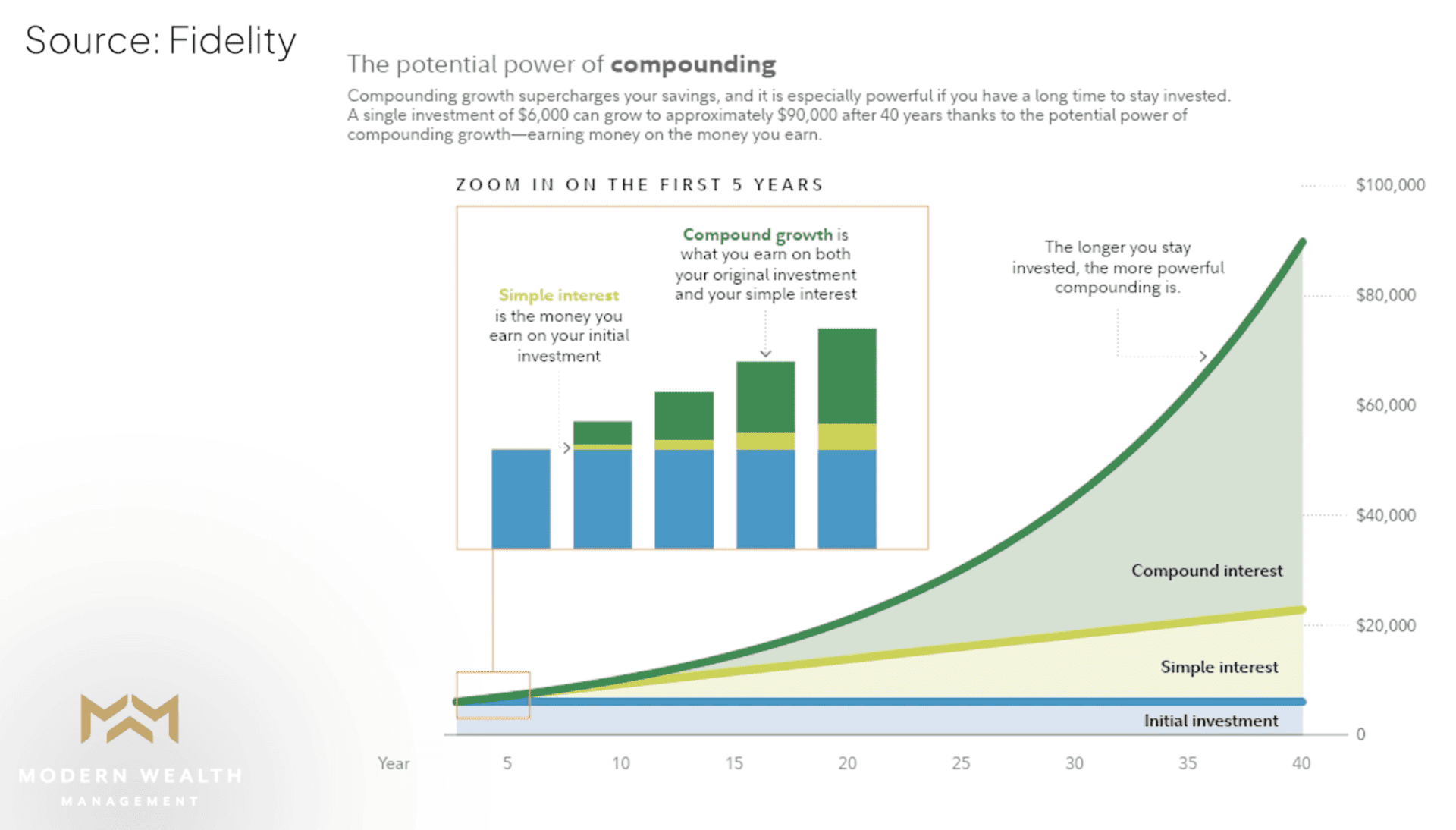
At its heart, compound interest is a phenomenon where the interest earned on a principal amount is reinvested, and subsequently, interest is earned on the accumulated interest – principal plus interest. Unlike simple interest, which only applies to the initial sum, compound growth begets further compound growth, creating an exponential function rather than a linear one. This distinction isn’t subtle; it’s fundamental. Mathematically, it transforms a predictable progression into a dynamic cascade. Albert Einstein allegedly once remarked, “Compound interest is the eighth wonder of the world. He who understands it, earns it; he who doesn’t, pays it.” While the quote’s authenticity is debated, the sentiment captures its transformative power – it defies linear thinking. Each increment generates more of itself, creating a self-reinforcing cycle of value generation.
Psychological Amplification and the Power of Perseverance
Beyond the numbers, compounding harnesses a potent psychological driver: the illusion of progress, fueled by the tangible accumulation of value. Accumulated wealth, however vast or modest, provides a tangible feedback loop, reinforcing saving and investing behaviors. This perceived progress, even when driven by a passive investment strategy allowing “time to work its magic,” fosters trust in the system. It demonstrates that effort, even seemingly small, can yield significant returns over the long gestation period unique to compounding. This creates a powerful inertia; once capital is allocated under a compounding regime, the tendency is to let it continue, allowing the snowball of growth to accelerate unchecked.
An Historical Imperative: From Debt to Dominance
While the explicit calculation of compound interest was formalized by figures like Leonardo Fibonacci centuries ago, its role became pivotal during periods marked by profound shifts. Its power provided the mechanism for immense transformations, from the European financial architectures that facilitated exploration and colonialism to the complex capital structures underpinning the rise of industrial giants and the subsequent development of sophisticated financial markets. It wasn’t just about earning more; it became a lever for concentrating ownership, channeling investments into ventures with the potential for extraordinary returns, fueling rapid accumulation and enabling investment on an unprecedented scale. The trajectory described by compounding – exponential rather than merely increasing – fundamentally altered the game, turning millennia-long asset building into a much faster, albeit riskier, endeavor driven by the interplay of leverage and time.
Modern Manifestations: Finance in the Era of Acceleration
The principle extends far beyond individual savings accounts. Within contemporary finance, it operates in more complex forms. Pension funds, insurance companies, institutions – they rely on the power of compound growth to fund future obligations. The exponential potential of compounding dictates the long-term growth trajectories necessary for these systems to fulfill their promises. Furthermore, the very structure of modern investing – enabling long-horizon holding and value appreciation – is predicated on compounding. This historical trajectory shows that compounding isn’t merely a theoretical curiosity; it’s deeply woven into the operational logic of how wealth is managed and redistributed in a capitalistic framework.
Capitalism and the Engine of Acceleratory Feedback Loops
Why this deep affinity? Capitalism, at its essence, is a system predicated on private ownership, exchange, and the pursuit of profit. These elements, synergized with compounding, create powerful positive feedback loops. Earnings generate resources, resources fuel further investment, which can lead to innovation and increased productivity – all capable of triggering even more growth, which in turn yields more capital to reinvest, perpetuating the cycle. The exponential curve is not just accommodating; it enables the hyper-growth narratives central to much of capitalist enterprise. It transforms potential into actualized growth, making the abstract promise of wealth creation tangible over decades, thereby justifying the inherent long-term orientation and the tolerance for high risk that characterizes the capitalist endeavor.
Disproportionate Returns: Fostering Wealth Hierarchies
The power of exponential growth naturally creates stark disparities. Given a consistent rate of return – often significantly boosted by the effects of its own compounding – sums invested decisively outperform mere passive accumulation. This dynamic reinforces wealth concentration over time; the wealthy accumulate assets faster, leading to a widening gap between the owners of capital and its users or creators (employees or consumers). This outcome – compounded inequality – is perhaps one of the most significant, albeit often overlooked, consequences within advanced capitalist economies. The mathematics dictates it.
Market Realities and the Lingering Shadow
Recognizing the power of compounding is essential for navigating the complexities of modern finance. In a world built on exponential accumulation, strategies focused exclusively on linear progress may seem fundamentally flawed. Understanding compounding helps demystify investing and informs prudent personal finance and corporate financial planning. The potential gains are undeniable, explaining markets’ enduring fascination.
However, the capacity for profound damage is equally potent. Uncontrolled debt and speculative bubbles often erupt from misunderstandings or misapplications of compounding principles – where interest accrual is misunderstood or where borrowing magnifies losses geometrically. It is crucial to remember that compounding, the engine driving immense wealth creation, operates symmetrically in the realm of debt, potentially eroding financial stability just as rapidly as it builds it.
Beyond the Numbers: Reflections on the Engine of Progress (or Decline)
The relationship between compounding and capitalism is deep and multifaceted. It fuels innovation and enables unprecedented accumulation, shaping personal fortunes and corporate behemoths alike. It underpins complex financial instruments and dictates long-term economic trajectories. The sheer mathematical and psychological power means compounding isn’t just an economic tool; it embodies a fundamental temporal logic – that investing time and incremental effort can yield transformative results over vast stretches.
Recognizing this intimate connection is crucial for understanding the forces shaping our economic world. Compounding isn’t a panacea, nor is it an insidious demon. It is simply an immutable law of value multiplication, amplified exponentially when applied to capital. Its power is inherent in its nature, making it a cornerstone upon which much of contemporary economic systems are built. Understanding its mechanisms and its deep interpenetration with the forces of capitalism provides a powerful lens for navigating the complexities and potential perils of the modern financial landscape.


